

The Skin Architect: GHK-Cu for Wound Healing and Minimal Scarring

Hi Mate,
Welcome back to the cutting edge of body recomposition and injury management. If you’ve been following our journey through the Guide to Peptide Assisted Injury Management, you’ve already seen how we can revolutionize muscle repair with the Wolverine Stack and how we manage internal inflammation like a VIP.
But today, we’re looking at the surface: the shield. Whether it’s a post-surgical incision, a nasty scrape from the gravel, or the lingering marks of a "battle scar" from your latest training session, the way your skin closes dictates more than just your look. It dictates your long-term mobility and tissue resilience.
Enter the "Skin Architect": GHK-Cu (Glycyl-L-histidyl-L-lysine). This isn't just a beauty serum; it’s a pivotal bio-hacking tool for anyone serious about skin remodeling and wound closure. In Chapter 4 of our master guide, we dive deep into how this copper-bound tripeptide acts as a high-tech signal to Unlock your body's innate regenerative capacity.
The Molecular Blueprint: Why Copper Matters
At its core, GHK-Cu is a tripeptide with a staggering affinity for copper ions. In the world of "scientific luxury," we think of GHK as the high-end courier and Copper as the precious cargo. Copper is a non-negotiable cofactor for the enzymes that build your body: specifically superoxide dismutase (for antioxidant defense) and lysyl oxidase (for cross-linking your structural proteins).
When you introduce GHK-Cu to an injury site, you aren’t just "moisturizing." You are deploying a signaling molecule that tells the body to stop panicked, haphazard patching and start Transforming the area with precision.
The Proliferation Engine: A 30% Surge in Repair
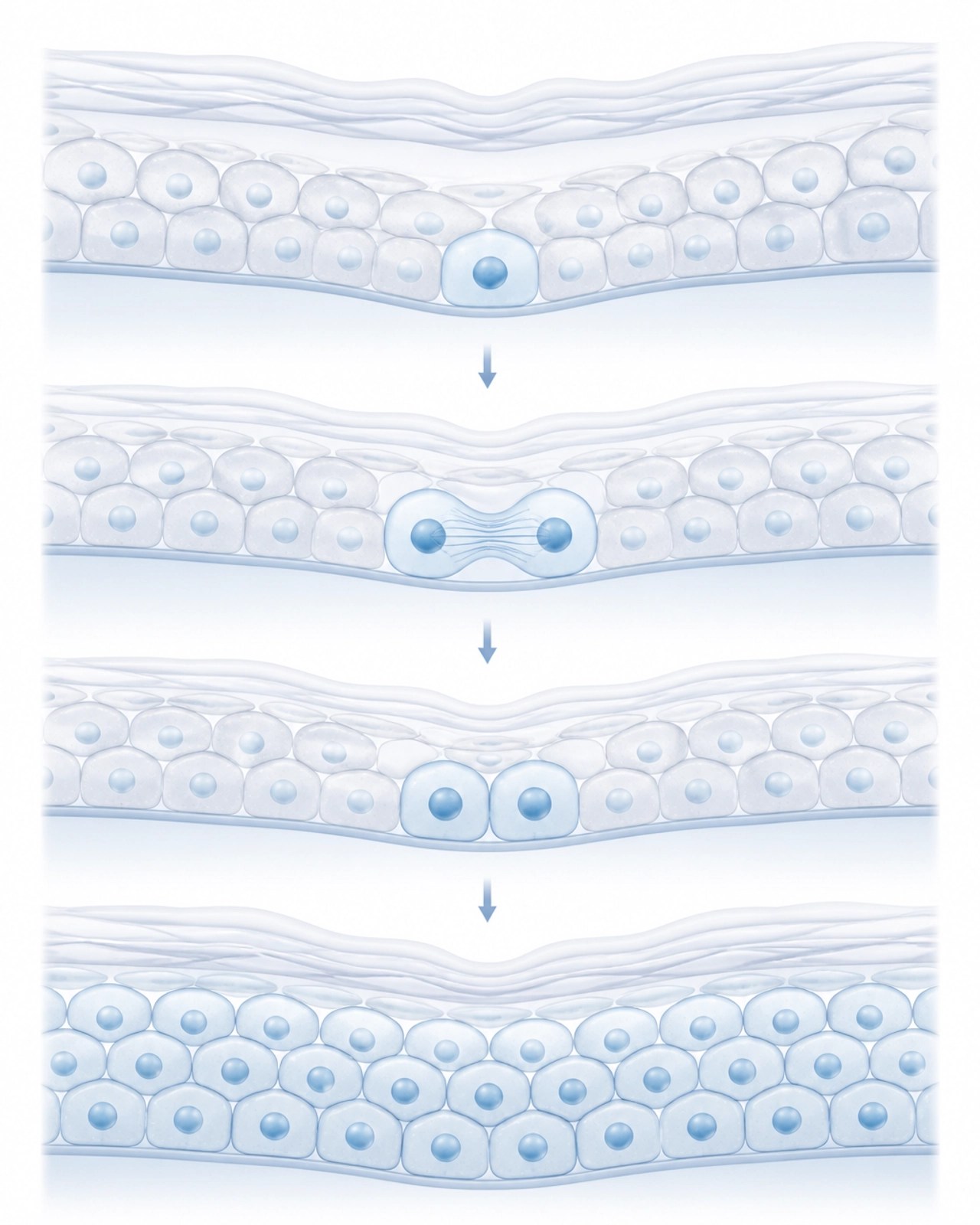
One of the most profound biological needs during wound healing is the rapid closure of the epidermis. If the wound stays open, the risk of infection and inflammation-driven scarring skyrockets. This is where the "Skin Architect" earns its title.
Clinical data and research models have shown that GHK-Cu can drive a 30% increase in keratinocyte proliferation. For the uninitiated, keratinocytes are the primary cells of your outer skin layer. By boosting their multiplication rate by nearly a third, GHK-Cu effectively accelerates re-epithelialization.
This isn't just about speed; it's about thickness. Higher proliferation means a more robust epidermal barrier, ensuring the new skin isn't "paper-thin" or prone to re-opening. It’s the difference between a cheap plywood patch and a reinforced concrete wall. If you are balancing intense metabolic protocols: perhaps utilizing research compounds like Ret or Tirz for weight management: maintaining skin elasticity during rapid body changes is equally vital.
The ECM Architect: Remodeling the Extracellular Matrix
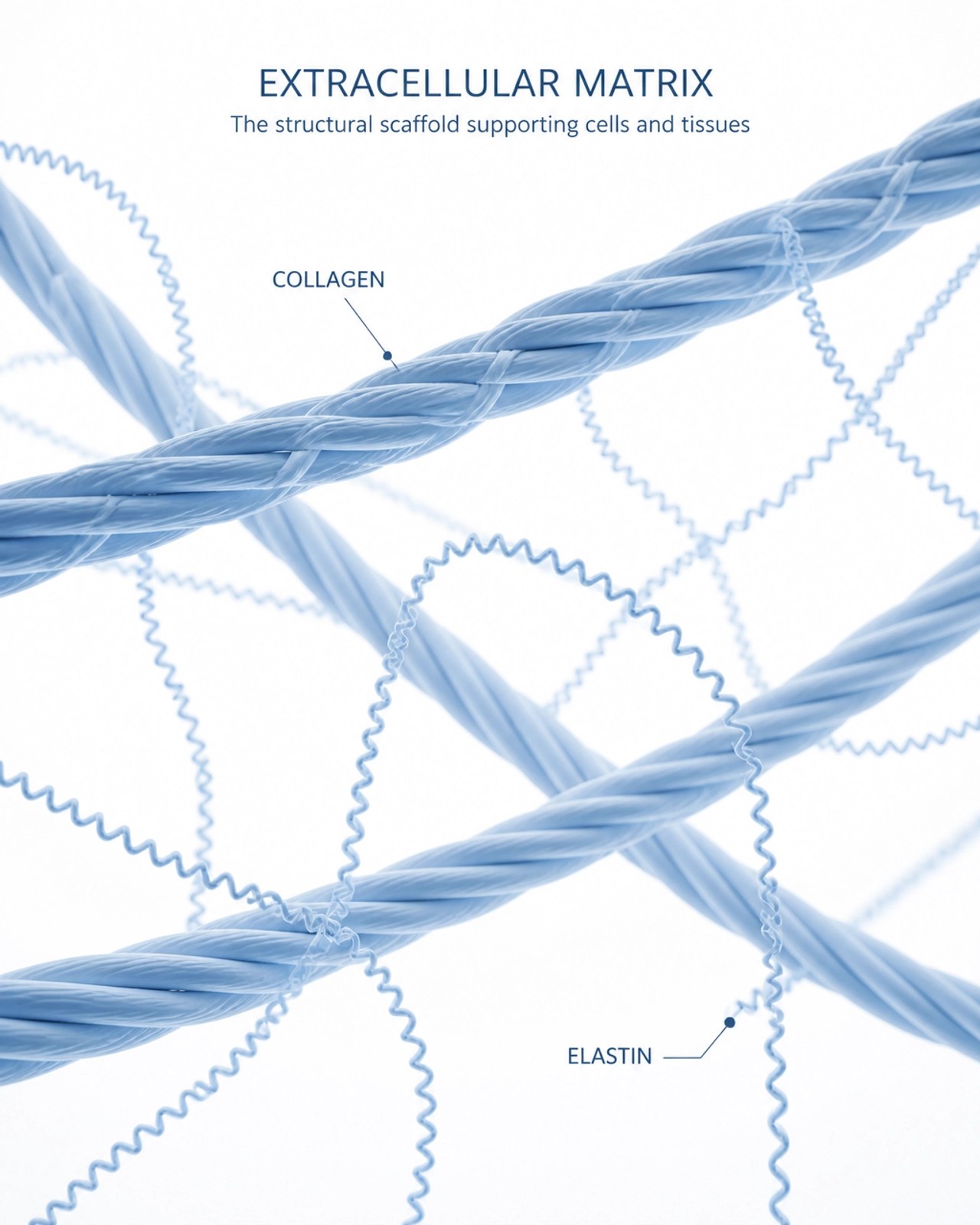
Scars happen when the Extracellular Matrix (ECM): the protein "scaffolding" that holds your skin together: gets laid down in a messy, disorganized pile of collagen. Think of it like a builder dumping bricks in a pile instead of laying them in a straight line.
GHK-Cu revolutionizes this process by balancing the synthesis and degradation of the matrix. It modulates:
- MMPs (Matrix Metalloproteinases): The "demolition crew" that breaks down old, damaged tissue.
- TIMPs (Tissue Inhibitors of Metalloproteinases): The "safety inspectors" that prevent the crew from taking down too much.
By fine-tuning this ratio, GHK-Cu ensures that the body removes the "junk" collagen (which causes that raised, lumpy scar texture) and replaces it with organized, flexible Type I and Type III collagen. This process, known as ECM remodeling, is what separates a visible, stiff scar from a nearly invisible, pliable recovery.
Combatting the "Inflexible" Scar
For the manual laborers and athletes in our community, a scar is an anchor. It doesn't stretch like normal skin. If you have a deep incision over a joint, that scar tissue can limit your range of motion for years.
By utilizing GHK-Cu early in the healing phase, you are effectively Combatting fibrosis. It encourages the production of Glycosaminoglycans (GAGs): specifically decorin: which helps organize collagen fibers into a neat, parallel alignment. This ensures your skin remains "pliable," maintaining the flexibility you need for peak performance.
Practical Application: How to Use the Architect
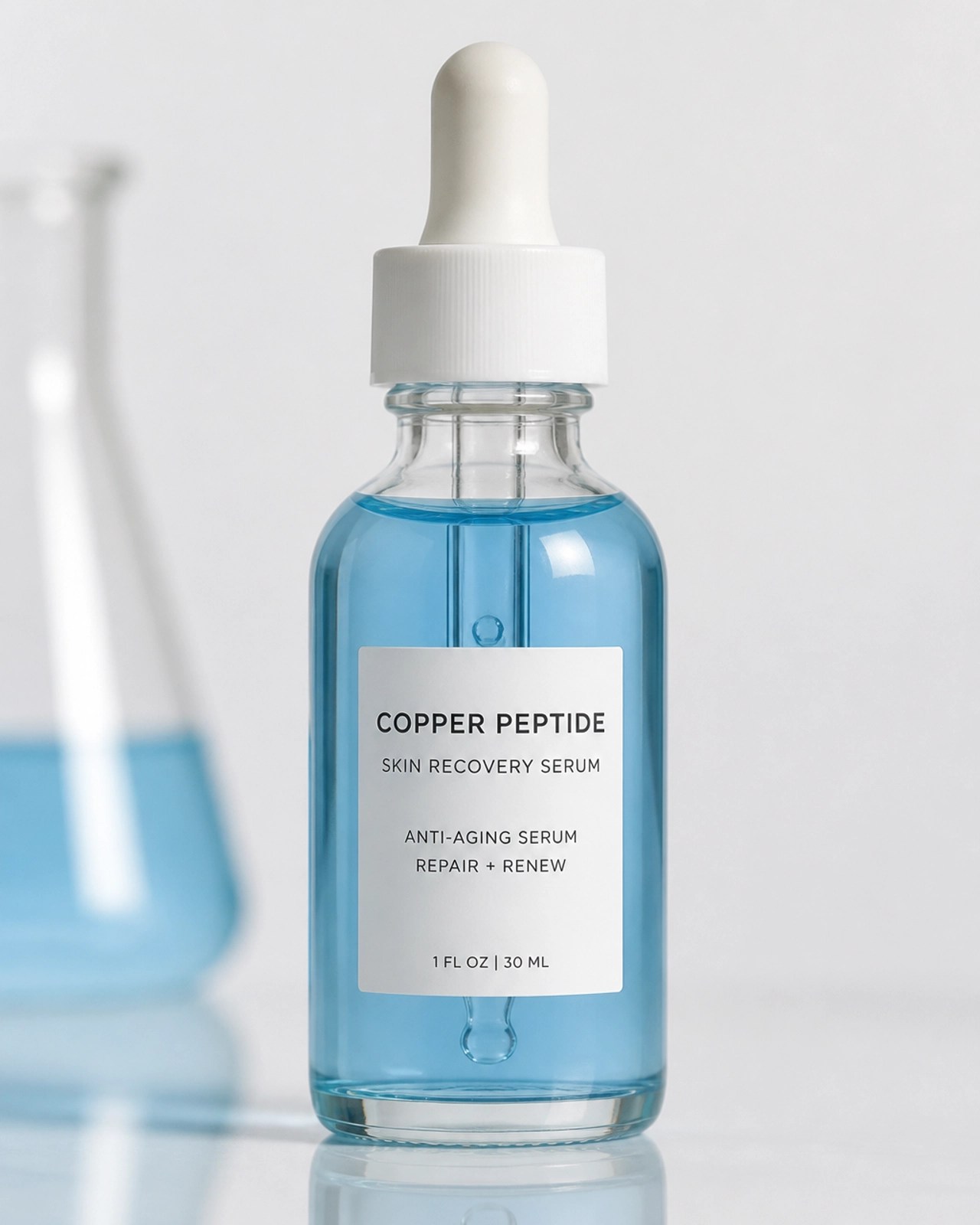
When it comes to GHK-Cu, the "physical contents" of your routine matter. While some biohackers look at systemic administration, the gold standard for wound healing and scar reduction is topical application.
- The Concentration: Most effective research protocols utilize a 1% to 2% GHK-Cu concentration.
- The Timing: For fresh wounds (once closed/dry) or post-surgical sites, apply twice daily.
- The Synergy: Many in our VIP Club combine GHK-Cu with AHK-Cu for a "beauty-and-build" approach, as AHK-Cu specifically targets the dermal papilla cells for hair and scalp health.
To ensure your dosing is clinical and precise, we always recommend using our Peptide Calculator. Whether you are reconstituting for a lab study or calculating topical ratios, precision is the hallmark of a "friendly expert."
A High-Tech Lab Standard

At WeightLossChems, we specialize in research compounds that prioritize metabolic function and longevity. We understand that "Science is Luxury." Every vial of "Gh-K-Cu" or "Ah-K-Cu" you source must meet the highest clinical benchmarks for purity.
We don't just sell peptides; we provide the blueprint for a better you. If you’re feeling overwhelmed by the technical hurdles of injury management, our WLC Assistant chatbot is available 24/7 to help you navigate our product range and technical documentation.
Final Thoughts from Matt
Healing isn't a passive event; it’s an architectural project. By leveraging GHK-Cu, you aren't just "getting better": you are Revolutionizing the way your body handles trauma. You are ensuring that every wound is a lesson in resilience, not a permanent mark of weakness.
Unlock the potential of your skin's remodeling pathways today. For more deep dives into Chapter 4 and beyond, check out the full Guide to Peptide Assisted Injury Management.
Stay sharp, stay resilient.
: Matt
Author & Peptide Researcher


 Peptide Supplements & Research Peptides for Better Longevity
 Scientific Fitness & Laboratory Equipment by WL Australia
 Immune and life extension
 Bioregulators
 Brain
Brain Skin & Hair
 Immune and Life Extension Peptides for Anxiety Support

