

The Lab Standard: A Step-by-Step Guide to Peptide Reconstitution and Storage

Hi Mate, Matt here.
If you’ve just secured your latest batch of research compounds: perhaps some high-purity Ret (Retatrutide) or a Tirz (Tirzepatide) bundle: you’re likely looking at a small vial of white, freeze-dried powder and wondering, "Now what?"
Welcome to the Lab Standard. In the world of high-end metabolic research and longevity, the way you handle your peptides is just as important as the quality of the peptides themselves. These are delicate biological messengers, not just generic chemicals. Treat them with "scientific luxury," and they’ll reward your research with peak potency and stability. Treat them like a bottle of Gatorade, and you’ll literally watch your investment (and results) degrade before your eyes.
Today, we’re going deep into the mastery of reconstitution and storage. We’re talking about the transition from lyophilized (freeze-dried) powder to a bioactive solution ready for your metabolic pathways.
The Pre-Flight Check: Essential Supplies
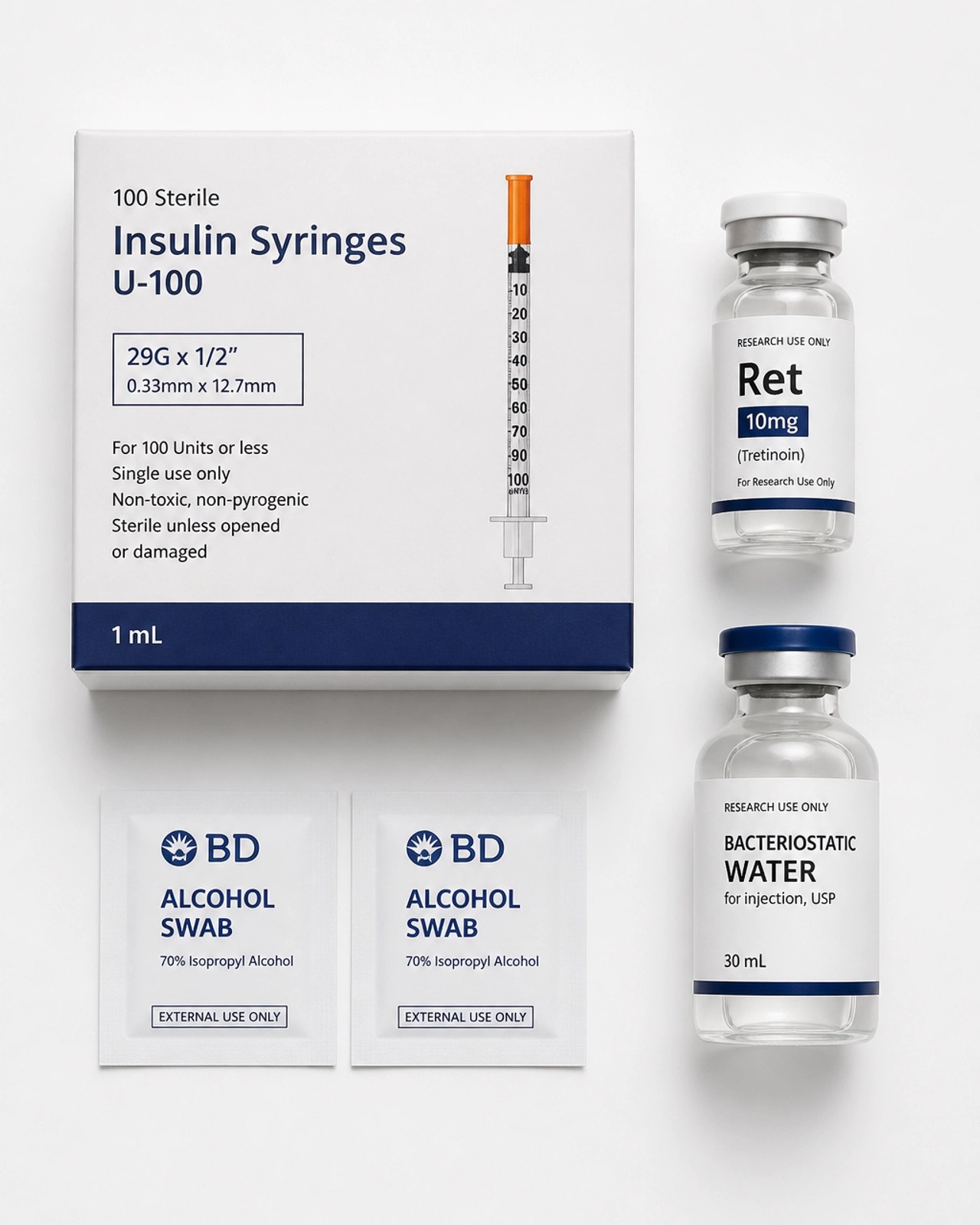
Before you even think about popping the flip-top off a vial of Ret 10mg, you need the right kit. You wouldn't perform surgery with a kitchen knife; don't reconstitute your research chemicals with anything less than the gold standard.
What’s in the Kit?
- The Peptide: Your lyophilized powder (e.g., Retatrutide/Ret 5mg-50mg).
- The Solvent: Bacteriostatic Water (Bac Water). This isn't just "filtered" water; it contains 0.9% benzyl alcohol to inhibit bacterial growth.
- The Hardware: Sterile insulin syringes (usually 31G for maximum comfort).
- The Sterilizers: 70% Isopropyl Alcohol swabs.
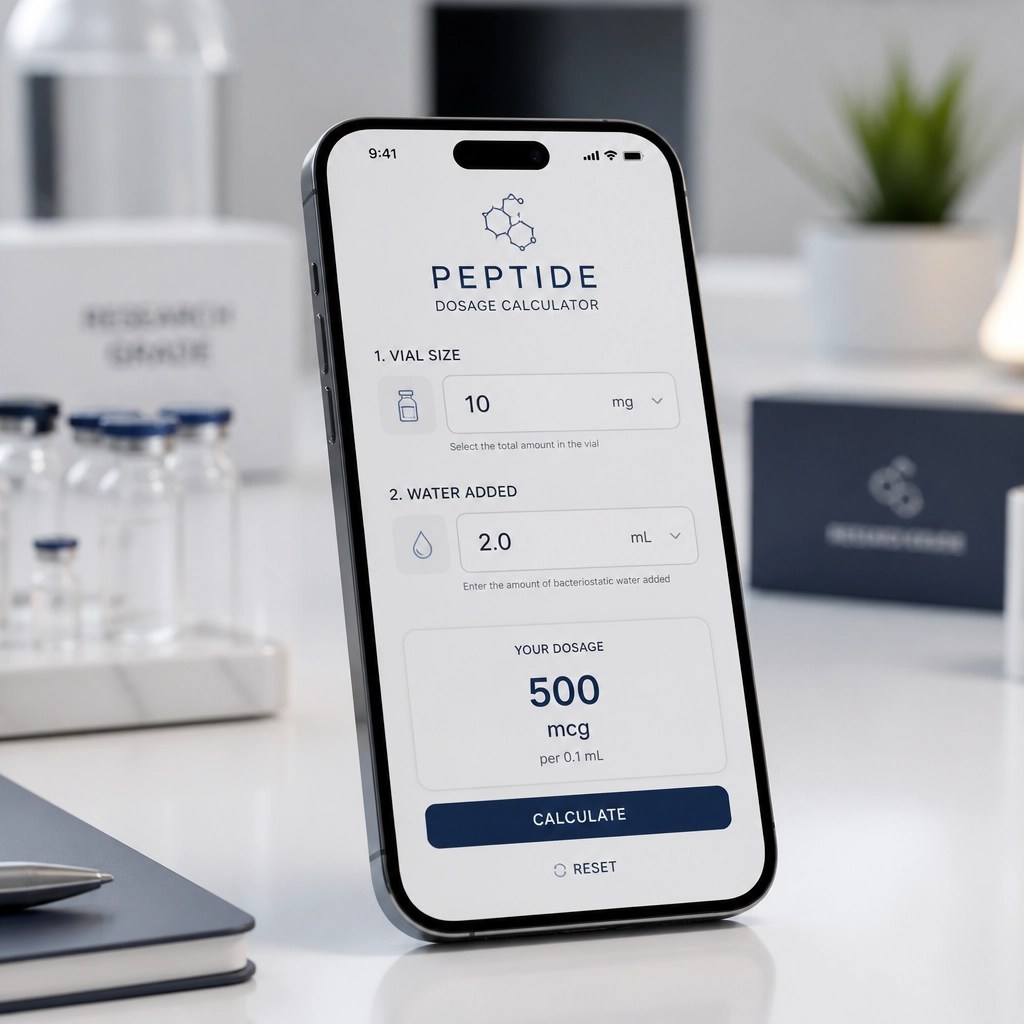
- The Brain: Our Peptide Dosage Calculator to ensure your math is as precise as your science.
Step 1: The Aseptic Prep
In any lab environment, "clean" is a relative term. We aim for sterile.
- Sanitize the Station: Wipe down your work surface with an alcohol swab.
- Prep the Vials: Pop the plastic caps off your peptide and your Bac Water.
- The Swab: Use a fresh alcohol swab to wipe the rubber stoppers of both vials. Don’t just "tap" them; give them a firm, circular wipe. Let the alcohol air-dry: don't blow on it (your breath is a cloud of bacteria).
Step 2: The Calculation (No Guesswork!)
This is where many researchers stumble. If you have a Ret 10mg vial and you add 2ml of Bac Water, what is your concentration?
Using our Peptide Calculator, you’d quickly see that every 10 units on a standard insulin syringe equals 0.5mg of the compound. Accuracy is the hallmark of the VIP Club; guessing is for amateurs. Always calculate before the needle hits the rubber.
Step 3: Drawing the Solvent
- Pressure Balance: Draw air into your syringe equal to the amount of water you plan to pull (e.g., 2ml of air for 2ml of water).
- The Draw: Inject the air into the Bac Water vial, invert it, and slowly draw the liquid.
- Bubble Management: Tap the syringe to move any air bubbles to the top and flick them out. We want pure solvent here.
Step 4: The "Gentle Drip" Reconstitution
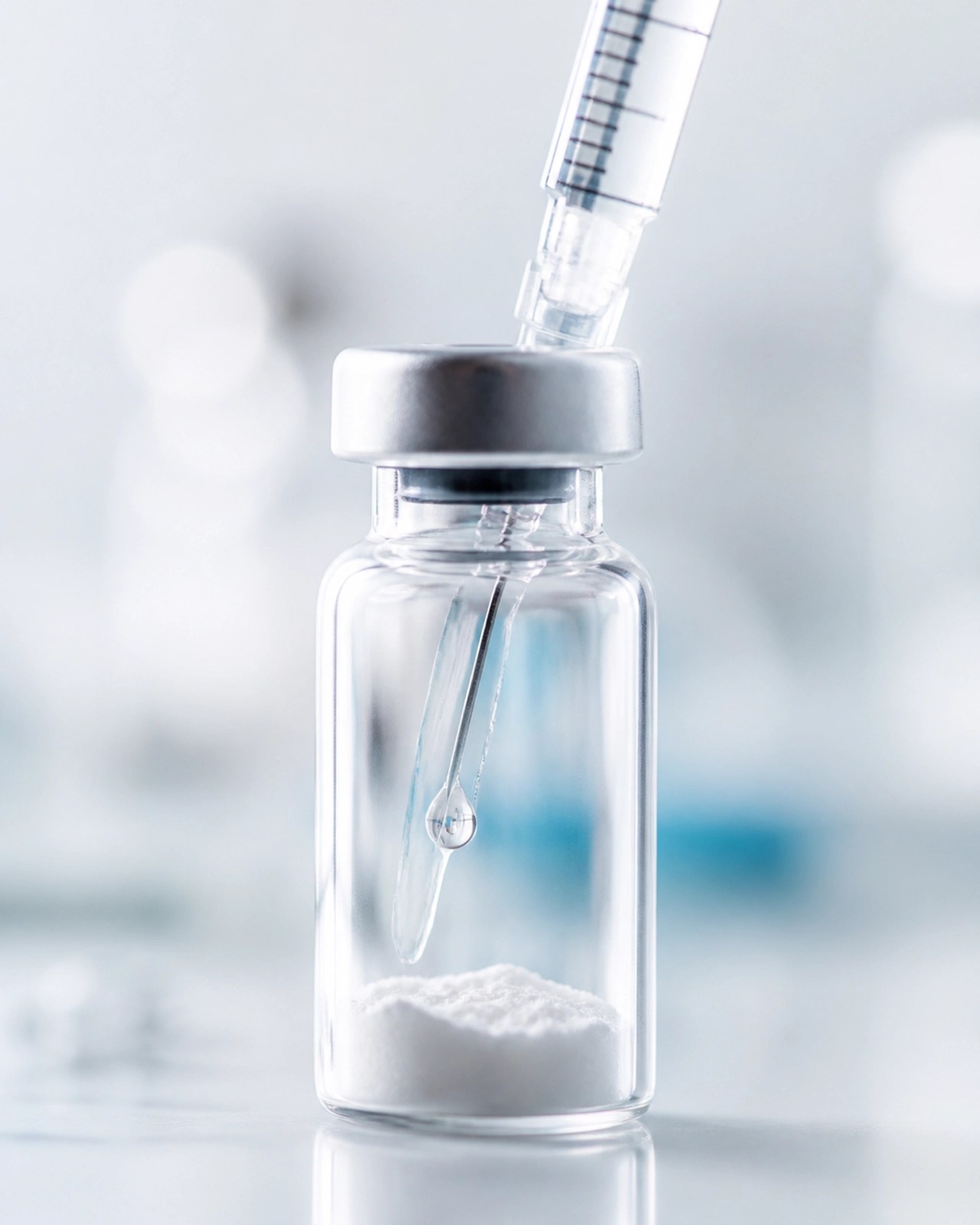
This is the most critical step. Peptides are held together by fragile peptide bonds. If you blast the water directly onto the powder, you can cause denaturation, basically "breaking" the peptide before it ever enters your research system.
- The Angle: Insert the needle into the peptide vial at a slight angle.
- The Wall Technique: Aim the needle so the water runs slowly down the inside wall of the glass, rather than "spraying" the powder cake directly.
- Pressure Release: You might notice the vacuum in the vial trying to suck the plunger down. Control it. Let it enter slowly. Once the liquid is in, pull the syringe out.
Step 5: The Swirl (Never the Shake)
If you see someone shaking a vial of Tirz like a cocktail shaker, stop them. Shaking creates foam and can shear the delicate molecules.
Instead, gently swirl the vial between your palms or on the table. It might take 2 minutes or 10 minutes to become clear. Patience is part of the scientific luxury experience. If the solution remains cloudy after 15 minutes, the peptide may have degraded or been exposed to extreme temps during shipping: though with WLC’s high-quality sourcing, your solution should be crystal clear.
Cold Chain Management: Storage Protocols
Now that your research compound is in liquid form, the clock is ticking. Lyophilized powder can last months at room temp, but once reconstituted, it’s a living biological solution.
The Fridge is Your Best Friend
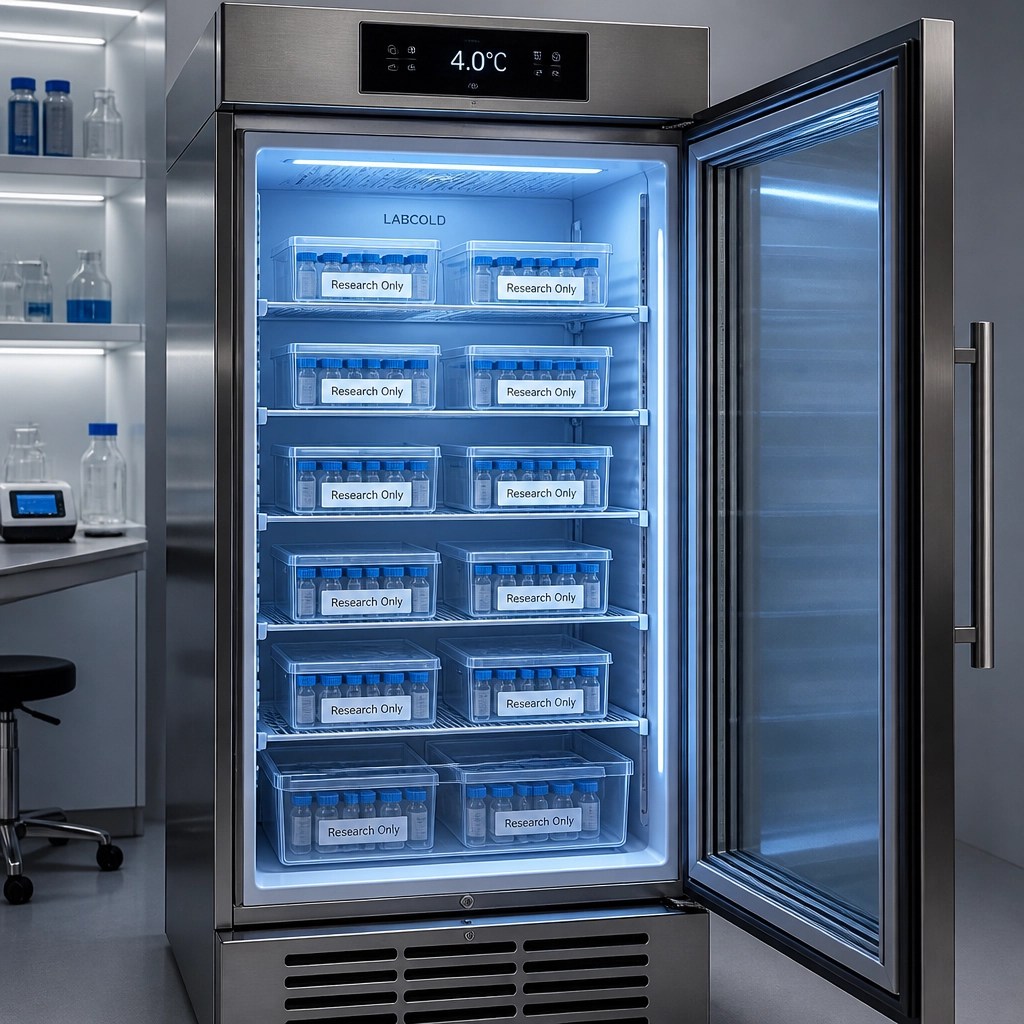
Store your reconstituted vials in a medical-grade or dedicated refrigerator at 2°C to 8°C (36°F to 46°F).
- Darkness Matters: Peptides are light-sensitive. Keep them in their boxes or an opaque container.
- No Freezer: Never freeze a reconstituted peptide. The expansion of water crystals can shred the peptide bonds.
Stability Timelines
- Ret / Tirz: Once mixed, try to use the vial within 30–45 days for maximum potency.
- Beauty Peptides (AHK-Cu): These are slightly more robust but still benefit from the cold chain.
Traveling with Research Compounds
Going away but don't want to break the protocol? You need a Travel Kit.
- Insulated Pouches: Use a small insulin travel bag with frozen gel packs.
- Avoid the "Hot Car": A car glovebox in summer is a peptide death trap.
- Airport Security: Keep your vials in their original packaging with your research notes. Most "biohackers" find that as long as vials are labeled and stored correctly, they pass through security without a hitch.
Unlock Your Metabolic Potential
Mastering the Lab Standard isn't just about being "correct": it’s about ensuring that every microgram of Ret or Tirz you invest in actually does the work it’s designed to do. Whether you're using AMPK peptides to revolutionize your energy or Abaloparatide to combat bone density issues, the ritual of reconstitution is where the transformation begins.
Ready to restock your lab? Head over to the WeightLossChems Store and join our VIP Club for exclusive drops on the latest metabolic research tools.
Stay sharp, stay sterile.
( Matt)


 Peptide Supplements & Research Peptides for Better Longevity
 Scientific Fitness & Laboratory Equipment by WL Australia
 Immune and life extension
 Bioregulators
 Brain
Brain Skin & Hair
 Immune and Life Extension Peptides for Anxiety Support

