

Mastering the Peptide Calculator: Precision Dosing for Research Peptides

Hi Mate, Matt here.
If you’re stepping into the world of advanced research compounds, you already know that "close enough" isn't part of the vocabulary. Whether you're investigating the metabolic pathways of Ret (our triple-agonist powerhouse) or exploring the longevity benefits of Tirz, precision is the bridge between a successful study and a wasted vial.
In the research community, we talk a lot about "Scientific Luxury." It’s that sweet spot where high-tech molecular biology meets a seamless, high-performance lifestyle. But to truly Unlock the potential of these compounds, you need to master the math behind the vial.
Today, I’m walking you through everything you need to know about using a peptide calculator dosing protocol, handling bac water for peptides, and why the WeightLossChems calculator is about to become your new best friend in the lab.
Why Precision is the Gold Standard
When you receive a vial of lyophilized (freeze-dried) powder, you aren't just looking at a product; you’re looking at a concentrated biological tool. Peptides like our Ret 10mg bundle or the higher-strength 50mg Ret vials require exact reconstitution to ensure your research data remains consistent.
A tiny error in math can lead to a 10x difference in concentration. That’s the difference between a controlled metabolic study and an unpredictable variable. By using a dedicated reconstitution calculator peptide tool, you eliminate human error and ensure that every "unit" on your syringe matches your intended dosage exactly.

Decoding the Units: MG, MCG, ML, and Units
Before we dive into the calculator, let's get our vocabulary straight. Mixing these up is the most common hurdle for new researchers.
- Milligrams (mg): This is usually the total weight of the peptide in your vial (e.g., 5mg, 10mg, or 30mg).
- Micrograms (mcg): This is the unit used for actual dosing. 1mg = 1,000mcg. If your research protocol calls for 250mcg, that is 0.25mg.
- Milliliters (mL): This is the volume of liquid (the solvent). Usually, we use bac water for peptides. 1mL is roughly equal to 1cc.
- Units: This is what you see on an insulin syringe. Most standard U-100 insulin syringes are 1mL total and contain 100 units. Therefore, 1 unit = 0.01mL.
Understanding that 10 units on a syringe is NOT 10mg of peptide is the first step toward becoming a pro. The "units" simply represent the volume of liquid, not the mass of the compound.
The Reconstitution Essential: Bac Water
You can’t just use any water. Research-grade bac water for peptides (Bacteriostatic Water) is sterile water containing 0.9% benzyl alcohol. This preservative prevents the growth of bacteria, allowing your reconstituted solution to stay stable in the fridge for several weeks.
When you’re ready to Transform that powder into a solution, the amount of Bac water you add determines the concentration.
- Add less water = High concentration (smaller volume to draw).
- Add more water = Lower concentration (easier to measure small doses accurately).
Step-by-Step: Using the WeightLossChems Peptide Calculator
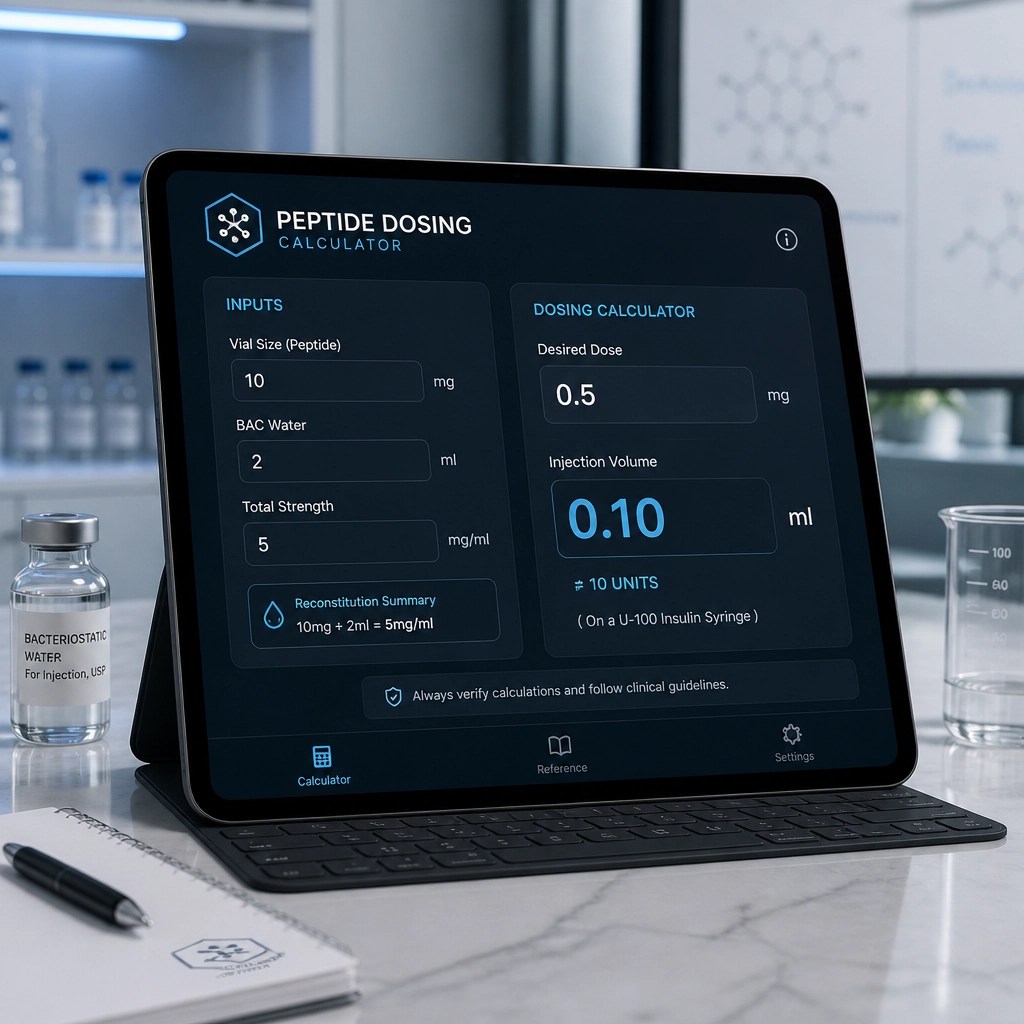
We’ve built our peptide calculator dosing tool to be the ultimate "Scientific Luxury" utility. It’s clean, it’s fast, and it removes the guesswork. Here’s how to use it like a pro:
Step 1: Input the Peptide Amount
Look at your vial. If you’re working with our Ret 10mg or Tirz 5mg, enter that number into the "Peptide Amount" field.
Step 2: Input the Bac Water Volume
Decide how much bac water for peptides you’re adding. A common choice is 1mL or 2mL. Enter this into the "Volume of Water" field.
Step 3: Set Your Desired Dose
What is your research target? If the protocol requires 500mcg, type "500" into the "Dose" field.
Step 4: Choose Your Syringe Size
Most researchers use the standard 1mL (100 unit) insulin syringe. Selecting this in the calculator ensures the visual guide matches the tool in your hand.
Step 5: Read the Results
The calculator will instantly tell you exactly how many "units" to draw up. No long-division, no scratch pads: just pure, clinical accuracy.
Pro Tips for Reconstitution
Once the math is done, the physical process is just as important. To Revolutionize your research results, follow these "Friendly Expert" guidelines:
- The Gentle Touch: When injecting Bac water into your vial, don’t aim directly at the powder. Aim for the glass side-wall. Let the water trickle down. Peptides are delicate molecular chains; "spraying" them can cause degradation.
- No Shaking: Swirl the vial gently until the liquid is clear. Never shake it like a protein topper.
- Cold Storage: Once reconstituted, keep your vials in the fridge (between 2°C and 8°C). Light and heat are the enemies of longevity in the peptide world.
Why WLC? The VIP Edge
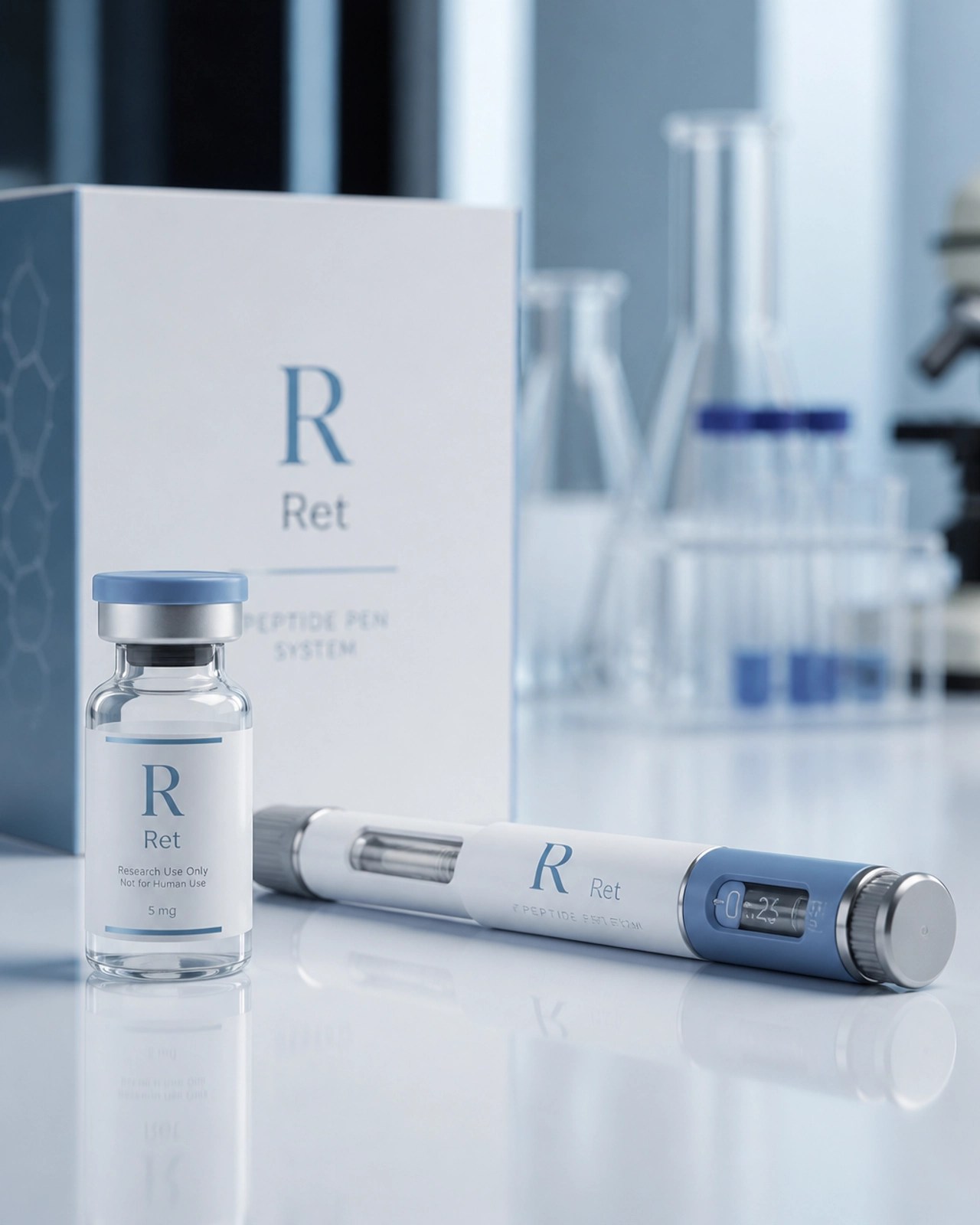
At WeightLossChems, we don’t just sell research compounds; we provide the ecosystem for success. From our Peptide Kits that include the reusable pen system to our VIP Club exclusive drops, we are dedicated to those who demand the highest quality.
Whether you are looking to Combat metabolic slowdown with AMPK peptides or seeking bone-density support with Abaloparatide (Tymlos), we ensure our sourcing is top-tier so your research is top-tier.
Summary: Mastering the Flow
Precision dosing is the hallmark of a serious researcher. By utilizing a reconstitution calculator peptide and high-quality bac water for peptides, you ensure that your study is reproducible and safe.
Don't guess. Use the tools. Unlock the data.
If you’re ready to stock up on the highest-grade research compounds or need to grab a fresh supply of Bac water and syringes, head over to the WeightLossChems shop. And don’t forget to bookmark our Peptide Calculator for your next session!
Stay sharp,
Matt
WeightLossChems Specialist


 Peptide Supplements & Research Peptides for Better Longevity
 Scientific Fitness & Laboratory Equipment by WL Australia
 Immune and life extension
 Bioregulators
 Brain
Brain Skin & Hair
 Immune and Life Extension Peptides for Anxiety Support

