


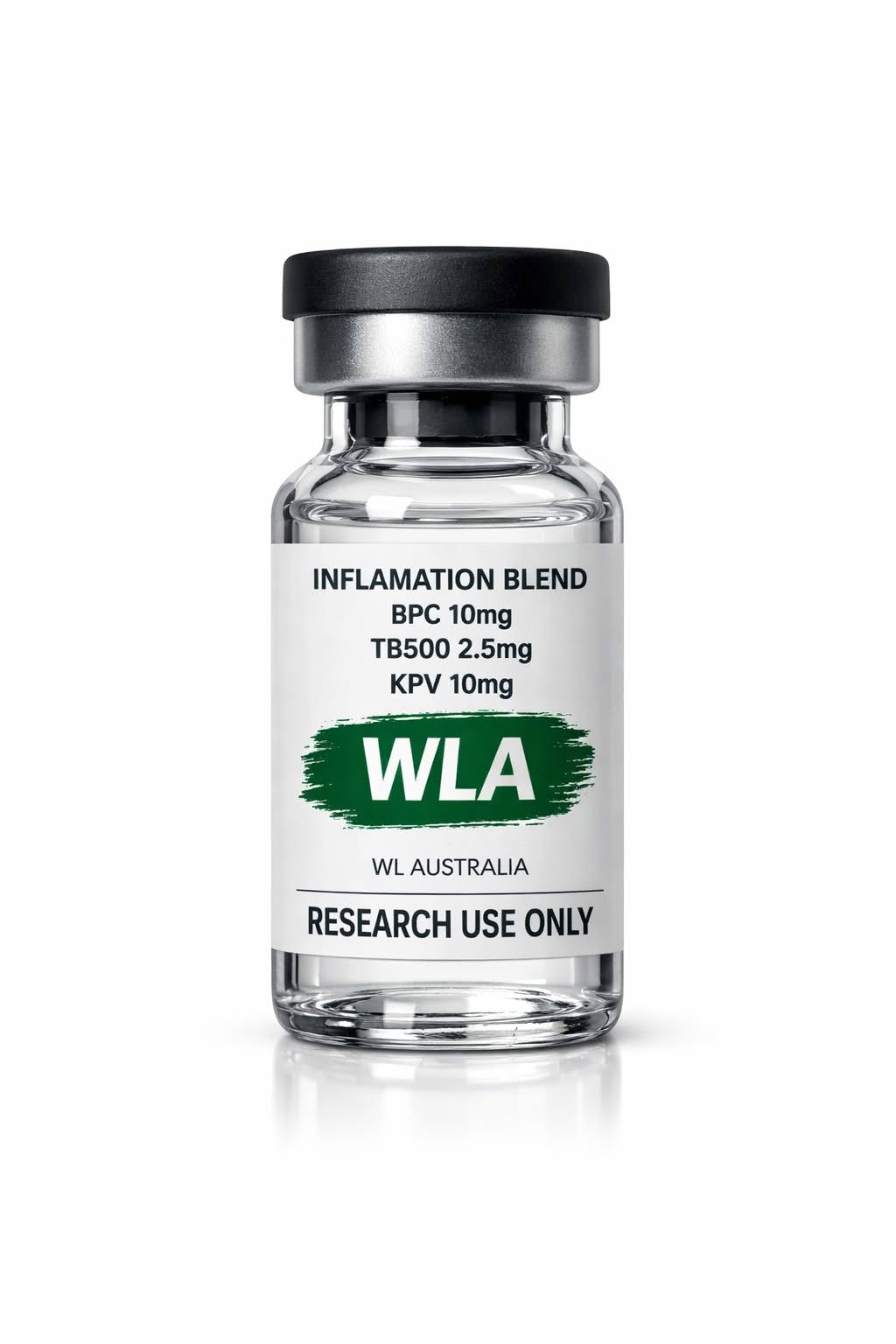
INFLAMATION BLEND BPC 10mg, TB500 2.5mg & KPV 10mg
$135.00
In stock
Research chemical only- Not for human use.
The intricate paradigm of regenerative medicine has been substantially enriched by the confluence of bioactive peptides such as BPC-157, TB-500, and KPV. This triadic amalgamation engenders a multifaceted therapeutic modality that ostensibly addresses a spectrum of pathophysiological conditions through diverse biochemical pathways. BPC-157, or Body Protection Compound 157, is heralded for its pleiotropic effects in tissue repair and angiogenesis, thereby augmenting the healing milieu, particularly in musculoskeletal injuries. Its mechanistic underpinnings are hypothesized to involve modulation of growth factor activity and enhancement of cellular migration and proliferation.
Complementarily, TB-500 — derived from thymosin beta-4 — exhibits a notable proclivity for promoting cell motility and collagen deposition, facilitating the remodeling of extracellular matrices. This peptide’s role in inflammation mitigation and its capacity to expedite wound healing render it a pivotal element in the therapeutic matrix. Meanwhile, KPV, an analog of α-MSH, demonstrates immunomodulatory properties, potentially curbing excessive inflammatory responses while simultaneously promoting homeostatic recovery in tissue dynamics. The intersection of these peptides engenders a synergistic effect that transcends their individual biochemical contributions, thus proposing a holistic approach to regenerative therapies that may yield superior clinical outcomes in the domains of sports medicine, orthopedics, and chronic inflammatory conditions.
Collectively, the integration of BPC-157, TB-500, and KPV into a singular therapeutic framework epitomizes the convergence of molecular biology and clinical practice. Future exploration into the pharmacokinetics and pharmacodynamics of this peptide amalgamation is warranted to elucidate its therapeutic potential and optimize its application in clinical settings, ultimately enhancing our comprehension of complex healing processes. The synthesis of these peptides could herald a paradigm shift in our approach to cellular repair frameworks, challenging the conventional boundaries of regenerative medicine.
The intricate paradigm of regenerative medicine has been substantially enriched by the confluence of bioactive peptides such as BPC-157, TB-500, and KPV. This triadic amalgamation engenders a multifaceted therapeutic modality that ostensibly addresses a spectrum of pathophysiological conditions through diverse biochemical pathways. BPC-157, or Body Protection Compound 157, is heralded for its pleiotropic effects in tissue repair and angiogenesis, thereby augmenting the healing milieu, particularly in musculoskeletal injuries. Its mechanistic underpinnings are hypothesized to involve modulation of growth factor activity and enhancement of cellular migration and proliferation.
Complementarily, TB-500 — derived from thymosin beta-4 — exhibits a notable proclivity for promoting cell motility and collagen deposition, facilitating the remodeling of extracellular matrices. This peptide’s role in inflammation mitigation and its capacity to expedite wound healing render it a pivotal element in the therapeutic matrix. Meanwhile, KPV, an analog of α-MSH, demonstrates immunomodulatory properties, potentially curbing excessive inflammatory responses while simultaneously promoting homeostatic recovery in tissue dynamics. The intersection of these peptides engenders a synergistic effect that transcends their individual biochemical contributions, thus proposing a holistic approach to regenerative therapies that may yield superior clinical outcomes in the domains of sports medicine, orthopedics, and chronic inflammatory conditions.
Collectively, the integration of BPC-157, TB-500, and KPV into a singular therapeutic framework epitomizes the convergence of molecular biology and clinical practice. Future exploration into the pharmacokinetics and pharmacodynamics of this peptide amalgamation is warranted to elucidate its therapeutic potential and optimize its application in clinical settings, ultimately enhancing our comprehension of complex healing processes. The synthesis of these peptides could herald a paradigm shift in our approach to cellular repair frameworks, challenging the conventional boundaries of regenerative medicine.


 Immune Support and Life Extension
 Shop Bioregulators & Research Chemicals for 2026 Scientific Labs
 Brain
Brain Buy Hair & Skin Care Peptides Australia – Top Quality & Best Prices
 Discover WLAustralia Peptides for Anxiety Relief & Longevity


Reviews
Clear filtersThere are no reviews yet.