


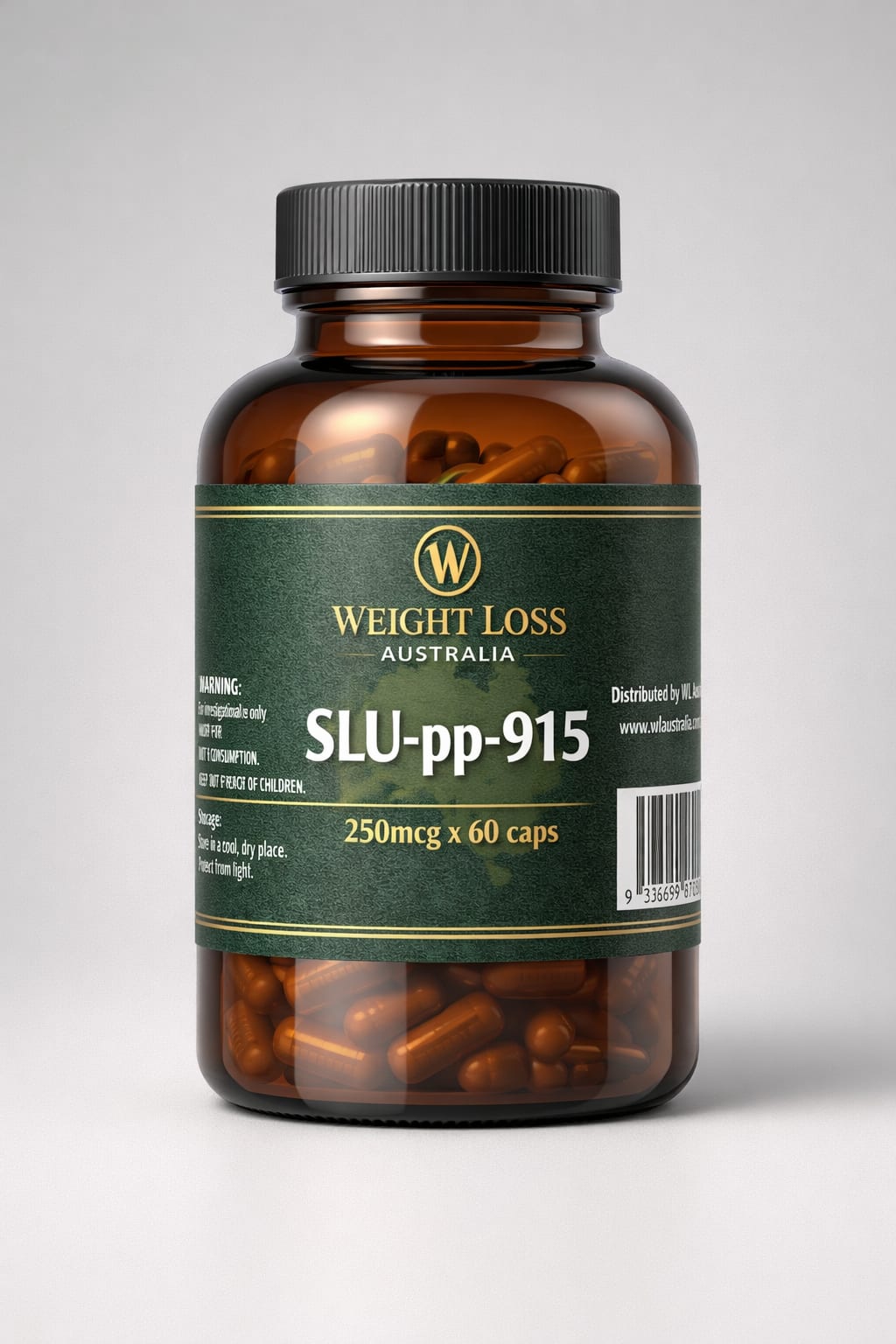
SLU-pp-915 250mcg x 60 caps
$110.00
In stock
Research chemical only- Not for human use.
Introducing SLU-PP-915, a groundbreaking synthetic pan-ERR agonist engineered at Saint Louis University that promises to unlock the full potential of the estrogen-related receptor family. This innovative compound stands out in the realm of research and therapeutic applications due to its exceptional in vivo performance, significantly surpassing earlier iterations. With SLU-PP-915, researchers can explore enhanced endurance and metabolic functions, setting the stage for new breakthroughs in health and wellness.
The advantages of SLU-PP-915 extend beyond its improved efficacy;
it also offers a more versatile application profile for experimental research. While previous compounds like SLU-PP-332 demonstrated remarkable potential in boosting endurance in murine models, their limitations in oral bioavailability hindered their long-term use. SLU-PP-915 addresses this critical gap, allowing for continuous administration and consistent results, making it an indispensable tool for scientists looking to delve deeper into the biological mechanisms influenced by ERR activation.
Incorporating SLU-PP-915 into your research toolkit opens doors to innovative studies in metabolic health, endurance training, and chronic disease management. This compound not only enriches our understanding of estrogen-related receptors but also paves the way for new therapeutic strategies that could revolutionize how we approach endurance and overall vitality. Embrace the future of biomedical research with SLU-PP-915 — where possibility meets performance.
In the burgeoning domain of endocrine pharmacology, SLU-PP-915 emerges as a synthetic pan-estrogen-related receptor (ERR) agonist, ingeniously engineered at Saint Louis University. This compound represents a pivotal advancement in the quest to develop pharmacological agents capable of activating the entire ERR family, a receptor class known for its multifaceted roles in metabolic regulation and energy homeostasis. The intrinsic molecular design of SLU-PP-915 illustrates a sophisticated iterative approach to structure-activity relationship (SAR) optimization, leading to enhanced receptor affinity and selectivity that facilitates its overarching aim to modulate ERR signaling pathways in a comprehensive manner.
Noteworthy among the empirical findings regarding SLU-PP-915 is its superior in vivo performance compared to erstwhile analogs, a significant criterion for translating preclinical efficacy into therapeutic applicability. The prior configurations, notably SLU-PP-332, elucidated a commendable capacity to augment endurance parameters in murine models; however, they were egregiously hampered by pharmacokinetic liabilities, particularly their diminished oral bioavailability. This limitation rendered them substantially less viable for chronic administration and longitudinal studies, thereby constraining their utility in the elucidation of long-term metabolic benefits. In contrast, the advancements encapsulated in SLU-PP-915 may portend a novel paradigm for the systemic administration of ERR modulators, potentially circumventing the pharmacological impediments previously encountered and propelling this realm of research into uncharted territories of metabolic therapeutics.
SLU-PP-915 is a man-made pan-ERR agonist created at Saint Louis University as part of an initiative to develop compounds that can activate the full spectrum of estrogen-related receptors (ERRs). These nuclear receptors play crucial roles in managing energy production, mitochondrial activity, oxidative metabolism, and adaptations in skeletal muscle.
Differing from traditional estrogen receptors, ERRs do not depend on estrogen binding for gene transcription regulation. They act as orphan nuclear receptors that interact with numerous genes essential for energy production and metabolic adaptability. Consequently, they have become appealing targets for researchers investigating exercise mimetics and metabolic disorders.
The initial compound from this research group was SLU-PP-332, which showed promising biological effects in animal tests but had poor oral bioavailability. To address this, researchers developed a chemically distinct successor that could elicit similar biological effects while being effective orally. This optimization resulted in SLU-PP-915.
While enthusiasm around this compound is growing, it’s crucial to acknowledge that all current findings are based on laboratory and animal studies, and there are no clinical trials published assessing its safety or effectiveness in humans. Some individuals may mistakenly classify SLU-PP compounds alongside peptides; however, it’s important to emphasize that this compound is not a peptide, and those familiar with peptides will understand the distinction. The primary action of SLU-PP-915 is to activate the three principal members of the ERR family: ERRα, ERRβ, and ERRγ, which regulate genes linked to mitochondrial biogenesis, fatty acid metabolism, oxidative phosphorylation, and glucose processing.
The key feature of SLU-PP-915 is its ability to act as a broad-spectrum ERR agonist.
Rather than targeting a specific nuclear receptor, this approach allows for the simultaneous modulation of various metabolic pathways. Researchers suggest that this extensive receptor activation more accurately mirrors the intricate biological adjustments that typically occur during endurance exercise.
A significant discovery from studies on mice revealed that treatment with SLU-PP-915 led to increased levels of the Ddit4 gene. This gene is usually activated after aerobic workouts and has become a crucial indicator in assessing the mimetic effects of exercise. In multiple trials, the rise in Ddit4 expression following treatment with SLU-PP-915 was comparable to or even greater than the increases seen after running on a treadmill.
On a molecular scale, researchers explored alterations in RNA expression to understand how the drug impacted downstream signaling pathways. These investigations showed synchronized changes across various exercise-responsive genes, bolstering the case for further research into the biological effects of ERR activation.
One of the notable improvements attributed to SLU-PP-915 is its enhanced performance in living organisms compared to previous compounds.
Earlier research indicated that SLU-PP-332 significantly boosted endurance in mice; however, its limited oral bioavailability restricted its applicability in extended studies. To counter this issue, researchers developed SLU-PP-915, which preserved similar biological effects while being effective when taken orally.
In treadmill trials, mice given SLU-PP-915 exhibited around a 50% increase in both running distance and duration compared to those receiving a control treatment. These enhancements matched the effects seen with SLU-PP-332, even though SLU-PP-915 was used at a lower dosage in several trials. This suggests that modifications to the chemical structure of the compound enhanced its effectiveness without diminishing its biological function.
Additionally, the studies assessed the expression of the Ddit4 gene, a marker for acute adaptations to aerobic exercise. After administering SLU-PP-915, Ddit4 levels rose significantly in skeletal muscle, with the quadriceps exhibiting an even greater response than with SLU-PP-332. In certain tests, this increase was nearly comparable to that resulting from an hour of running on a treadmill.
Further research involved administering SLU-PP-915 orally over a week. The plasma levels rose in correlation with the dosage, and the repeated dosage did not lead to excessive accumulation. Notably, oral treatment consistently enhanced running performance and sustained the activation of exercise-responsive genes throughout the duration of the study.
Another intriguing finding related to mitochondrial biology: the animals treated with SLU-PP-915 showed increased mitochondrial DNA levels and a higher expression of various mitochondrial genes, aligning with the known functions of ERR signaling.
From the standpoint of medicinal chemistry, SLU-PP-915 is not merely a refined iteration of its predecessor.
This compound is part of a newer chemical series aimed at maximizing potency while enhancing oral absorption. In contrast to SLU-PP-332, which is hindered by low oral bioavailability, SLU-PP-915 was specifically engineered using a different scaffold that yielded better pharmacokinetic properties in preliminary lab evaluations. [1]
Its design features a thiophene ring, a widely recognized element in medicinal chemistry that can affect receptor interactions, metabolic stability, and other physicochemical properties. Although these structural modifications may seem trivial, they are often critical in determining a molecule’s potential to advance beyond early-stage research.
As additional pharmacological information emerges, researchers will continue to refine this class of compounds to enhance selectivity, prolong action duration, and improve tissue targeting.
While SLU-PP-915 and SLU-PP-332 are part of the same class of pan-ERR agonists, they indicate different stages in this research initiative.
SLU-PP-332 was the initial proof of concept, showing that ERR signaling could be pharmacologically activated to enhance endurance, stimulate fatty acid oxidation, boost resting energy expenditure, decrease fat in obese mice, and improve key indicators of metabolic syndrome. These findings confirmed that pharmacological activation of ERR could mimic exercise-related metabolic changes.
Building on this foundation, researchers aimed to enhance SLU-PP-915 compared to SLU-PP-332 by preserving the beneficial effects of the latter while addressing its pharmacokinetic challenges.
The updated compound utilizes a unique chemical structure, has oral bioavailability, and exhibits exercise-mimicking properties similar to those of SLU-PP-332, as demonstrated in various animal studies. Additionally, it has shown a stronger induction of Ddit4 in certain skeletal muscles and has achieved comparable enhancements in running distance and endurance at lower doses.
The metabolic profiles of the two compounds also vary. Detailed laboratory tests identified seven metabolites for SLU-PP-915, while SLU-PP-332 resulted in nine metabolites, including several Phase II conjugates that were not present in the newer compound. These variations highlight how minor structural changes can significantly influence metabolic processing while keeping the biological target unchanged.
As of now, neither compound is in clinical use. Both remain important research tools that further our knowledge of estrogen-related receptor functions, exercise mimetics, and metabolic regulation.


 Immune Support and Life Extension
 Shop Bioregulators & Research Chemicals for 2026 Scientific Labs
 Brain
Brain Buy Hair & Skin Care Peptides Australia – Top Quality & Best Prices
 Discover WLAustralia Peptides for Anxiety Relief & Longevity


Reviews
Clear filtersThere are no reviews yet.