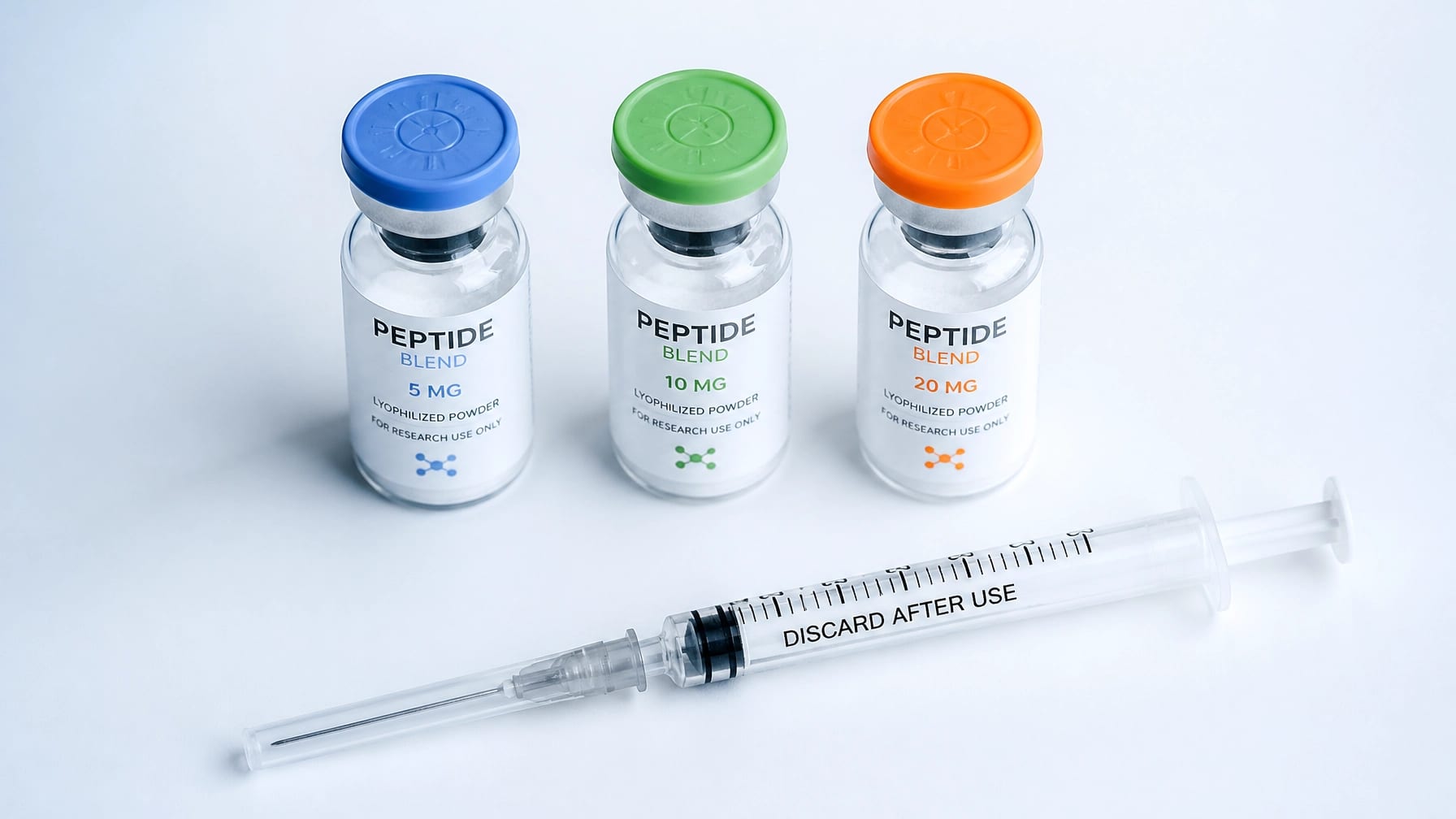
The Master Stacks: Mixing Peptides for Maximum Recovery Results

Hi Mate, it’s Matt here from WeightLossChems.
If you’ve been following our latest updates, you’ve probably seen the heavy-hitting Guide to Peptide Assisted Injury Management. It’s a massive resource for anyone looking to Unlock their body’s natural regenerative potential. But today, I want to zoom in on Chapter 12: the "Master Stacks."
In the world of research peptides, we aren't just looking at single-molecule solutions anymore. We’re moving into a phase of "scientific luxury" where we layer specific compounds to create a synergistic blast. Think of it like a high-performance engine, you don't just upgrade the spark plugs; you optimize the fuel, the air intake, and the exhaust.
When we talk about "Stacks," we’re talking about Revolutionizing the way your body handles trauma, inflammation, and long-term wear. Here is the blueprint for the three most powerful stacks in the game right now.
1. The Wolverine Stack: The Gold Standard for Tissue Repair

If you’ve ever walked into a gym or an elite athlete’s training room, you’ve heard of the "Wolverine Stack." It’s named for a reason, it’s designed to Transform the way you recover from acute physical trauma.
This stack consists of two primary research peptides: BPC-157 and TB-500.
The Scientific Function
- BPC-157 (Body Protection Compound): Derived from human gastric juice, this is the "architect" of the construction site. It triggers Angiogenesis (the creation of new blood vessels), ensuring that oxygen and nutrients actually reach the injured tissue. This is crucial for tendons and ligaments, which notoriously have poor blood supply.
- TB-500 (Thymosin Beta-4): This is the "rapid response team." It regulates Actin Sequestration, which is a fancy way of saying it tells your cells to get up and move. It mobilizes stem cells to migrate directly to the site of injury to begin the repair.
Why They Mix
When you use them together, you aren't just doubling the effect; you're creating a feedback loop. BPC-157 builds the roads (blood vessels) while TB-500 sends the trucks (repair cells). Clinical observations suggest that using this stack can potentially reduce recovery times for ligament tears by up to 50%.
The Stack Contents:
- BPC-157: 250mcg – 500mcg twice daily (SubQ).
- TB-500: 5mg – 10mg weekly for a "loading phase," then 2.5mg weekly for maintenance.
Check out our Peptide Dosing Calculator to get your reconstitution math exactly right. Nobody wants to fumble with the units when they're in the middle of a recovery cycle.
2. The Gut & Systemic Inflammation Stack: The Internal Reset

We often treat injury as a "local" problem, a bum knee, a torn rotator cuff. But if your internal systems are on fire with inflammation, your body is too "distracted" to heal properly. This is the "problem-solution" framework: identify the biological hurdle (systemic inflammation) and present the high-tech solution.
The Triple Agonist Approach for the Gut
This stack combines KPV, Larazotide, and BPC-157.
- KPV (Potassium-Lysine-Proline-Valine): A tripeptide that acts as a powerful non-steroidal anti-inflammatory. It inactivates the NF-kappaB signaling pathway, effectively turning off the alarm system that causes swelling.
- Larazotide (AT-1001): Specifically targets the "Tight Junctions" in your gut. It’s an antagonist to Zonulin, the protein that causes "Leaky Gut." By "re-zipping" your intestinal barrier, it stops toxins like LPS from entering your bloodstream and triggering a body-wide inflammatory response.
- BPC-157: As mentioned above, it heals tissue. In the gut, it repairs ulcers and soothes the lining of the colon.
Physical Transformation
When you fix the gut, you lower your C-Reactive Protein (CRP) levels. This "systemic reset" allows your body to reallocate resources toward repairing that pesky sports injury rather than fighting off imaginary invaders in your blood.
The Stack Contents:
- Larazotide: 0.25mg – 1mg taken orally 15-30 minutes before meals.
- KPV: 250mcg – 500mcg daily.
- BPC-157: 250mcg – 500mcg daily (can be taken orally or SubQ).
3. The Longevity & Resilience Stack: The Future-Proof Protocol

This stack is for the "VIP Club", the biohackers and longevity enthusiasts who want to Combat the effects of aging before they turn into permanent disabilities. We use a bioregulator-led approach here to maintain organ and tissue health.
The Resilience Components
- Cartalax: A short-chain peptide that signals Chondrocytes in your cartilage to produce more collagen. It’s a proactive way to prevent degenerative joint disease.
- Chonluten: A lung-specific bioregulator. It enhances protein synthesis in the bronchial mucosa. This is a game-changer for athletes looking to improve oxygen uptake post-injury.
- VIP (Vasoactive Intestinal Peptide): This 28-amino acid polypeptide acts as a highway interchange for your systems. It’s neuroprotective, anti-inflammatory, and helps reset your Circadian Rhythm, ensuring your body does its heavy-duty repairing while you sleep.
Why it Works
By layering these bioregulators, you aren't just patching holes; you’re reinforcing the entire structure. It’s about building a body that is "harder to break."
The Stack Contents:
- Cartalax: 10mg – 20mg per 10-day cycle, repeated twice a year.
- Chonluten: 1-2 capsules daily for 10-30 days.
- VIP Nasal Spray: 50mcg per spray, four times daily during "Step 3" of recovery.
Compliance and Safety: A Friendly Expert Tip
Hi mate, before you dive into the deep end, we need to talk about the rules of the game. If you’re a competitive athlete in Australia, you have to answer to Sport Integrity Australia and WADA.
Currently, compounds like BPC-157 and TB-500 are on the Prohibited List. They are classified as S2 (Peptide Hormones and Growth Factors). If you’re in a testing pool, these are off-limits unless you have a Therapeutic Use Exemption (TUE).
For everyone else, the key is finding a Peptide-Literate GP. You need someone who understands the TGA regulations and can monitor your biomarkers like CRP and IGF-1. Don't go "black market": the risk of contamination isn't worth the discount. High-quality sourcing from compliant labs is the only way to ensure your "scientific luxury" doesn't turn into a medical mishap.
How to Get Started
Ready to Transform your recovery? Here’s your utilitarian checklist:
- Read the Guide: Check out the full Injury Management Guide for a deep dive into every molecule.
- Calculate Your Dose: Use our Peptide Calculator to figure out your reconstitution ratios with bacteriostatic water.
- Get Your Supplies: Ensure you have 31-gauge insulin syringes and alcohol swabs ready to maintain a sterile environment.
- Monitor Your Progress: Get pre- and post-cycle blood work to prove the effectiveness of your stack.
Recovery isn't just about time anymore; it’s about technology. Use the right stacks, and you can Unlock a version of yourself that heals faster and lasts longer.
Stay sharp,
Matt
Author & Peptide Specialist, WeightLossChems

 Immune Support and Life Extension
 Khavinson Bioregulators
 Brain
Brain Skin & Hair Care Peptides
 Anxiety & Mental Health