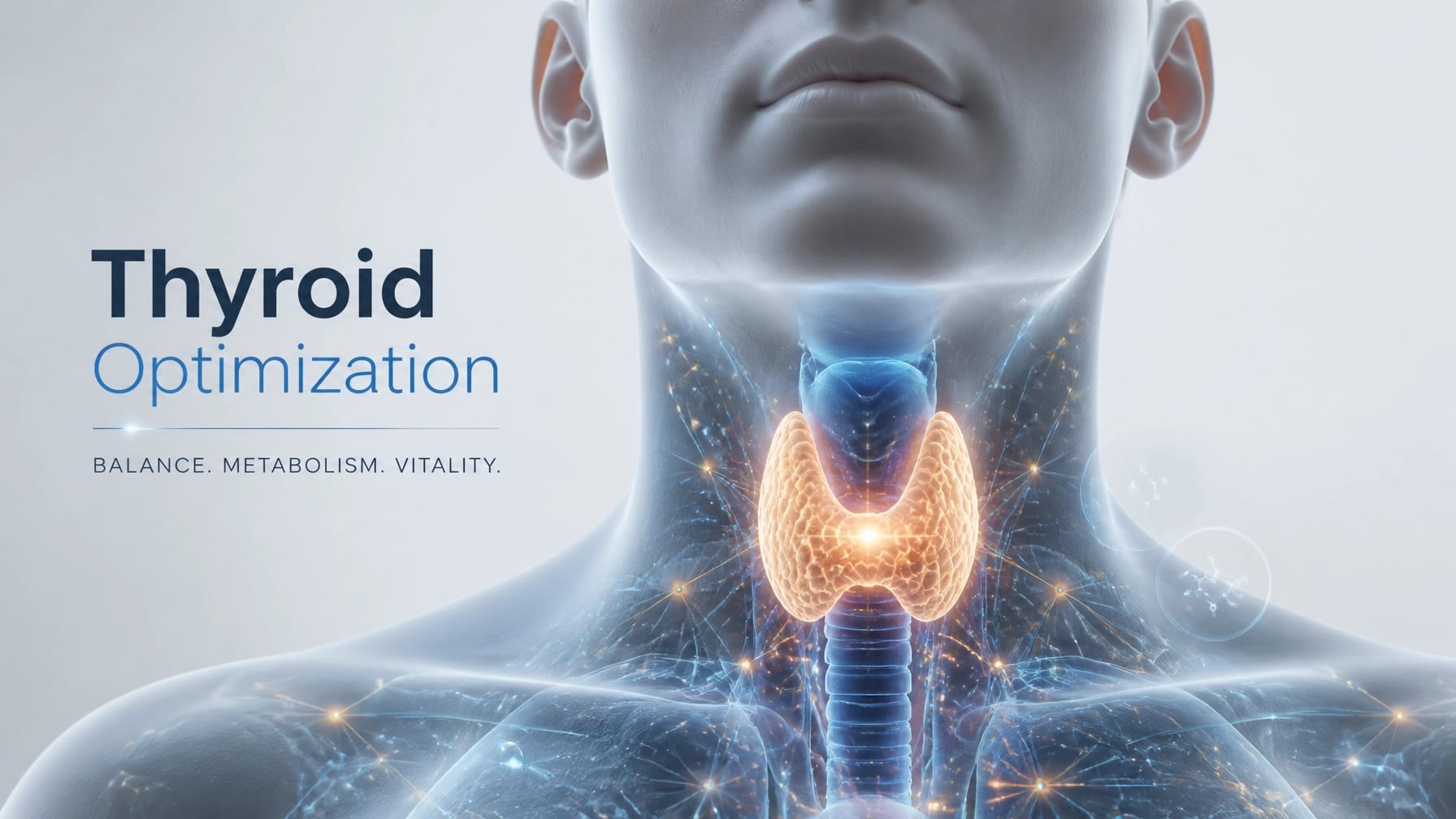
Thyroid Optimization: Navigating TRH, T3, and T4 for a High-Performance Metabolism

Hi Mate,
If you’ve been deep in the research world for a while, you know that the journey to a shredded, high-performance physique isn’t just about how much you lift or how few calories you consume. It’s about the underlying biological signals that govern your energy expenditure. Think of your metabolism like a high-performance engine; your thyroid is the thermostat and the fuel regulator all in one. If that thermostat is set to "low," it doesn't matter if you're running the highest quality "Ret" or "Tirz" protocols: you're going to feel like you're driving with the handbrake on.
Welcome to the cutting edge of metabolic science. Today, we’re diving into the Thyroid Axis, specifically how researchers are utilizing TRH, T3, and T4 to bypass metabolic plateaus and unlock a new level of "scientific luxury" in body recomposition.
The Master Switch: Understanding the HPT Axis
Before we get into the protocols, we need to talk about the chain of command. In the world of clinical luxury, we call this the Hypothalamic-Pituitary-Thyroid (HPT) Axis. It’s a sophisticated feedback loop that starts in the brain and ends at every single cell in your body.
- TRH (Thyrotropin-Releasing Hormone): The hypothalamus acts as the CEO, releasing TRH to signal that it’s time to ramp up energy production.
- TSH (Thyroid-Stimulating Hormone): The pituitary gland receives the TRH signal and acts as the middle manager, releasing TSH.
- T4 (Thyroxine): The thyroid gland produces T4, which is largely a storage or "pro-hormone."
- T3 (Triiodothyronine): This is the active form. T4 is converted into T3 in the liver and peripheral tissues. T3 is the "active key" that enters the cells and tells them to burn oxygen and produce heat.

When this system is optimized, your basal metabolic rate (BMR) is humming. You feel warm, energetic, and fat loss becomes a byproduct of your internal efficiency. When it’s suppressed: often due to chronic calorie restriction or stress: everything slows down. This is what we call "starvation mode," and it’s the number one enemy of high-performance research.
TRH: The Hypothalamic Unlock
While most people jump straight to direct hormone replacement, advanced researchers are looking at TRH (Thyrotropin-Releasing Hormone). TRH is a hypothalamic peptide that acts as the "Master Switch." Instead of just adding more hormone to the system, TRH signals your body to increase its own natural production pathways.
The beauty of TRH in a research context is its ability to support the natural regulatory pathways. By gently nudging the pituitary to release more TSH, you encourage the thyroid to function at its peak. This is often viewed as a more "holistic" way to combat the metabolic slowdown seen during intensive "cutting" phases. If you're currently researching Ret (Retatrutide) or Tirz (Tirzepatide), you know that these triple and dual agonists work best when the body's baseline thermogenesis is already active.
T3 and T4: Direct Metabolic Support
Sometimes, the research demands a more direct intervention. This is where T3 (Liothyronine) and T4 (Thyroxine) come into play.
- T4 (The Pro-Hormone): Supplementing with T4 provides a stable "reservoir" of thyroid hormone. It has a longer half-life and allows the body to convert it to the active T3 as needed. It's the "slow and steady" approach to thyroid optimization.
- T3 (The Active Hormone): T3 is the high-octane fuel. It bypasses the conversion process and directly increases cellular metabolism. However, because it is so potent, researchers must be incredibly precise. Too much T3 can lead to "muscle wasting": the exact opposite of what we want in body recomposition.
The goal of direct thyroid support isn't to blast the system into hyperthyroidism. It's to Restore and Optimize. We want to keep your T3 levels in that "high-normal" range where you are burning fat effectively but not catabolizing your hard-earned muscle tissue.

Recognizing Thyroid Dysfunction and Fatigue
How do you know if your "metabolic engine" is stalling? Clinical research points to several "soft" signs of thyroid suppression:
- Cold Extremities: Always having cold hands and feet is a classic sign that your internal thermostat is turned down.
- Hair and Skin Changes: Thinning hair (especially the outer third of the eyebrows) and dry skin are common indicators.
- Lethargy: That "mental fog" or deep-seated fatigue that caffeine can’t fix.
- Plateaus: Doing everything right: diet, training, and peptides: but the scale refuses to move.
If you are experiencing these, it may be time to evaluate your research protocol. A great place to start is by checking your basal body temperature first thing in the morning. If it’s consistently low (under 36.5°C or 97.7°F), your thyroid axis likely needs attention.
Synergistic Stacking: Thyroid and GLP-1s
One of the most exciting areas of modern metabolic research is the synergy between thyroid optimization and modern agonists. When you use a triple agonist like Ret (which already impacts glucagon and energy expenditure), adding a layer of thyroid support can "Revolutionize" the results.
By ensuring your thyroid hormones are optimized, you maximize the efficacy of your other research compounds. You are essentially ensuring the "machinery" is ready to handle the increased fat-burning signals being sent by the peptides.
To ensure you are dosing these complex compounds correctly, always utilize the Peptide Calculator available on our site. Precision is the difference between an amateur experiment and a professional research protocol. And of course, always reconstitute your peptides with high-quality Bac water to ensure stability and purity.
Safety, Monitoring, and Research Standards
Researching thyroid hormones and TRH analogs is advanced territory. Because of the impact on heart rate and bone density, a "Safety-First" mindset is mandatory.
- Monitor Heart Rate: Thyroid hormones can increase your resting heart rate. Keep a log.
- Blood Work is Non-Negotiable: You must check your TSH, Free T3, and Free T4 levels. Don't guess: measure.
- Tapering: Never stop a thyroid protocol abruptly. You need to "taper" down to allow your HPT axis to resume its natural rhythm.
At WeightLossChems, we believe in providing the tools for "Scientific Luxury." This means high-quality sourcing, precise information, and a community of researchers dedicated to longevity and performance. If you have questions about your protocol, our WLC Assistant chatbot is available 24/7 to provide guidance and answer technical queries.

Final Thoughts: The Performance Edge
Thyroid optimization isn't just for those with medical deficiencies; it's for the researcher looking to "Unlock" their peak physical potential. By navigating the complexities of TRH, T3, and T4, you can transform a sluggish metabolism into a high-performance fat-burning machine.
Stay focused, stay precise, and keep pushing the boundaries of what's possible.
Cheers,
Matt
Expert Contributor, WeightLossChems
Source Content adapted from: "The complete guide on weight loss and body recomposition peptides" by Matt. For more in-depth protocols, visit WLAustralia.

 Immune Support and Life Extension
 Khavinson Bioregulators
 Brain
Brain Skin & Hair Care Peptides
 Anxiety & Mental Health