

BAM-15 Research Guide: Mitochondrial Uncoupling and Weight Management

Hi Mate, Matt here from WLA.
If you’ve been following the cutting edge of metabolic research, you’ve likely heard the buzz surrounding "mitochondrial uncouplers." While the term sounds like something straight out of a sci-fi reactor core, it represents one of the most exciting frontiers in weight management science today. Specifically, we’re talking about BAM-15, a compound that is redefining how researchers look at fat oxidation and metabolic efficiency.
At Weight Loss Australia (WLA), we are committed to providing the community with the latest insights into high-performance research compounds. Whether you’re diving into Ret or exploring the synergy of Tirz, understanding the biological "engine" of your research subjects is key.
Today, we’re breaking down the science of BAM-15: what it is, how it works, and why it’s being hailed as a potential "holy grail" for metabolic health.
What is BAM-15?
BAM-15 (short for N5,N6-bis(2-fluorophenyl) [1,2,5]oxadiazolo[3,4-b]pyrazine-5,6-diamine) is a small-molecule mitochondrial protonophore. In simpler terms, it’s a highly selective mitochondrial uncoupler.
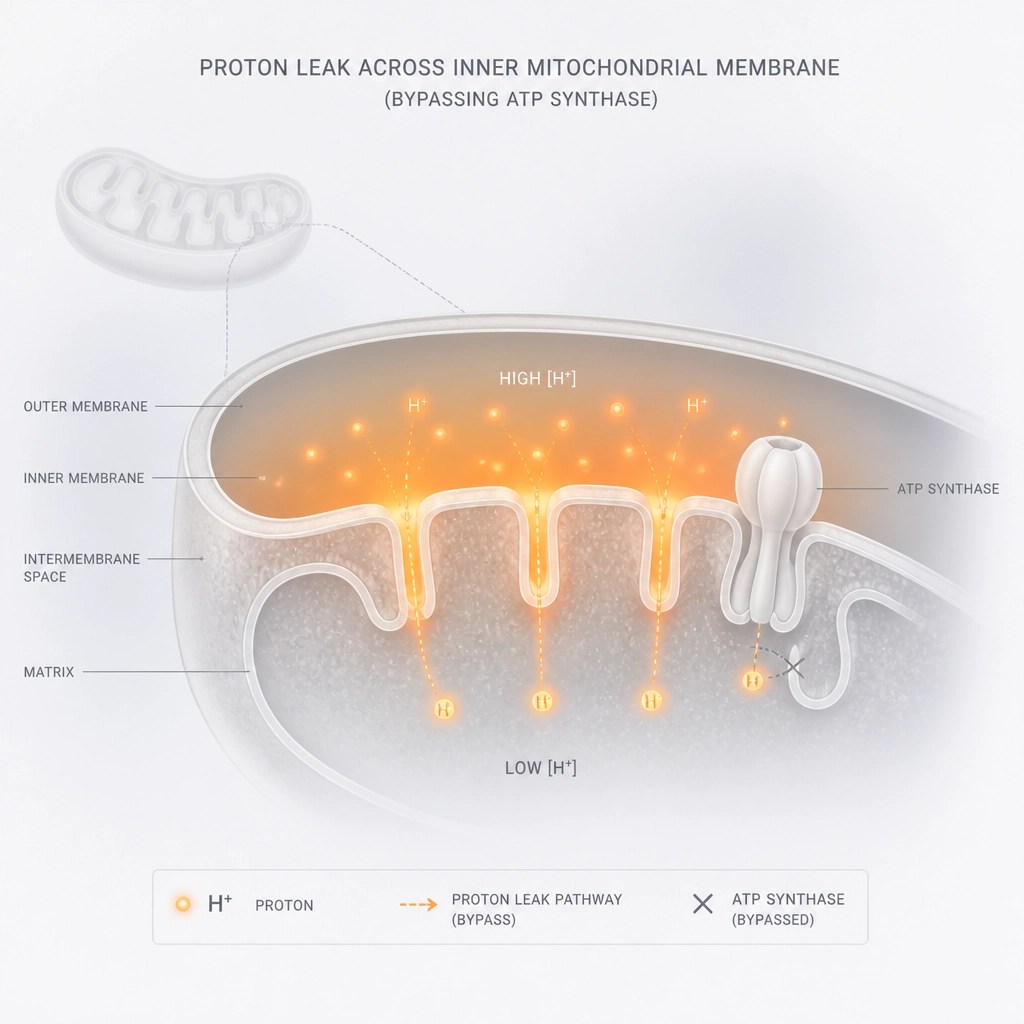
In the world of cellular biology, mitochondria are the "powerhouses" that convert nutrients (fats and sugars) into ATP (adenosine triphosphate), the energy currency of the cell. Usually, this process is "coupled", meaning the burning of fuel is directly linked to the production of energy. BAM-15 "uncouples" this process, allowing the body to burn calories without necessarily creating more ATP.
The "Wasteful" Advantage
Think of it like a car engine idling at a high RPM but not being in gear. You’re burning petrol, but you’re not moving. In a research context, this "metabolic wastefulness" is a massive advantage. By increasing energy expenditure at the cellular level, BAM-15 helps research subjects utilize stored fat as fuel even in a resting state.
Mechanism of Action: Unlocking Metabolic Pathways
To understand how BAM-15 can Revolutionize weight management research, we have to look at the proton motive force.
- Normal Respiration: Electrons from nutrients are passed through the mitochondrial membrane, creating a proton gradient. These protons usually flow through a "turbine" called ATP synthase to create energy.
- The BAM-15 Intervention: BAM-15 acts as a carrier, picking up protons and shuttling them across the membrane, bypassing the ATP "turbine."
- Caloric Burn: Because the gradient is being dissipated, the cell has to work overtime, burning more fat and sugar, to try and rebuild that gradient.
This process essentially lowers the "efficiency" of the mitochondria. While "inefficiency" is usually a bad word, in the context of combating obesity and metabolic dysfunction, it is a high-tech solution to an age-old biological problem.
Why BAM-15 is Not DNP (and Why That Matters)
If you’re a veteran of the research community, you might be thinking: "Wait, isn't this just DNP?"
For the uninitiated, DNP (2,4-Dinitrophenol) was a popular (but dangerous) uncoupler used decades ago. The problem with DNP was its lack of selectivity; it would uncouple everything, leading to a massive spike in body temperature (hyperthermia) and potential organ failure.
BAM-15 is the evolution.
Research indicates that BAM-15 is significantly more potent than DNP at stimulating oxygen consumption but has a much wider safety profile in animal models. Unlike its predecessor, BAM-15 does not appear to raise core body temperature or cause respiratory collapse at effective research doses. This makes it a "Scientific Luxury", all the fat-burning potential with a precision that was previously impossible.
Transformative Research Benefits
BAM-15 isn't just about weight loss; it’s about a total metabolic overhaul. Here are the primary outcomes seen in current preclinical studies:
1. Fat-Specific Weight Management
In rodent studies, BAM-15 has shown the incredible ability to reduce fat mass without touching lean muscle. This is a critical distinction. Many weight management protocols lead to "muscle wasting," but BAM-15 keeps the metabolism hot while preserving the structural integrity of the research subject's physique. For those focused on Muscle Growth, this makes it an intriguing compound for study.
2. Improved Insulin Sensitivity
Metabolic dysfunction often goes hand-in-hand with insulin resistance. BAM-15 has been shown to improve glycemic control and reverse insulin resistance in diabetes models. By clearing out excess lipids (fats) from the liver and muscle tissues, it helps the body regain its natural sensitivity to insulin.
3. Combatting Fatty Liver
Nonalcoholic Fatty Liver Disease (NAFLD) is a growing crisis. BAM-15 research suggests it can potently reduce hepatic triglycerides, essentially "cleaning out" the liver. This is achieved through the activation of AMPK, a master switch for energy metabolism.

Integrating BAM-15 into Research Stacks
At WLA, we see BAM-15 as a perfect companion for other metabolic powerhouses. Researchers are currently exploring how mitochondrial uncouplers interact with:
- GLP-1 and GIP Agonists: While Tirz and Ret focus on appetite suppression and insulin secretion, BAM-15 tackles the energy expenditure side of the equation.
- Longevity Peptides: Because BAM-15 can reduce mitochondrial ROS (Reactive Oxygen Species) by lowering membrane potential, it is being looked at by biohackers for its potential neuroprotective and anti-aging effects.
Utilitarian Dosing and Practicality
When conducting research with BAM-15, precision is paramount. We always recommend using our WLA Peptide Calculator to ensure your reconstructions and measurements are clinical-grade.
Standard Research Setup:
- Classification: Synthetic Mitochondrial Uncoupler.
- Format: Lyophilized Powder for research use.
- Primary Goal: Increase nutrient oxidation and metabolic rate.

The WLA Verdict: A High-Tech Solution
BAM-15 represents the shift from "brute force" weight loss to "precision metabolic engineering." By targeting the very source of energy production, the mitochondria, it offers a way to Unlock levels of fat oxidation that were previously gated by biological efficiency.
As we move toward a future where metabolic health is viewed through a lens of mitochondrial optimization, BAM-15 stands out as a premier research tool. It’s clean, it’s effective, and it’s a testament to how far science has come since the days of DNP.
Ready to take your research to the next level? Join the WLA VIP Club for exclusive drops and the latest updates on metabolic breakthroughs.
Stay sharp, research hard.
, Matt
Weight Loss Australia (WLA)
FAQ: BAM-15 Research
Is BAM-15 a SARM?
No, BAM-15 is a mitochondrial uncoupler. It does not interact with androgen receptors. It focuses entirely on energy metabolism and ATP production.
Can BAM-15 be stacked with Ret or Tirz?
In a research environment, many find that combining appetite suppressants with energy expanders like BAM-15 provides a comprehensive view of metabolic management. However, always consult current research literature for synergy data.
Does BAM-15 cause "the sweats"?
Unlike older uncouplers like DNP, BAM-15 is highly selective. In preclinical trials, it has not been shown to significantly raise core body temperature, making it a much more "luxurious" compound for sensitive research models.
Where can I find dosing tools?
Head over to the WLA Homepage and look for our Peptide Calculator tool for all your measurement needs.


 Immune Support and Life Extension
 Khavinson Bioregulators
 Brain
Brain Skin & Hair Care Peptides
 Anxiety & Mental Health


