

Revitalizing the Surface: AHK-Cu for Skin Rejuvenation and Collagen Support

Hi Mate, Matt here from the WeightLossChems team.
When we talk about the frontier of anti-aging research, most of the noise centers around systemic interventions like our high-purity Ret or Tirz research compounds. But for those dedicated to the science of dermal architecture, the conversation inevitably turns to a specific copper tripeptide that is revolutionizing how we view topical rejuvenation: AHK-Cu.
If you’ve been scouring the literature for a potent research tool to Unlock the skin’s latent regenerative potential, you’ve landed in the right place. AHK-Cu (Alanine-Histidine-Lysine Copper) is more than just a beauty ingredient; it’s a high-tech metabolic signaling molecule designed to Transform the extracellular matrix (ECM) from the inside out.
In this deep dive, we’re going to dissect the clinical pathways that make AHK-Cu a cornerstone for collagen support and anti-aging research. Let’s get into the technicals.
The Molecular Architecture: What is AHK-Cu?
Scientifically classified as a copper-binding tripeptide, AHK-Cu consists of the amino acids L-alanine, L-histidine, and L-lysine. While it shares a "copper peptide" heritage with the more famous GHK-Cu, AHK-Cu has a distinct affinity for specific metabolic pathways within the skin and hair follicles.
At WeightLossChems, we source our AHK-Cu to the highest clinical standards, ensuring that researchers are working with a compound capable of precise biological signaling. In a research setting, this blue-hued peptide acts as a catalytic agent for dermal remodeling.
Product Specifications:
- Molecular Formula: C15H24CuN6O4
- Classification: Copper Tripeptide-3
- Physical State: Lyophilized powder or aqueous solution
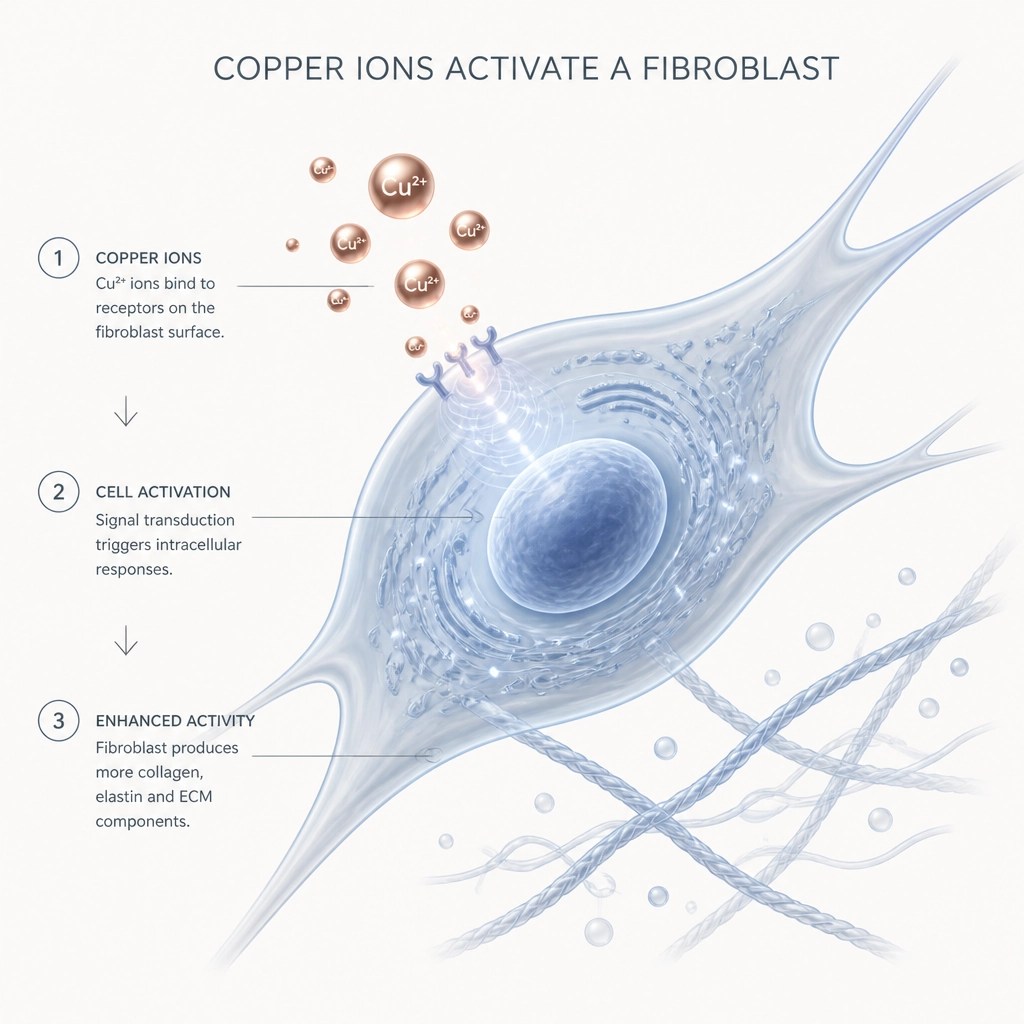
- Primary Function: Fibroblast activation and ECM synthesis
Fibroblast Activation: The Engine Room of Rejuvenation
The primary biological hurdle in skin aging is the progressive "sleepiness" of our fibroblasts. These are the cells responsible for manufacturing the structural proteins that keep skin looking tight and youthful. As we age, fibroblast activity drops, leading to a collapse in the skin’s internal scaffolding.
AHK-Cu serves as a high-octane wake-up call for these cells. Research indicates that AHK-Cu exposure can Revolutionize the dermal environment by:
- Increasing Fibroblast Proliferation: Effectively expanding the population of "worker cells" in the dermis.
- Upregulating Growth Factors: Specifically targeting TGF-β1 (Transforming Growth Factor beta 1) and VEGF, which are essential for cellular repair and vascularity.
By stimulating the growth and development of new fibroblasts, AHK-Cu addresses the root cause of dermal thinning and laxity rather than merely masking the surface.
Collagen Support: Synthesizing Strength
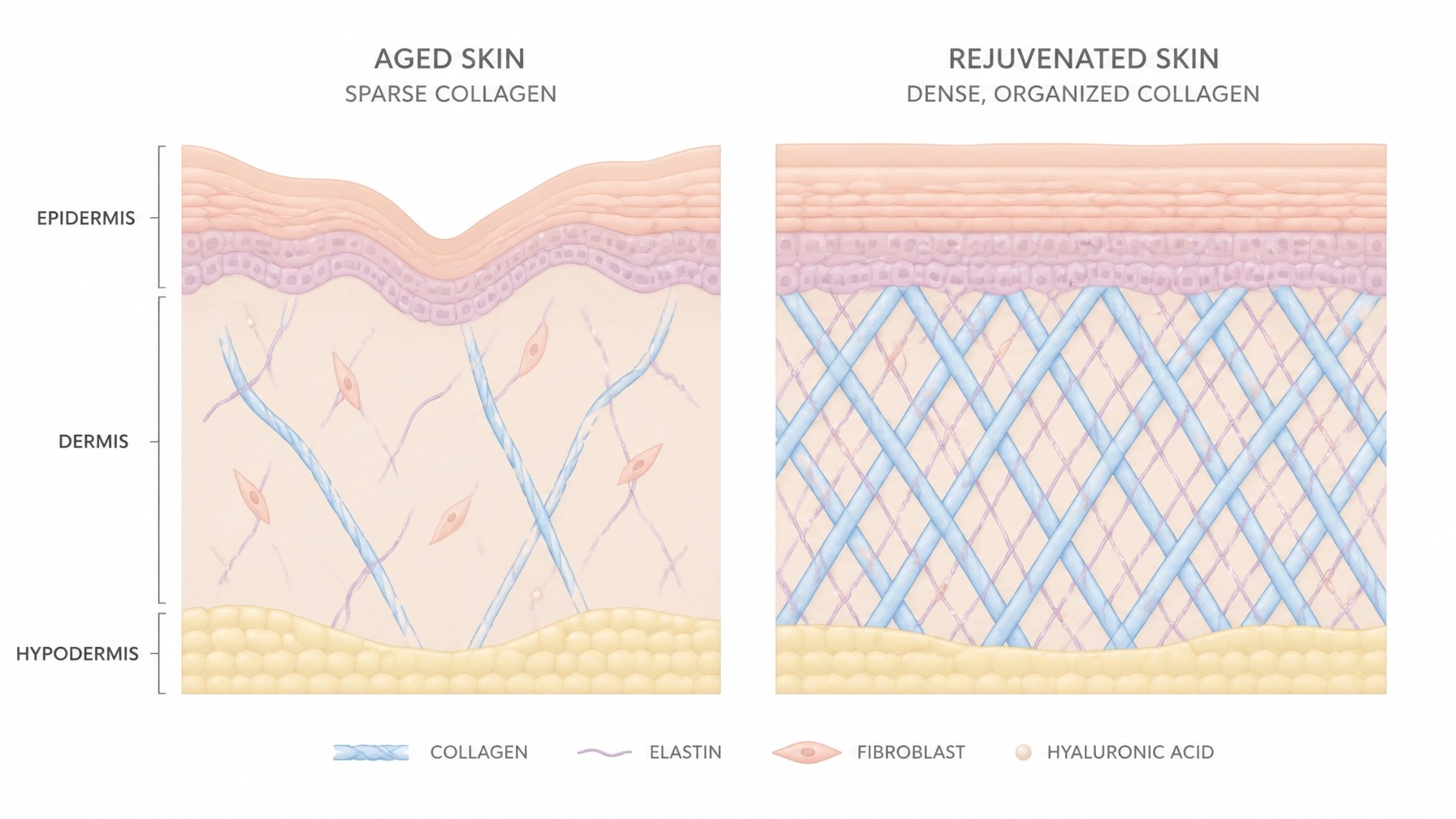
If fibroblasts are the workers, Collagen Type I is the high-strength steel they produce. Collagen Type I is the most abundant protein in the human body and is the primary component of the skin's connective tissue.
One of the most impressive AHK-Cu skin benefits identified in laboratory models is its ability to stimulate Type I collagen synthesis. Some cell studies have shown an increase of up to 300% in collagen production following AHK-Cu application. This isn't just a minor improvement; it’s a fundamental structural shift.
Beyond Collagen: The Elastin Connection
While collagen provides strength, elastin provides "snap-back." Without elastin, skin becomes brittle and prone to sagging. AHK-Cu acts as a dual-action agent, supporting the production of both collagen and elastin to ensure the skin remains resilient and pliable. For those focusing on skin-tightening research, this synergistic effect is the "holy grail" of dermal recovery.
AHK-Cu vs. GHK-Cu: The Researcher’s Choice
A common question we get at the WLC Assistant desk is: "What’s the difference between AHK and GHK?"
While both are copper peptides, their "mission profiles" differ:
- GHK-Cu: The "Generalist." It’s highly effective for overall wound healing, DNA repair, and generalized anti-inflammation.
- AHK-Cu: The "Specialist." Research suggests AHK-Cu has a higher specificity for fibroblast stimulation and is often the preferred choice in hair follicle research and targeted dermal thickening.
If your research goal is specifically the Combat of deep-set wrinkles and the restoration of structural skin density, AHK-Cu offers a specialized metabolic pathway that is hard to beat.
Experimental Application and Protocols
In the world of research chemicals, precision is everything. Whether you are conducting in vitro tests or exploring topical delivery systems, maintaining the integrity of the peptide is paramount.
We recommend utilizing our Peptide Calculator to ensure your dilutions are exact. For those integrating AHK-Cu into broader metabolic studies, it pairs exceptionally well with our AMPK peptide for a comprehensive approach to cellular longevity.
Research Kit Essentials:
- AHK-Cu Peptide: Available in various concentrations.
- Bac Water: For stable reconstitution.
- Peptide Supplies: Ensure you have the complete kit for accurate administration.

The WLC Advantage: Why Source from Us?
At WeightLossChems, we don’t just sell products; we provide the tools for scientific discovery. We understand that our community of biohackers and researchers demands the absolute best.
- Scientific Luxury: Our products are housed in premium packaging and sourced from the highest-grade labs.
- Coded Compliance: We use terms like Ret and Tirz to ensure we stay operational while providing you with the heavy hitters like Retatrutide and Tirzepatide.
- VIP Access: Join our VIP Club for Exclusive drops on new peptide strengths and limited-edition bundles.
Ready to Upgrade Your Research?
Don't let your research stall. Whether you're looking to Transform skin texture with AHK-Cu or Unlock metabolic efficiency with our triple agonist range, we’ve got you covered.
Explore the Collection:

FAQ: AHK-Cu Anti-Aging Research
Q: Is AHK-Cu better than Retinoids?
A: They work differently. Retinoids increase cell turnover, while AHK-Cu provides the copper-dependent signals to build the actual structural proteins (collagen/elastin). In a research environment, they are often used together to Revolutionize the skin's appearance.
Q: Can I mix AHK-Cu with Vitamin C?
A: Caution is advised. High concentrations of Vitamin C (L-Ascorbic Acid) can potentially chelate the copper from the peptide, rendering it less effective.
Q: How soon are results visible in research models?
A: Fibroblast activation and collagen synthesis are biological processes that take time. Significant structural changes in the ECM are typically observed over a 4 to 12-week research window.
Stay sharp, keep researching, and as always: reach out to the WLC Assistant if you need a hand!
Cheers,
Matt
Lead Content Specialist, WeightLossChems


 Peptide Supplements & Research Peptides for Better Longevity
 Scientific Fitness & Laboratory Equipment by WL Australia
 Immune and life extension
 Bioregulators
 Brain
Brain Skin & Hair
 Immune and Life Extension Peptides for Anxiety Support

