

Advanced Reconstitution Technique: The Wall Trick, Swirling & the Never-Shake Policy

You have secured your research materials, prepared your sterile workspace, and are ready to transition your peptides from their stable, freeze-dried (lyophilized) state into a liquid solution. It seems simple enough: add water, and you're done. However, this is the exact moment where most researchers: both novice and experienced: unintentionally compromise the integrity of their sequence.
In this third installment of our Advanced Reconstitution & Stability Series, you will learn why the physical method of mixing is just as critical as the chemical purity of your solvent. Consider this: if a peptide is a precision-engineered car engine, reconstitution is the process of putting the oil in. Do it too fast or too aggressively, and you risk mechanical failure before the engine even turns over.
The Physics of Fragility: Why Shaking is the Enemy
To understand why we never shake a vial, you must first understand Shear Force. Imagine a delicate piece of origami. If you place it in a jar and shake it violently, the paper will crumple, tear, and lose its specific shape. Peptides are essentially molecular origami. They rely on a very specific three-dimensional shape: called "folding": to interact with receptors in your biology.
When you shake a vial, you create turbulent flow. This high-velocity movement creates mechanical stress that can literally pull the peptide chains apart or cause them to "unfold" (denature). Furthermore, shaking introduces millions of tiny air bubbles. At the surface of every air bubble, the surface tension is high enough to attract and trap peptide molecules, causing them to clump together in a process called aggregation.
The Problem: Once a peptide is denatured or aggregated through shaking, it is often biologically useless. You are no longer researching a precision tool; you are researching a broken sequence.
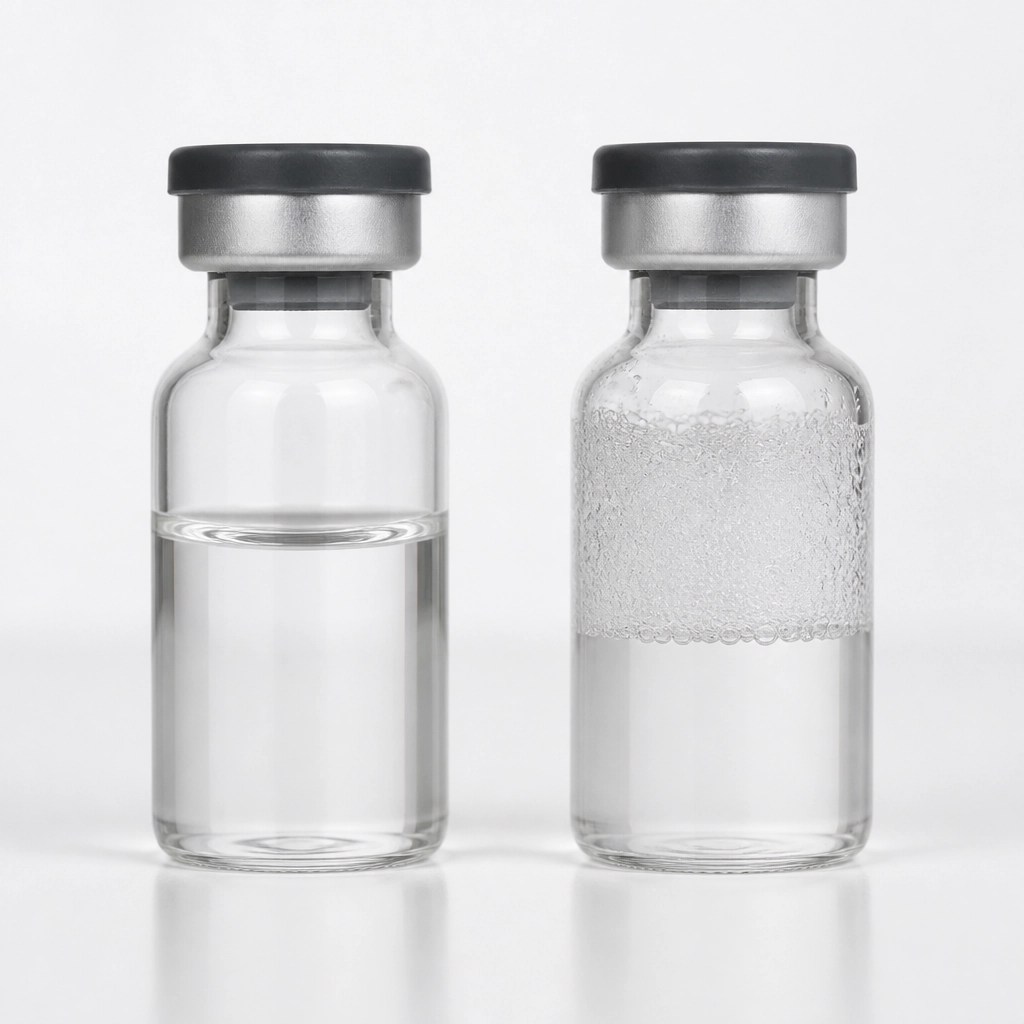
The Solution: The "Wall Trick" Technique
The first line of defense in protecting your peptide’s structural integrity is the Wall Trick. This technique is designed to minimize the impact of the solvent as it enters the vial. Focus on these steps to master the gentle entry:
- Prepare Your Syringe: Draw up your required volume of Bacteriostatic Water or solvent.
- The Angle of Entry: Instead of pushing the needle straight down into the center of the vial, insert it at a 45-degree angle.
- Find the Glass: Aim the tip of the needle so it is touching the upper interior wall of the glass vial, well above the powder "cake."
- The Slow Release: Depress the plunger slowly. You want the liquid to run down the side of the glass like a gentle stream rather than a high-pressure jet.
By letting the water "crawl" down the wall, you avoid "blasting" the powder. Direct impact can create localized heat and shear stress, which is exactly what we want to avoid.
Swirling vs. Shaking: Mastering Laminar Flow
Once the liquid is in the vial, the urge to shake it until clear is strong. You must resist this. Instead, you will employ Laminar Mixing through the art of swirling.
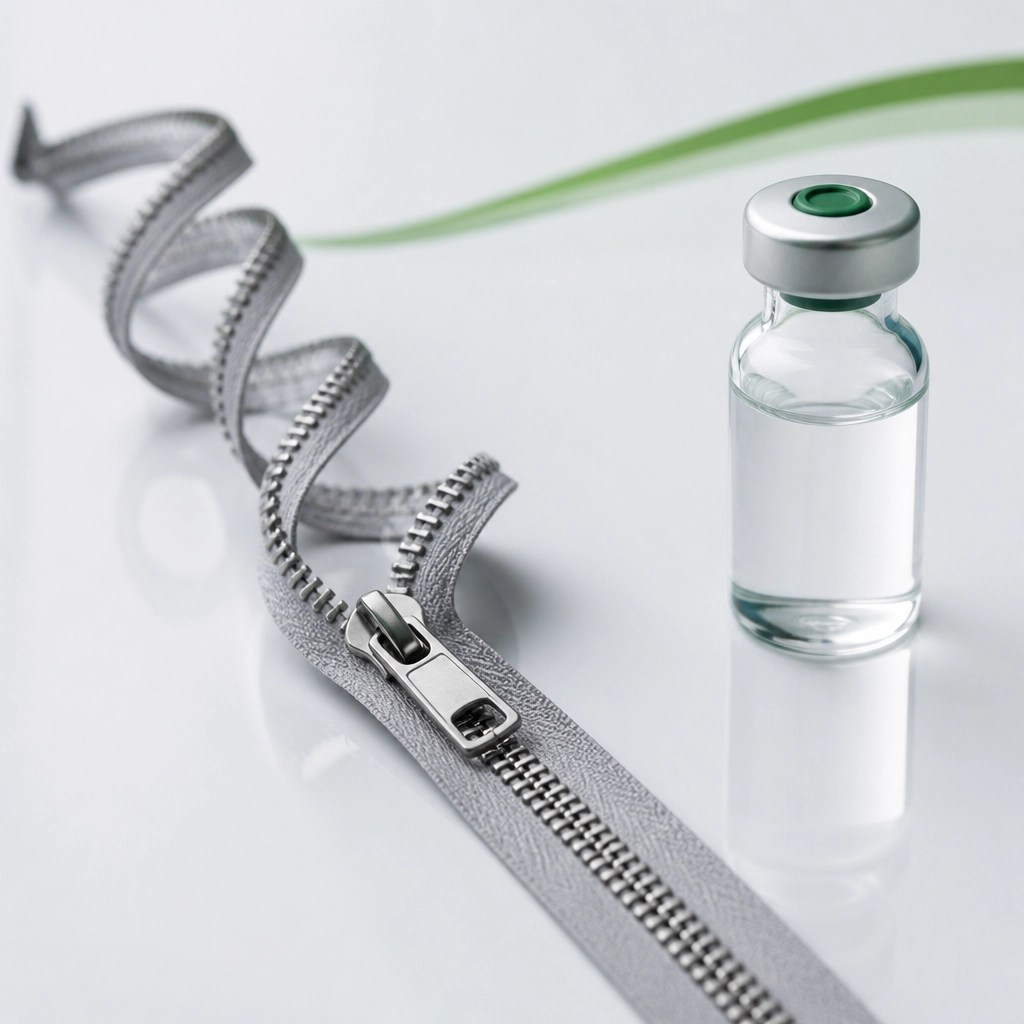
Consider this analogy: Think of a zipper. If you try to force a zipper together by shaking the jacket, it will never align. You have to gently guide the slider along the track. Swirling is that gentle guidance.
The Technique: The Palm Roll
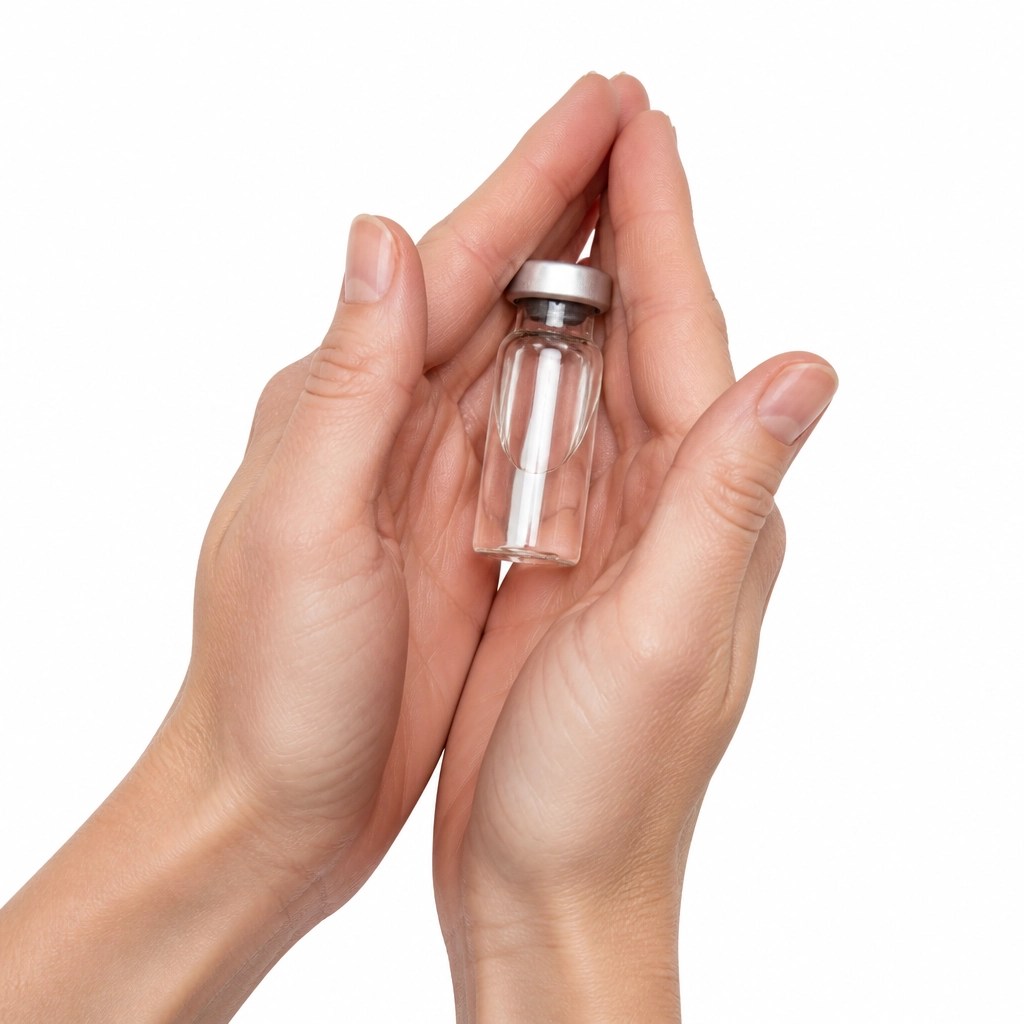
Instead of shaking, take the vial and place it vertically between your two palms. Gently roll the vial back and forth. This creates a soft, circular motion in the liquid that encourages the solvent to "wet" the powder without creating air bubbles or foam.
Why it works: Swirling keeps the liquid movement smooth and predictable. This allows the peptide molecules to hydrate and find their natural folded state without being battered by turbulence.
The 20-Minute Rule: The Power of Patience
In our fast-paced world, we want immediate results. However, high-quality reconstitution takes time. Some complex sequences or highly concentrated solutions may not dissolve instantly.
The Protocol for Complete Dissolution:
- Initial Swirl: Roll the vial for 30–60 seconds.
- The Wait: Set the vial down on a flat surface and wait 5 minutes.
- Check for Clarity: Look for the Tyndall Effect (tiny reflections of light from undissolved particles).
- Repeat: If the solution is still cloudy or has visible "floaties," give it another gentle 30-second roll and wait another 10 minutes.
Most peptides will fully dissolve within 5 to 20 minutes. If you are researching more "stubborn" sequences, it can occasionally take longer. Never resort to shaking to "speed it up." If it doesn't dissolve with patience and gentle swirling, there may be an issue with the pH level, which we will cover in the next article of this series.
The "Never-Shake" Policy: Your New Standard
Adopting a strict Never-Shake Policy is the mark of a responsible researcher. Whether you are working with bioregulators or nootropics, the rules of physics remain the same.
| Feature | Shaking (Incorrect) | Swirling (Correct) |
|---|---|---|
| Flow Type | Turbulent | Laminar |
| Air Introduction | High (Foaming) | Minimal (Clear) |
| Molecular Impact | High Shear (Risk of Denaturation) | Low Stress (Maintains Folding) |
| Result | Potential Potency Loss | Maximum Stability |
Biological Integrity and Regional Context
In the Australian climate, temperature fluctuations can already put stress on your materials. By mastering the Wall Trick and the Never-Shake Policy, you are removing one of the biggest variables in research failure. You are taking control of the biology by ensuring that the "molecular zipper" is perfectly aligned before the study even begins.
Safety and legal compliance are your foundation. Always ensure your research is conducted within local guidelines and under appropriate oversight. By treating your sequences with the respect their complexity deserves, you unlock the true potential of your research.
In the next article, we will move into the more technical realm of pH Adjustment Protocols, teaching you how to handle peptides that refuse to dissolve in standard bacteriostatic water.
Ready to level up your lab? Visit our Shop All section for the latest in high-stability research materials.


 Are Scientific Research Immune Support Products Effective?
 Are Research Chemicals & Bioregulators the Future of Scientific Labs 2026?
 Brain
Brain Are Skin & Hair Care Products Australia the Best Choice for You?
 WL Australia Peptides for Anxiety & Longevity Research Support


