

Lyophilized Powder, Reconstitution & Storage: The Complete Guide to Peptide Handling

Welcome back to the Responsible Researcher Series. In our previous installment, we discussed the mindset required to step away from "spoon-fed" information and toward true biological self-sufficiency. Today, we move from the mental to the physical.
Think of your peptides as high-performance components for a precision engine. You wouldn't leave a Ferrari fuel injector out in the rain or toss it into a hot trunk; similarly, your research materials require a specific environment to remain functional. If you want to unlock the potential of gut health supplements or immune system boosters, you must first master the art of preservation.
In this guide, you will learn the "why" and "how" of peptide handling: from the moment the vial hits your doorstep to the delicate process of reconstitution and travel.
Understanding the "Puck": What is Lyophilized Powder?
When you receive a vial, you won't see a liquid. Instead, you'll see a solid, white "cake" or "puck" at the bottom. This is lyophilized powder.
The Analogy: Imagine a fresh strawberry. If you leave it on the counter, it rots in days. But if you freeze-dry it, you remove the water while keeping the structure and nutrients intact for years. Lyophilization is "freeze-drying" for peptides. By removing the moisture, we put the peptide into a state of suspended animation.
The Problem: While the powder is stable, it is not invincible. The chemical bonds holding those amino acids together are like the teeth of a delicate zipper. If you apply too much heat, light, or physical force, you "jam the zipper," rendering the peptide useless.
Temperature Control: The Three Safety Zones
Temperature is the primary driver of peptide degradation. In Australia’s harsh climate, a vial left in a mailbox or a hot car can lose potency in hours. You must treat your storage like a tiered security system.
| Storage Zone | Temperature | Purpose | Shelf Life |
|---|---|---|---|
| Deep Freeze | -20°C to -80°C | Long-term "Vault" storage | 2–5 Years |
| Standard Fridge | 2°C to 8°C | Active research vials | 1–3 Months |
| Room Temp | 20°C to 25°C | Short-term handling/transit | Days to Weeks |
Focus on the "Goldilocks Zone"
For most researchers, the refrigerator (2–8°C) is the sweet spot. It keeps the "molecular engine" cool enough to prevent breakdown without the risks associated with frequent freeze-thaw cycles.
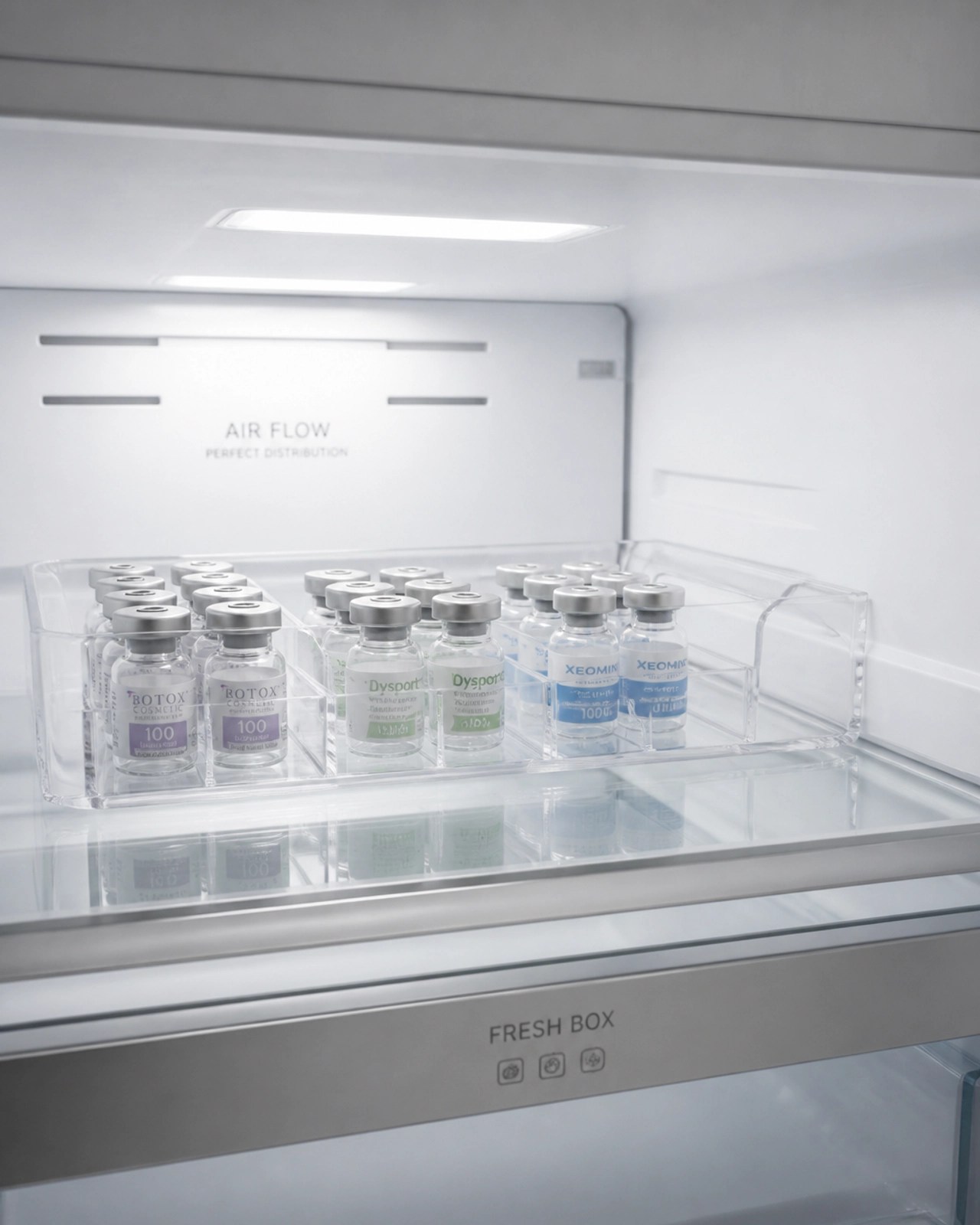
Instructional Note: Avoid storing your vials in the refrigerator door. The constant opening and closing cause "temperature spikes." Instead, place them in a dedicated container toward the back of the fridge where the environment is most stable.
The Vampire Rule: Shielding from UV Light
Light is the second great enemy of your research. Specifically, UV light causes photo-degradation.
The Science: Certain amino acids (like Tryptophan and Tyrosine) act as tiny antennae for light. When they absorb UV rays, they undergo a chemical reaction that breaks the peptide bond. This is why many high-quality gut health blends are kept in dark or opaque environments.
The Solution:
- Use Amber Vials: Whenever possible, choose amber-colored glass which filters out harmful wavelengths.
- The Foil Shield: If your vials are clear, consider wrapping them in a layer of aluminum foil or placing them in an opaque "dark box" inside your fridge.
- Blackout Storage: Integrating light protection into your routine is simple: keep the lights off in your workspace until you are ready to begin, and return vials to their dark storage immediately after use.

Handling and Physical Shock: Don't Shake the Baby
A common mistake among novice researchers is treating a peptide vial like a bottle of orange juice. You must never shake a reconstituted peptide.
The Analogy: Think of a reconstituted peptide like a delicate glass sculpture suspended in water. If you shake the container, the sculpture shatters.
Practical Steps for Handling:
- The Slow Drip: When adding Bacteriostatic (BAC) water to your lyophilized powder, aim the needle at the side of the glass wall. Let the water "trickle" down slowly.
- The Gentle Swirl: To encourage dissolution, gently roll the vial between your palms. Never flip it upside down or shake it vigorously.
- Spotting Ruin: If your solution remains cloudy after several minutes of gentle swirling, or if you see "floaties" (particulates), the peptide may have been damaged by physical shock or rapid pressure changes.
Travel and Transit: Protecting Your Investment
If you need to move your research materials, you face two challenges: thermal stability and physical shock.
1. Stabilizing Lyophilized Powders
Lyophilized powder is surprisingly hardy during travel. It can survive a few days at room temperature (e.g., in a suitcase) provided it is kept dry and dark. However, once you arrive at your destination, it must be returned to a refrigerator immediately.
2. Protecting from Physical Shock
During transit, vials can bounce around, causing the delicate powder cake to break apart or the glass to crack.
- Action Item: Use a foam-lined travel case. Ensure there is no "wiggle room" for the vials to move.
- Secure Packaging: If you don't have a professional case, wrap each vial in bubble wrap and place them in a hard-shell container (like a tupperware box) to prevent crushing.
3. Thermal Stability in Transit
For reconstituted solutions, travel is more complex. You will need an insulated pouch with a small gel cold pack. Note: Do not let the vial touch the ice pack directly, as this can cause localized freezing and potentially damage the peptide bonds.

Safety, Compliance, and Professional Oversight
While these guidelines empower you to take control of your biological research, they are not a substitute for professional medical guidance. In Australia, the use of peptides for research must align with local regulations and clinical oversight.
The Path Forward: Before you even think about "mcg per tick" (which we will cover in the next article), you must be disciplined enough to maintain your workspace. A messy storage environment leads to a messy result.
Final Pre-Storage Check:
- Is the vial sealed tight?
- Is it shielded from light?
- Is the temperature logged?
- Have you labeled it with the "Date of Reconstitution"?
Conclusion: The Responsibility of the Researcher
You are no longer just a consumer; you are a researcher. By mastering the storage of your immune system boosters and understanding the fragility of lyophilized powder, you have laid the foundation for successful optimization.
In our next article, we will tackle the "Math Monster": Milligrams, Milliliters & Concentration. Get your calculators ready( it’s time to get precise.)


 Are Scientific Research Immune Support Products Effective?
 Are Research Chemicals & Bioregulators the Future of Scientific Labs 2026?
 Brain
Brain Are Skin & Hair Care Products Australia the Best Choice for You?
 Are WL Australia Peptides Helping with Anxiety & Longevity?


