Wound Healing and Muscle Recovery: How Chrysalin and Gotratrix Accelerate Injury Repair

A hard training session can leave you with more than muscle soreness. A sprint may strain a hamstring. A fall may cause a bone bruise. A cut, surgical incision, or tendon injury can interrupt your routine for weeks.
Your body already has a repair system. It works like a construction crew: inflammation clears damaged material, new cells rebuild the structure, and blood vessels deliver oxygen and nutrients to the site. The problem is that this crew may work slowly when an injury is large, blood flow is poor, or the tissue is repeatedly stressed.
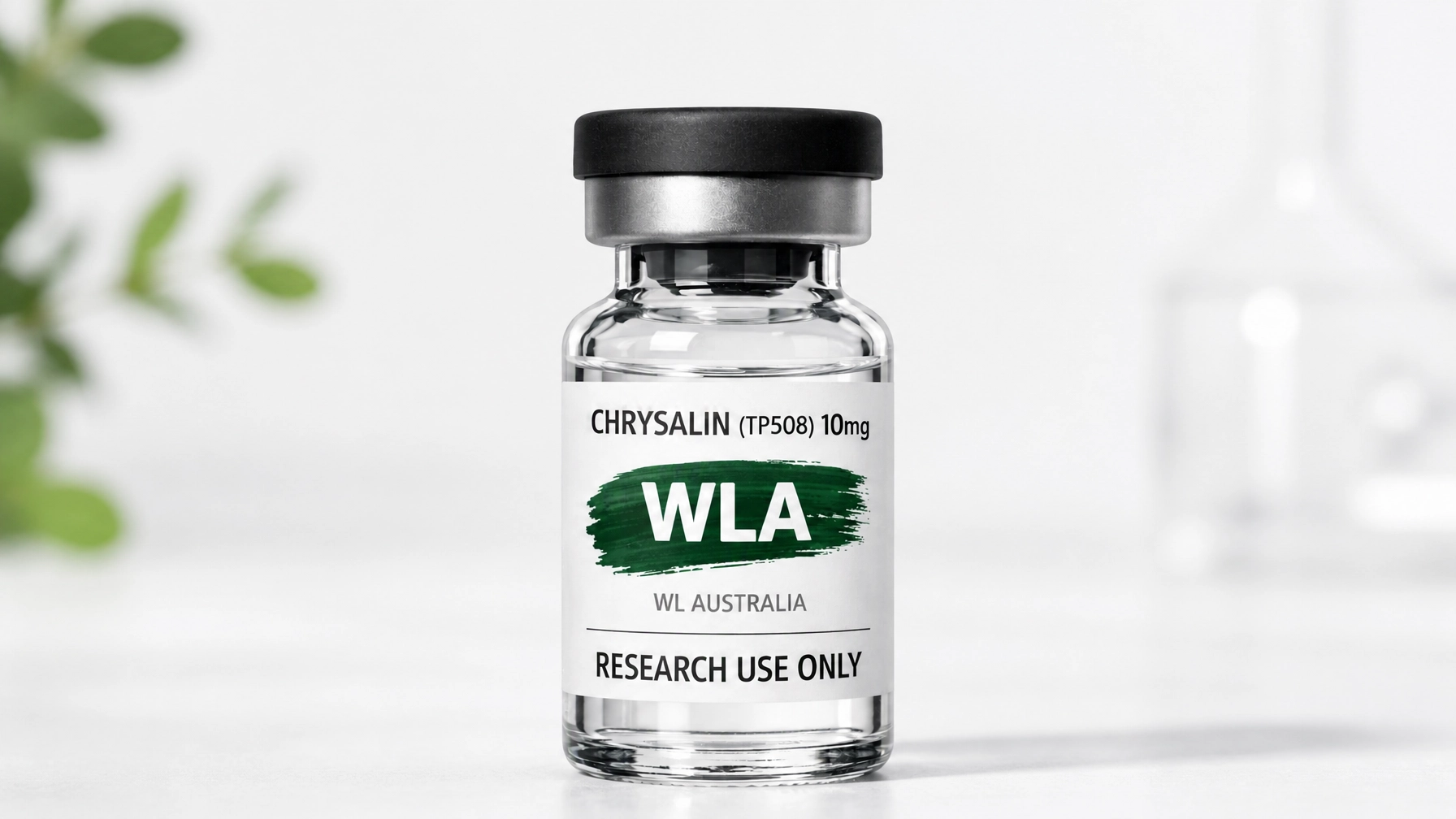
Targeted peptides are being researched as biological signals that may help coordinate these repair processes. Two names discussed in this area are Chrysalin, also known as TP508, and Gotratrix, often written as Gotratix in WL Australia’s educational material.
They are not interchangeable. Chrysalin is primarily researched for wound and bone repair, while Gotratix is positioned as a muscle-specific bioregulator. Used together in research models, they represent a tissue-focused approach to recovery.
Important: Products discussed in this article are research chemicals, not approved treatments for self-use. WL Australia states that its research products are intended strictly for laboratory and research purposes and not for human or animal use. Do not use them to treat an injury. Speak with a qualified Australian healthcare professional about diagnosis and appropriate care.
Why injuries can be slow to heal
The first frustration after an injury is often simple: you want to recover, but the tissue is not ready.
Healing is not one event. It is a sequence of overlapping stages:
- Inflammation: The body identifies damage and sends immune cells to the area.
- Proliferation: New cells, connective tissue, and small blood vessels begin forming.
- Remodelling: The repaired tissue gradually becomes stronger and more organised.
Think of the injury as a damaged road. First, the obstruction must be cleared. Next, temporary lanes are built. Finally, the road is resurfaced and tested under load.
If circulation is limited, inflammation remains excessive, or the area is stressed too soon, progress can slow. That may lead to persistent swelling, weakness, reduced mobility, or repeated injury.
Targeted peptides are studied because they may act like instructions sent to the repair crew. Rather than supplying only raw materials, they may influence cellular behaviour, including migration, proliferation, blood-vessel formation, and tissue organisation.
The goal is not to force healing. It is to understand how the body’s repair signals might be supported.

Chrysalin (TP508): supporting wound and bone repair research
Chrysalin is a synthetic 23-amino-acid peptide derived from a receptor-binding region of human prothrombin. An amino acid is a small building block used to form proteins and peptides.
Although Chrysalin is related to thrombin, it is not being discussed as a conventional clotting enzyme. Research has focused on how TP508 interacts with receptors on cells involved in tissue repair, including fibroblasts, endothelial cells, and bone-forming cells.
The problem: damaged tissue needs more than time
A wound or bone injury requires a coordinated supply chain. New tissue needs oxygen, nutrients, structural proteins, and an organised cellular response. If blood vessels do not reach the area efficiently, the repair process can stall.
The research solution: coordinate cellular repair signals
Preclinical research suggests that TP508 may support several parts of this process:
- Cell migration: Encouraging repair-related cells to move towards the injury.
- Cell proliferation: Supporting the production of new cells.
- Extracellular matrix formation: Helping create the framework around cells that gives tissue structure.
- Revascularisation: Supporting the development of new functional blood vessels.
- Bone repair signalling: Influencing early responses involved in fracture and bone-defect healing.
In one animal wound study, topical TP508 was associated with faster wound closure and increased revascularisation. In fracture models, treatment was linked with stronger callus formation and more blood vessels within the healing area.
This is promising research, but the distinction matters: animal findings do not prove that the same result will occur in people.
Human research has also been mixed. Early clinical studies examined TP508 in diabetic foot ulcers and fractures. While some wound-healing results were encouraging, a larger Phase 2b distal-radius fracture trial did not demonstrate a clear benefit over placebo. Chrysalin remains investigational and is not an approved routine therapy.
You can review the scientific background in the PubMed review of TP508 and tissue repair and the preclinical wound-healing study.
[VIDEO PLACEHOLDER : How Chrysalin (TP508) is being researched in wound and bone repair
Suggested video: an animated explanation of inflammation, cell migration, blood-vessel growth, and tissue remodelling. Include a clear “research only” disclaimer.]
Gotratrix/Gotratix: a muscle-focused research concept
The second frustration is different. You may not have an open wound or fracture, but your muscles can still be damaged by training.
During demanding exercise, muscle fibres experience small disruptions. These are commonly called micro-injuries. They are part of the adaptation process, but the muscle still needs time, nutrition, rest, and circulation to repair itself.
A larger strain is more serious. It may involve overstretched or torn muscle fibres, pain, bruising, weakness, and restricted movement.
The problem: returning to training too quickly
Many active people follow the same cycle:
- Training creates muscle stress.
- Soreness appears.
- The person feels better after a short rest.
- Training resumes before the tissue has regained strength.
- The injury returns.
This is like repainting a wall before the plaster underneath has set. It may look improved, but it is not ready for pressure.
The research solution: muscle-specific signalling
WL Australia’s educational material describes Gotratix as a muscle-specific peptide bioregulator associated with the A-18 muscle peptide complex. The foundational material supplied for this article refers to it as Gotratrix.
Bioregulators are described as short peptide signals intended to influence tissue-specific cellular activity. In the muscle-recovery context, the proposed focus includes:
- Muscle protein synthesis, the process of creating and repairing muscle proteins.
- Cellular energy production, including mitochondrial function.
- Recovery from training-related micro-injuries.
- Support for muscle tissue after strain or overuse.
The analogy is a sports team. Protein, calories, sleep, and rehabilitation provide the equipment, fuel, and training plan. A signalling peptide is proposed to act more like the coach communicating which part of the team needs attention.
However, current independent evidence for Gotratix/Gotratix in human sports injury recovery is limited. The available information is primarily product and educational material rather than robust, peer-reviewed clinical trials. Claims about faster recovery from muscle strains should therefore be treated as research hypotheses, not established medical outcomes.
Read the WL Australia Gotratix muscle-health research article for the product’s stated research context. Do not interpret its protocol descriptions as instructions for personal treatment.

Why researchers may study both peptides after a sports injury
Consider a realistic scenario.
You land awkwardly during a weekend football match. Your upper leg is painful and tight, suggesting a muscle strain. Imaging also identifies a nearby bone bruise. The injury is not one problem; it involves two different tissues.
That is where a combined research model becomes interesting:
| Injury component | Research focus | Peptide discussed |
|---|---|---|
| Muscle strain or fibre damage | Muscle tissue repair and recovery signalling | Gotratrix/Gotratix |
| Bone bruise or bone injury | Bone repair, cellular response, and vascular support | Chrysalin (TP508) |
| Overall rehabilitation | Restoring mobility, strength, and safe loading | Clinician-led rehabilitation |
The proposed logic is tissue specificity. Gotratix is discussed in relation to the muscle “team,” while Chrysalin is researched in relation to wound and bone repair. Combining them may appear comprehensive because it addresses more than one structure.
But more products do not automatically mean better recovery. A combined protocol can introduce unknown interactions, make it difficult to identify adverse effects, and distract from essential care such as imaging, immobilisation, physiotherapy, gradual loading, and adequate nutrition.
[VIDEO PLACEHOLDER : One injury, two tissues: understanding muscle strain and bone bruise recovery
Suggested video: a clinician-led explainer showing how a sports injury is assessed, why imaging may be needed, and how rehabilitation progresses from protection to controlled loading.]
A safer recovery framework
Whether you are managing a minor training setback or a significant injury, start with the fundamentals.
1. Confirm what is injured
Pain alone cannot reliably distinguish a strain, tendon injury, fracture, bone bruise, or joint problem. Seek medical assessment for severe pain, deformity, inability to bear weight, significant swelling, numbness, spreading redness, fever, or pain that is worsening.
2. Protect the damaged area
Follow professional advice on rest, support, elevation, and activity modification. Do not “test” a suspected fracture or return to sport simply because pain has temporarily reduced.
3. Support the repair environment
Adequate sleep, protein, energy intake, hydration, and medically appropriate movement give the body the materials and conditions it needs. These are the foundations of recovery.
4. Progress gradually
Rehabilitation is a staircase, not a leap. Progress from pain-free movement to controlled strength work, then sport-specific activity. Your physiotherapist or doctor can define suitable milestones.
5. Treat peptides as research: not self-treatment
Chrysalin and Gotratrix are not substitutes for diagnosis or rehabilitation. In Australia, product legality, quality, handling, importation, and use can involve regulatory requirements. Review the WL Australia legal disclaimer before considering any research material.
The key takeaway
Chrysalin and Gotratrix represent two different research directions: Chrysalin for wound and bone-repair signalling, and Gotratrix for muscle-focused recovery research.
The science is most compelling when it explains how healing works: cells migrate, new vessels form, connective tissue develops, and damaged structures remodel. But promising mechanisms are not the same as proven treatment outcomes.
Use the information to ask better questions, not to bypass medical care. Confirm the injury. Follow a structured rehabilitation plan. Track progress. Keep safety, evidence, and compliance at the centre of every recovery decision.
Recovery is a process. Precision helps; but responsible care comes first.
This article is for general educational purposes only. It does not diagnose, prevent, or treat any condition and is not medical advice. Chrysalin (TP508) and Gotratrix/Gotratix products discussed here are research chemicals and must not be used in humans or animals. Consult a qualified healthcare professional before making decisions about an injury or recovery plan.

 Immune Support and Life Extension
 Shop Bioregulators & Research Chemicals for 2026 Scientific Labs
 Brain
Brain Buy Hair & Skin Care Peptides Australia – Top Quality & Best Prices
 Discover WLAustralia Peptides for Anxiety Relief & Longevity