

Bacteriostatic vs Sterile Water: Choosing, Testing & pH Management

Think of your lyophilized (freeze-dried) peptide as a high-performance sports car engine sitting in a crate. It has incredible potential, but it can’t go anywhere without the right fuel and lubricant. In the world of bioregulators and research, your solvent: usually water: is that fuel.
If you use the wrong type of water, or if the water’s chemistry is "off," that expensive engine might stall, rust, or fail to start altogether. You will learn how to choose between Bacteriostatic and Sterile water, why pH is the secret dial for stability, and how to test your setup like a pro.
The Problem: Longevity vs. Purity
A common frustration for many researchers is seeing a peptide solution go "cloudy" or lose its "kick" before the vial is empty. This often happens because the water choice didn't match the intended use.
Bacteriostatic Water (BAC)
Bacteriostatic Water is sterile water containing 0.9% Benzyl Alcohol. Think of Benzyl Alcohol as a security guard for your vial. It doesn't necessarily kill every germ on contact, but it stops them from "breeding" or multiplying.
- Focus on: Multi-dose vials. If you plan to draw from the same vial over 2 to 4 weeks, BAC water is your standard.
- Shelf Life: Once opened, a vial of BAC water is typically reliable for about 28 days if stored correctly.
- The "Burn": Because of the alcohol, some users report a slight stinging sensation at the injection site. This is the trade-off for multi-day safety.
Sterile Water for Injection (SWFI)
Sterile Water is exactly what it sounds like: H2O that has been sterilized but contains no preservatives.
- Consider this: Single-use only. Once you pop the top, the "security guard" isn't there. If a single bacterium enters the vial, it has a free pass to take over.
- The Benefit: It is generally gentler on the peptide’s delicate structure and doesn't cause the "benzyl sting."
- The Risk: If you don't use the entire reconstituted vial immediately, you must discard the rest. Storing reconstituted peptides in plain sterile water for more than a few hours is a recipe for contamination.

The pH Factor: Why Acidity Matters
Peptides are like zippers. For the zipper to work, the teeth need to line up perfectly. If the environment is too acidic or too basic (alkaline), those "teeth" (amino acids) can warp, preventing the peptide from folding into its active shape. This is called denaturation.
Most commercial waters have a pH range:
- Sterile Water: Usually pH 5.0 to 7.0.
- BAC Water: Usually pH 4.5 to 7.0.
While these ranges are "near neutral," even a small slide toward the acidic or basic side can change how well a peptide dissolves (solubility) and how long it stays active (stability).
The Synergy of Stability
Most synthetic peptides, like those found in our bioregulators collection, prefer a slightly acidic environment for long-term storage. When the pH is around 5.0 to 6.0, the peptide is essentially "in hibernation," resistant to breaking down. However, for the best comfort during use, a neutral pH (around 7.0 to 7.4) is ideal.
How to Test Your Water's pH
Don't guess: measure. Just as a mechanic uses a dipstick to check oil, you should check your solvent.
Option A: pH Test Strips (The Quick Check)
These are affordable and easy to use. You dip the strip, wait a few seconds, and match the color to a chart.
- Accuracy: Low (±0.5 to 1.0).
- Best for: Confirming your water isn't "extreme" (e.g., ensuring it hasn't turned highly acidic due to poor storage).
Option B: Digital pH Meter (The Professional Way)
For serious researchers, a digital meter is the gold standard. It gives you a numerical readout that eliminates the guesswork of color-matching.
The Mentor’s Guide to Testing:
- Sanitize: Swab the top of your water vial with alcohol.
- Aliquot: Withdraw 1-2ml of water and squirt it into a clean, small glass beaker or cup. Never dip your tester directly into the original vial; you will contaminate the whole batch.
- Calibrate: If using a digital meter, ensure it is calibrated using a pH 7.0 buffer solution first.
- Test: Dip the probe into your small sample.
- Discard: Once tested, throw the sample away. Do not put it back in the vial.

Ideal pH Ranges for Common Sequences
Different peptides have different "comfort zones." If your peptide isn't dissolving (clumping at the bottom), it’s usually a signal that the pH is wrong for that specific sequence.
| Peptide Sequence | Ideal Storage pH | Solubility Notes |
|---|---|---|
| BPC-157 | 5.0 – 6.5 | Very stable; dissolves easily in BAC water. |
| TB-500 | 5.0 – 6.0 | Likes slightly acidic water for stability. |
| Melanotan II | 4.5 – 6.5 | High solubility; very resilient in standard BAC water. |
| Tesamorelin | 6.0 – 7.5 | Can be finicky; may require a more neutral range. |
Note: For a full range of high-quality research options, check out our Shop All page.
Practical Solvent Volume Guidelines
"How much water do I add?" is the number one question we get. Think of this like mixing cordial. Too little water, and the taste (concentration) is too strong; too much, and it's diluted.
- Standard Rule: Most researchers use 1ml to 3ml of BAC water per 5mg or 10mg vial.
- The Math: If you add 2ml of water to a 5mg vial, you have a concentration of 2.5mg per ml.
- Pro Tip: Use enough volume so that your measurements on the syringe are easy to read. If you use too little water, a tiny "air bubble" error in your syringe becomes a massive dosage error.
Safety and Regional Context
In Australia, regulations regarding "therapeutic goods" are strict. Always ensure your solvents and supplies are sourced from reputable local providers to avoid customs seizures or contaminated imports.
Take control of your biology by maintaining a clean workspace. Use a fresh alcohol swab for every single puncture. If you are in a humid environment (like Queensland or Northern NSW), be extra vigilant about "moisture ingress": keep your vials tightly sealed and stored in a dry, cool place.
Summary: The Protocol for Success
- Choose BAC Water for any vial you plan to use for more than one day.
- Verify the pH if you are working with sensitive or expensive sequences.
- Aim for pH 5.0 – 6.0 for the best balance of stability and solubility.
- Always discard the sample you used for testing.
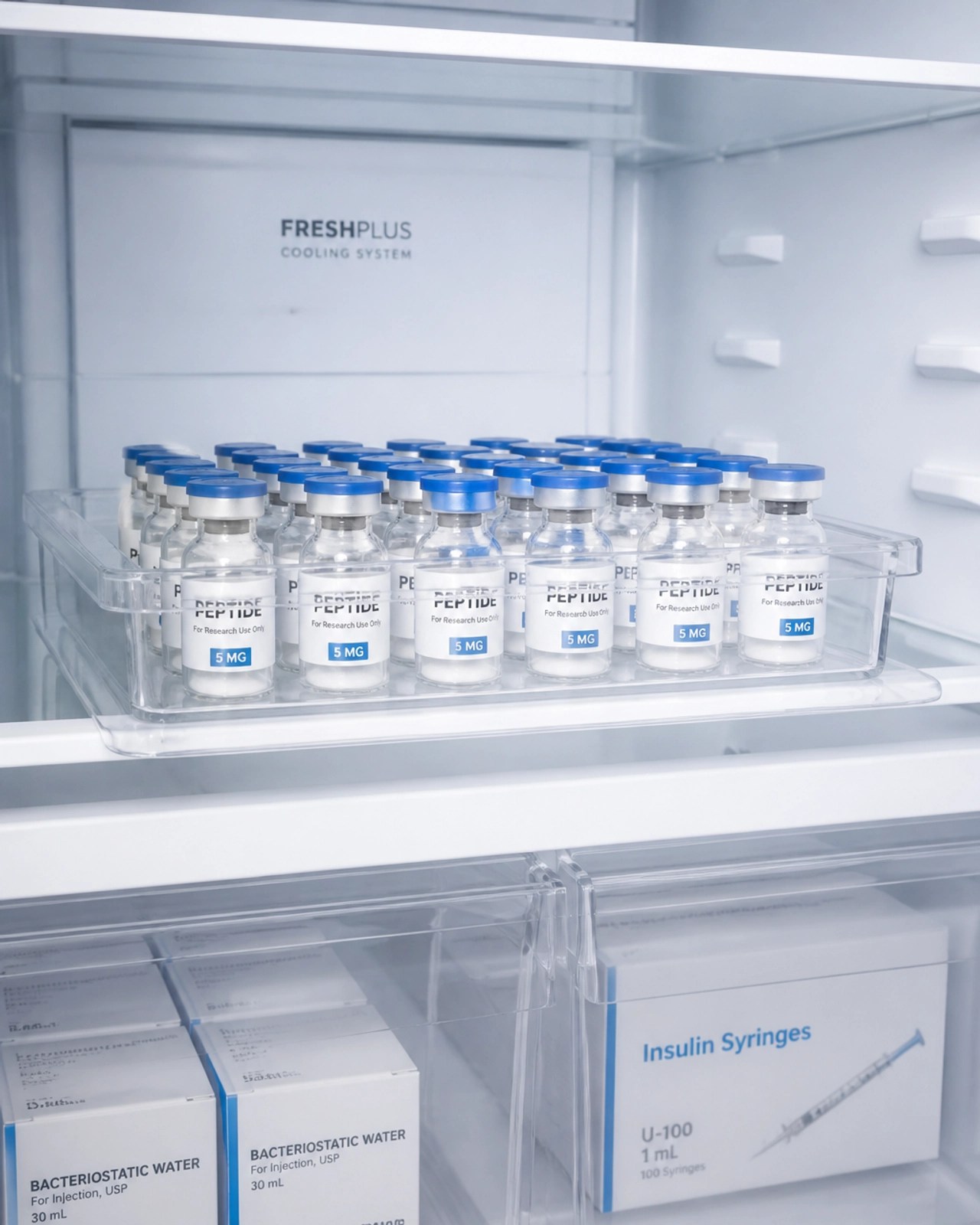
- Store your reconstituted vials in the center of the fridge, away from the door where temperatures fluctuate.
By mastering the "water basics," you ensure that your research is consistent, safe, and effective. You’ve successfully unlocked the second pillar of peptide stability.
Ready to stock up on essentials? Explore our Featured Products to find everything you need for your next project.


 Are Scientific Research Immune Support Products Effective?
 Are Research Chemicals & Bioregulators the Future of Scientific Labs 2026?
 Brain
Brain Are Skin & Hair Care Products Australia the Best Choice for You?
 WL Australia Peptides for Anxiety & Longevity Research Support


