
Cytomaxes vs Cytogens: Comparing Natural and Synthetic Peptide Extracts for Your Health Goals

Peptides are short chains of amino acids that act like biological messages. In simple terms, they can be compared with instructions sent between departments in a large organisation: the message is small, but it may influence what happens next.
Within the world of organ-specific bioregulators, two broad categories are often discussed:
- Cytomaxes: natural animal organ extracts containing complex mixtures of peptides.
- Cytogens: laboratory-synthesised peptides containing a defined, single peptide sequence.
The main question is not whether one category is automatically “better”. The more useful question is: which format matches the research objective, timeframe and level of precision you need?
This guide explains the differences in composition, timing, duration and administration, using examples such as Pinealon and Cerluten for brain-focused research, Cardiogen and Chelohart for heart-focused research, and Bonomarlot for bone marrow research.
Important: WL Australia product pages identify these products as research chemicals and state that they are not for human use. This article is educational only. It does not provide a treatment plan, dosing instructions or medical advice.
What are Cytomaxes and Cytogens?
The problem: similar names can create confusion
The terms Cytomax and Cytogen sound alike, but they describe different types of peptide material. If you focus only on the product name, it can be difficult to understand what is actually inside the vial or capsule.
The solution: compare the source and the structure
Think of the difference like this:
- A Cytomax is like a complete tool kit collected from a particular workshop. It may contain several tools, each contributing to the overall function.
- A Cytogen is like one precision tool manufactured to perform a specific task.
Cytomaxes are derived from animal organ tissue extracts. Their composition is complex and may include multiple peptide fractions and other biological components associated with the source tissue.
Cytogens are made in a laboratory. They are designed around a specific short peptide sequence, often intended to represent a key active fragment associated with a natural bioregulator.
Both categories are discussed in the context of organ-specific cellular signalling. However, the claims associated with these compounds are not a substitute for evidence from large, independent human clinical trials.
Cytomaxes: broad, natural peptide mixtures
The problem: you want wider tissue support, not just one narrow signal
A single biological process rarely depends on one molecule. Cells work more like a sports team than a solo athlete. Different players contribute to coordination, energy production, repair and communication.
A Cytomax is described as a broader peptide extract, which may provide a mixture of signals associated with a particular organ or tissue.
Examples include:
- Cerluten: a natural brain-related peptide extract.
- Chelohart: a natural heart-related peptide extract.
- Bonomarlot: a natural bone marrow-related peptide extract.
The foundational guide describes Cytomaxes as having a more gradual onset and a longer-lasting effect. The proposed advantage is breadth: instead of delivering one defined sequence, the extract contains a more complex combination of peptide fractions.
Practical research profile of Cytomaxes
According to the supplied foundational document, natural extracts are commonly described as:
- Animal-derived
- Complex in composition
- Gradual in onset
- Beginning to show an effect at around 30 days
- Associated with a longer post-cycle duration of approximately four to six months
These timeframes should be treated as general descriptions from the bioregulator literature, not guaranteed outcomes. Results can vary depending on the material, its quality, the research model and the way outcomes are measured.

Cytogens: precise, synthetic peptide sequences
The problem: you need a clearly defined molecular signal
In laboratory research, consistency matters. If you are testing a pathway, you want to know exactly what compound was introduced and in what amount. This is where a synthetic peptide can offer a more controlled research variable.
A Cytogen is like a single line of code written to trigger a specific function. It does not represent the entire operating system. Instead, it is used to investigate one defined signal or sequence.
Examples include:
- Pinealon: a synthetic peptide associated with brain and pineal-related research.
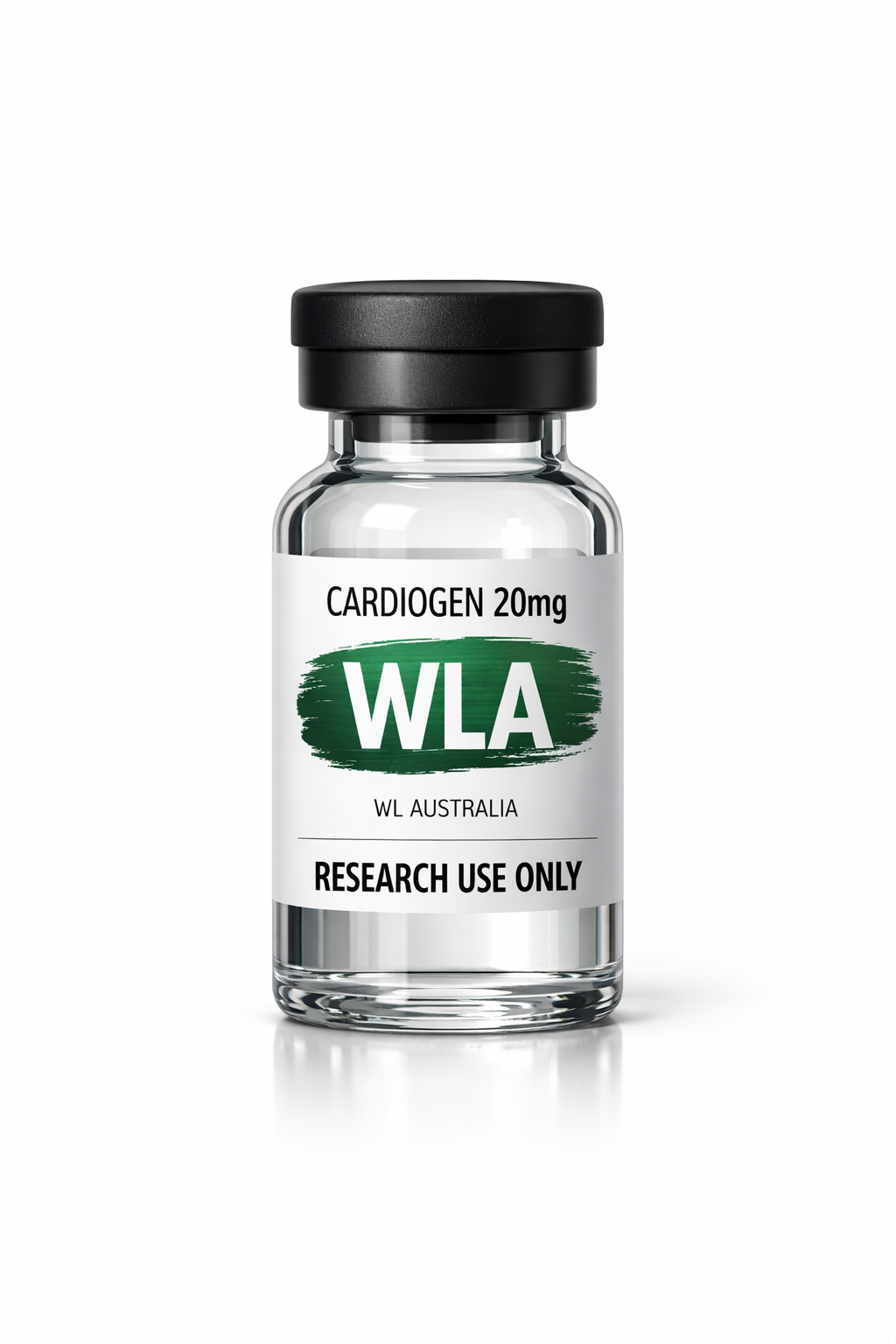
- Cardiogen: a synthetic peptide associated with heart tissue research.
Practical research profile of Cytogens
The foundational document describes synthetic peptides as:
- Laboratory-made
- Containing a single, defined short peptide sequence
- More targeted in their proposed action
- Faster-acting than natural extracts
- Commonly associated with an onset of approximately 10 to 14 days
- Shorter-lasting and therefore more likely to require repeated research cycles
The attraction is precision. A synthetic sequence is easier to identify, reproduce and compare across experiments than a complex extract containing several peptide fractions.
Fast does not automatically mean more effective. It simply means the research question may be approached with a more direct and clearly defined input.
Cytomaxes vs Cytogens: key differences
| Feature | Cytomaxes | Cytogens |
|---|---|---|
| Origin | Natural animal organ extract | Laboratory-synthesised |
| Composition | Complex mixture of peptide fractions | Single, defined peptide sequence |
| Research style | Broad, organ-level investigation | Targeted, sequence-specific investigation |
| Typical onset described in the guide | Approximately 30 days | Approximately 10–14 days |
| Duration described in the guide | Approximately 4–6 months after a course | Shorter duration; may require cycling |
| Examples: brain | Cerluten | Pinealon |
| Examples: heart | Chelohart | Cardiogen |
| Key consideration | Breadth and gradual progression | Precision and faster signalling |
| Main limitation | More complex composition | Narrower scope and shorter duration |
These timeframes are educational reference points, not guarantees of safety, effectiveness or personal results.
Administration and bioavailability
The problem: the delivery format can be just as confusing as the peptide type
Even when two products are discussed in the same category, they may use different delivery formats. People often assume that “oral” or “sublingual” automatically means suitable for personal use. That is not a safe assumption.
The solution: separate the delivery method from the regulatory status
The foundational document describes two administration formats:
- Oral capsules: swallowed and processed through the digestive system.
- Sublingual drops: placed under the tongue, where absorption may occur through tissues in the mouth.
The document presents both formats as convenient research delivery routes. However, the actual stability, formulation, absorption and intended use of a specific product must be confirmed through its documentation.
Do not convert a research description into a personal protocol. In Australia, peptide products presented for therapeutic use may be regulated as therapeutic goods. The Therapeutic Goods Administration (TGA) advises consumers to be cautious with unapproved peptide products and to discuss health decisions with an appropriately qualified healthcare professional.
The rule is simple: verify the product, verify the legal pathway and obtain professional oversight.
Video placeholder: Cytomaxes vs Cytogens explained: natural extracts, synthetic sequences and why composition matters.
The bone marrow example: Bonomarlot vs a synthetic alternative
The problem: a broad tissue system may not be represented by one signal
Bone marrow is not a single-purpose organ. It functions more like a busy manufacturing centre. It produces blood cells, supports immune activity and depends on a carefully regulated cellular environment.
The foundational document uses Bonomarlot as an example of a Cytomax associated with bone marrow research. Because it is described as a natural extract, it represents a complex mixture of peptide fractions derived from bone marrow tissue.
A synthetic alternative may focus on one narrower process, such as investigating a particular cellular signal or growth-related pathway. This can be useful when the research objective is specific, but it may not represent the full biological environment of bone marrow.

How to interpret the comparison
| Research objective | Format that may be considered | Why |
|---|---|---|
| Investigate a broad bone marrow peptide extract | Bonomarlot or another Cytomax | Represents a complex tissue-derived mixture |
| Examine one defined molecular sequence | Synthetic Cytogen | Provides a more controlled variable |
| Compare broad and narrow signalling | Both formats in separate research arms | Helps distinguish extract effects from sequence-specific effects |
| Study timing and persistence | Both formats over an appropriate observation period | Allows onset and duration to be measured rather than assumed |
This is a research framework, not a recommendation for self-administration or treatment.
Brain and heart examples
Brain: Pinealon compared with Cerluten
The foundational guide places Pinealon in the synthetic Cytogen category and Cerluten in the natural Cytomax category.
In the analogy of a computer:
- Pinealon represents a defined instruction used to investigate a specific signal.
- Cerluten represents a broader set of brain-related peptide fractions used to study wider cellular support.
You can explore the Cerluten research product page and the WL Australia bioregulator collection. Availability may change, and the Cerluten page currently identifies the product as out of stock.
Heart: Cardiogen compared with Chelohart
For heart-focused research:
- Cardiogen is presented as a synthetic Cytogen.
- Chelohart is presented as a natural Cytomax.
The comparison is similar to tuning one instrument versus studying the whole orchestra. Cardiogen offers a defined synthetic sequence for targeted research. Chelohart represents a more complex heart-derived extract.
You can view the Cardiogen 20 mg product page and the Chelohart 10 mg product page.

Which format should you choose?
If your priority is speed
The supplied guide describes Cytogens as the faster option, with an expected onset of around 10 to 14 days in the relevant research context.
A synthetic peptide may be considered when:
- You need a defined sequence.
- You are studying a specific pathway.
- You want a shorter observation window.
- Reproducibility is important.
If your priority is duration and breadth
The guide describes Cytomaxes as slower, with effects building over approximately 30 days, but lasting around four to six months after a course.
A natural extract may be considered when:
- You are investigating a broader organ-specific extract.
- A complex mixture is relevant to the research question.
- You are examining longer-term cellular signalling.
- You want to compare a tissue extract with a single synthetic sequence.
If you are unsure
Start with the research question, not the marketing claim.
Ask:
- Do I need a single defined molecule or a complex extract?
- Is the study designed for a short-term or longer-term observation?
- Can the material be authenticated and documented?
- Is the intended use lawful in Australia?
- Has a qualified professional reviewed the risks, interactions and handling requirements?
Video placeholder: How to compare a natural peptide extract with a synthetic sequence: a practical research checklist.
Safety, regulation and responsible research
Cytomaxes and Cytogens should not be treated as ordinary wellness supplements simply because they are small peptides or available in a capsule or drop format.
WL Australia’s relevant product pages state research chemical only : not for human use. The TGA also warns that unapproved peptide products may not have been assessed for safety, quality or effectiveness.
Before purchasing or handling any peptide research material:
- Check the product documentation and intended-use statement.
- Do not use research chemicals in humans or animals.
- Do not rely on claims that a product has “no side effects”.
- Do not assume oral or sublingual delivery makes a product safe.
- Seek advice from a qualified professional about Australian regulatory requirements.
- Use appropriate laboratory procedures, storage and record-keeping.
For background reading, see the Free Khavinson Peptides Guide and The Definitive Guide on Peptide Basics.
Final takeaway
Cytomaxes and Cytogens are best understood as two different research approaches:
- Cytomaxes are broader, natural organ extracts with complex peptide mixtures, gradual onset and longer duration.
- Cytogens are precise, laboratory-synthesised sequences designed for faster, more targeted investigation.
One is not automatically superior. The right choice depends on the scientific question, the required timeframe, the need for molecular precision and the legal and safety framework surrounding the work.
Start with clarity. Compare composition. Measure outcomes. Put safety first.

 Immune Support and Life Extension
 Shop Bioregulators & Research Chemicals for 2026 Scientific Labs
 Brain
Brain Buy Hair & Skin Care Peptides Australia – Top Quality & Best Prices
 Discover WLAustralia Peptides for Anxiety Relief & Longevity