Sharpening Brain Performance with Pinealon: Neurological Repair for Mental Clarity

You sit down to work, study, or make an important decision. The task is simple, but your mind feels slow. You reread the same paragraph. You forget why you opened your phone. You feel mentally tired before the day has properly begun.
This experience is often called brain fog. It can be influenced by poor sleep, stress, illness, ageing, nutrition, or neurological strain. While no single compound can solve every cause, targeted peptide research is exploring ways to support the brain at a cellular level.
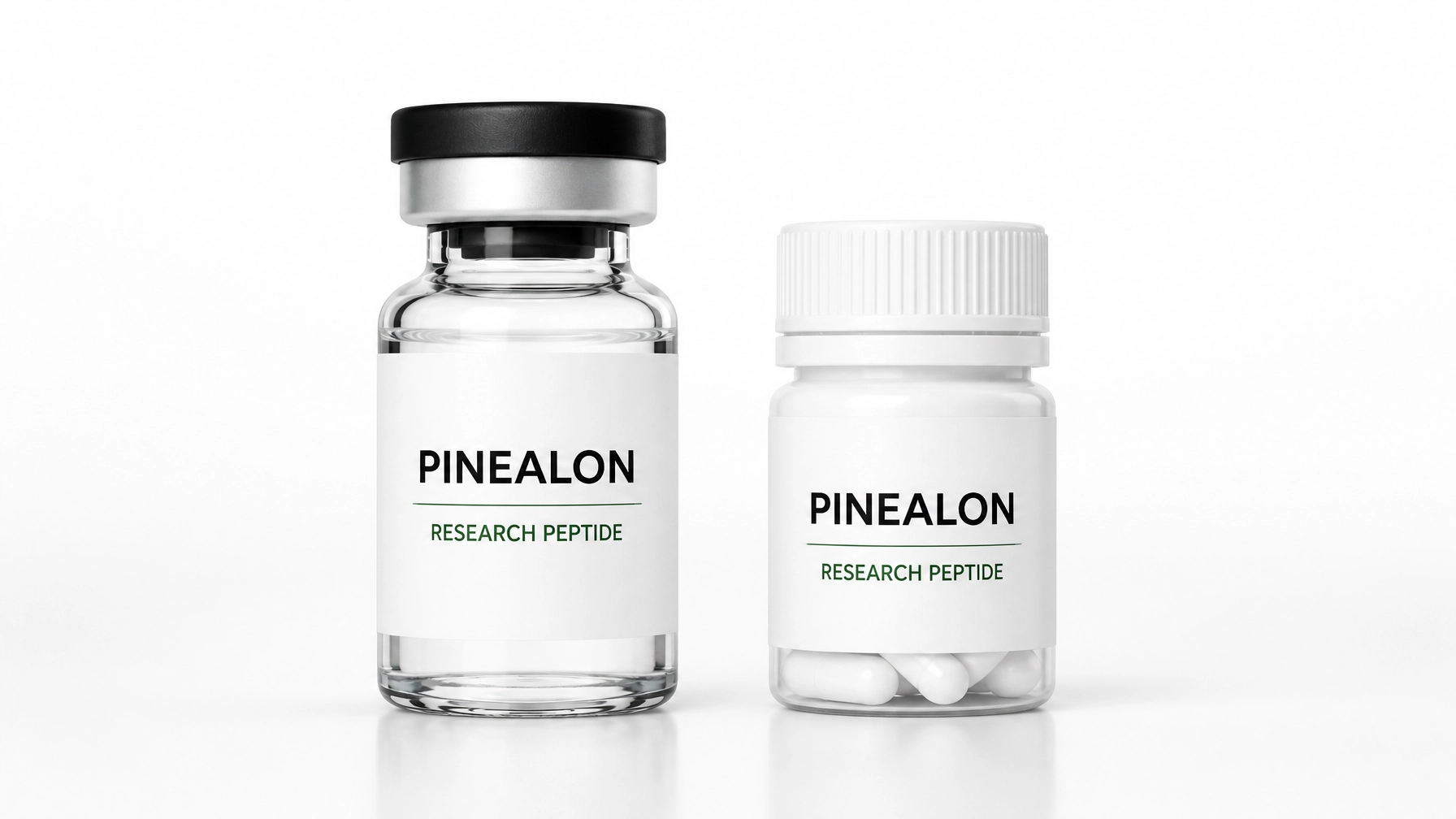
One of the best-known compounds in this area is Pinealon, a synthetic tripeptide made from three amino acids: Glu-Arg-Asp: glutamic acid, arginine, and aspartic acid.
The foundational research chapter behind this article describes Pinealon as a brain-focused bioregulator that can cross the blood-brain barrier (BBB). The BBB is the brain’s security checkpoint: a protective filter that prevents many substances in the bloodstream from entering brain tissue.
The goal is not to force the brain into overdrive. The goal is to support the systems that help neurons communicate, adapt, and recover.
Important: WL Australia product pages label these compounds as research chemicals: not for human use. This article is educational only and does not provide medical advice or a recommendation to use Pinealon, Cerluten, or Cortagen. Discuss any research peptide with a qualified Australian healthcare professional and follow applicable Australian regulations.
The mental clarity problem: when your brain’s wiring feels overloaded
Your brain contains billions of neurons. These specialised cells communicate through electrical and chemical signals, forming networks that control memory, attention, mood, movement, and learning.
Think of your brain as a large communications network. Neurons are the devices, synapses are the connection points, and neurotransmitters are the messages moving between them. When the network is rested and well supported, information flows efficiently. When the system is affected by stress, poor sleep, ageing, or injury, messages may travel more slowly or become less reliable.
Pinealon is researched as a way to support neurons directly. According to the supplied foundational chapter, its small structure may allow it to cross the BBB and interact with neural tissue.
That does not mean Pinealon is a proven treatment for dementia, concussion, depression, or any other neurological condition. Human evidence remains limited, and neurological symptoms require proper medical assessment.
The practical takeaway: mental clarity begins with understanding the brain’s repair and communication systems: not chasing a quick stimulant effect.
Pinealon and the “brain fertilizer” connection
A central part of this discussion is BDNF, which stands for brain-derived neurotrophic factor. BDNF is a naturally occurring protein that supports the growth, survival, and maintenance of neurons.
You can think of BDNF as fertiliser for your brain’s garden. It does not create an entirely new garden overnight. Instead, it helps existing plants grow stronger roots and form healthier connections.
BDNF is closely linked with neuroplasticity, the brain’s ability to reorganise itself by strengthening existing pathways and creating new connections. Neuroplasticity is how you learn a new language, recover skills after an injury, or adapt to changing demands.
The foundational material describes Pinealon, Cerluten, and Cortagen as peptides that may stimulate BDNF-related activity. In practical terms, this research is focused on whether these compounds can help create a more supportive environment for neuronal maintenance and adaptation.
The proposed sequence looks like this:
- Peptide signalling provides a targeted biological message.
- Neuronal support pathways become more active.
- BDNF activity may help maintain neurons and synaptic connections.
- Neuroplasticity provides the brain with greater capacity to adapt.
This is a research model, not a guarantee of improved memory or concentration.
🎥 Video placeholder: How BDNF and neuroplasticity support learning, memory, and brain recovery.
Where Pinealon fits in a brain-support framework
Pinealon is the most targeted compound in this three-part framework. The foundational chapter describes it as a synthetic tripeptide that targets neurons and supports brain cell function.
Its proposed role includes:
- Supporting neuronal health
- Helping maintain communication between brain regions
- Supporting cognitive processes such as memory and attention
- Contributing to research into brain ageing and neurological recovery
- Potentially supporting BDNF-related pathways
The key distinction is that Pinealon is not described as a general energy stimulant. It is discussed as a cellular signalling molecule.
Imagine the difference between revving a car engine and servicing it. A stimulant may make the engine feel faster for a short time. A bioregulator is being researched as a message to the maintenance team: check the wiring, improve the systems, and restore normal function where possible.
The current evidence should still be viewed carefully. Research summaries include animal studies and older, smaller human reports, but modern, high-quality clinical evidence is limited. You should treat claims about cognitive improvement as preliminary rather than established medical fact.
Cerluten: broader central nervous system support

Pinealon is a single synthetic sequence. Cerluten is described in the foundational document as a natural peptide extract that supports the central nervous system (CNS).
The CNS includes the brain and spinal cord. If Pinealon is like a precise technician working on a particular circuit, Cerluten is more like a broader maintenance crew supporting the building’s overall electrical system.
The supplied chapter reports a study in which 70% of participants experienced improved concentration after a Cerluten cycle. This figure should be interpreted cautiously. The study details, design, sample size, and independent replication are important when judging how much confidence to place in any result.
According to the WL Australia product page, Cerluten is positioned around brain tissue, cellular metabolism, protein synthesis, and central nervous system support. However, the same page clearly states that it is a research chemical and not for human use.
Cerluten may therefore be relevant to readers exploring the difference between:
- Targeted synthetic signalling, represented by Pinealon
- Broader natural extract support, represented by Cerluten
Neither should replace sleep, medical care, rehabilitation, or evidence-based treatment.
Cortagen: supporting the brain cortex and peripheral nerves

Cortagen is described in the supplied chapter as a synthetic peptide focused on the peripheral nerves and the brain cortex.
The cortex is the outer layer of the brain. It supports higher-level functions such as language, memory, decision-making, sensory processing, and voluntary movement. Peripheral nerves carry signals between the brain, spinal cord, muscles, skin, and organs.
Think of the nervous system as a city transport network. The cortex is the central control room, while peripheral nerves are the roads carrying instructions to and from the rest of the body. If either area is strained, messages can become delayed or disrupted.
The foundational chapter presents Cortagen as a research compound for:
- Supporting nerve cell maintenance
- Supporting cortical tissue
- Assisting research into neurological stress and recovery
- Complementing broader brain-focused strategies
The WL Australia Cortagen page also carries a research-only disclaimer. Its product description should not be interpreted as proof that Cortagen treats concussions, nerve damage, pain, or any diagnosed condition.
If you have persistent headaches, weakness, numbness, memory changes, dizziness, or symptoms after a head injury, seek medical assessment promptly.
Pinealon, Cerluten, and Cortagen compared

| Peptide | Type described in the foundational material | Main research focus | Simple analogy |
|---|---|---|---|
| Pinealon | Synthetic tripeptide | Neurons, cognitive support, BDNF-related pathways | A precision technician |
| Cerluten | Natural extract | Broader central nervous system support | A maintenance crew |
| Cortagen | Synthetic peptide | Brain cortex and peripheral nerves | A wiring repair team |
The proposed synergy is easy to understand: Pinealon provides targeted neuronal signalling, Cerluten offers broader CNS support, and Cortagen focuses on cortical and peripheral nerve pathways.
However, there is no strong evidence that combining these compounds produces better outcomes than using one alone. Stacking research chemicals can also make it difficult to identify which compound caused a benefit or adverse reaction.
Start with clarity, not complexity.
The 10–20 mg, 30-day protocol: how to interpret it responsibly
The supplied foundational chapter describes a research protocol involving 10–20 mg daily for 30 days for brain-specific peptides, including Pinealon, Cerluten, and Cortagen.
This is a description of the source material: not a personal dosing recommendation.
You should not automatically apply this protocol to yourself because:
- The products may differ in formulation, concentration, purity, and delivery method.
- Human safety data are limited.
- Individual medical history, medications, and neurological conditions can change risk.
- The product pages identify these compounds as research chemicals not intended for human use.
- A daily milligram amount does not confirm clinical effectiveness or safety.
If you are investigating the protocol for laboratory or academic purposes, document the compound, formulation, batch information, testing data, and study conditions carefully. If your concern is brain fog, memory loss, stress, or recovery after injury, begin with a qualified clinician rather than self-experimentation.
Building a stronger foundation for mental clarity
Peptide research is only one part of the picture. Your brain’s natural BDNF and neuroplasticity systems are also influenced by basic health behaviours.
Focus on the foundations:
- Sleep: Keep a consistent sleep and waking schedule.
- Movement: Regular aerobic and resistance exercise supports circulation and brain health.
- Learning: Challenge your brain with new skills, reading, music, or problem-solving.
- Nutrition: Eat a varied diet with adequate protein, fibre, and essential nutrients.
- Stress management: Chronic stress can interfere with attention, memory, and recovery.
- Medical review: Investigate persistent symptoms instead of masking them.
These habits are not glamorous, but they are the construction materials your nervous system uses every day.
🎥 Video placeholder: Pinealon, Cerluten, and Cortagen: understanding the proposed roles of three brain-focused research peptides.
Final perspective
Pinealon represents an intriguing area of peptide research. Its small Glu-Arg-Asp structure, proposed ability to cross the blood-brain barrier, and relationship with neuronal and BDNF pathways make it an important subject for further investigation.
Cerluten offers a broader central nervous system focus, while Cortagen is described as supporting the cortex and peripheral nerves. Together, they provide a useful framework for understanding how researchers are exploring targeted neurological signalling.
But research interest is not the same as medical proof.
Your best approach is to stay informed, verify claims, respect Australian regulations, and involve a qualified healthcare professional in any decision involving neurological symptoms or research chemicals. Mental clarity is built through synergy: sound sleep, movement, learning, medical oversight, and responsible interpretation of emerging science.
Support the brain. Respect the evidence. Prioritise safety.
Read more about Cerluten 10mg · View Cortagen 20mg · Read WL Australia’s Pinealon overview · Browse bioregulators

 Immune Support and Life Extension
 Shop Bioregulators & Research Chemicals for 2026 Scientific Labs
 Brain
Brain Buy Hair & Skin Care Peptides Australia – Top Quality & Best Prices
 Discover WLAustralia Peptides for Anxiety Relief & Longevity