The Ultimate Healing Stack: How BPC-157 and TB-500 Work Together for Rapid Recovery

When you are facing a significant injury: whether it is a stubborn tendon tear, a lingering muscle strain, or post-surgical trauma: your body becomes a high-stakes construction site. In the world of advanced bioregulation, two players dominate the field of recovery: BPC-157 and TB-500. Individually, they are impressive; together, they form what is known in recovery circles as the "Wolverine Stack."
But how exactly do these compounds interact? Why is one considered "local" while the other is "systemic"? In this guide, you will learn the mechanics of this powerful synergy and how to leverage it to take control of your biology.
The Construction Site: A Biological Analogy
Imagine your injured tissue is a bridge that has collapsed. To fix it, you need two things: a Site Foreman to manage the local debris and structural rebuilding, and a Logistics Manager to ensure materials and workers can travel from across the city to reach the site.
- BPC-157 is your Site Foreman. It stays at the bridge, organizing the local workers (fibroblasts) and ensuring new supply lines (blood vessels) are built exactly where the damage is.
- TB-500 is your Logistics Manager. It manages the entire city’s traffic, making sure cells can move through the "biological streets" (fascia and extracellular matrix) to get to the bridge in the first place.
Without the Foreman, the Logistics Manager sends workers to a site with no direction. Without the Logistics Manager, the Foreman is stuck waiting for supplies that never arrive. Synergy is the result of both working in tandem.
BPC-157: The Local Site Foreman
BPC-157 (Body Protection Compound-157) is a synthetic peptide based on a protective protein found in human gastric juice. Its primary role is angiogenesis: the formation of new blood vessels.
Focus on the "local" nature of BPC-157. When you have a focal injury, such as "golfer's elbow" or a specific ligament tear, BPC-157 acts as a homing beacon. It accelerates the expression of growth factor receptors, allowing the damaged tissue to heal faster than it could on its own.
Why Form Matters
Depending on your goals, the delivery method changes:
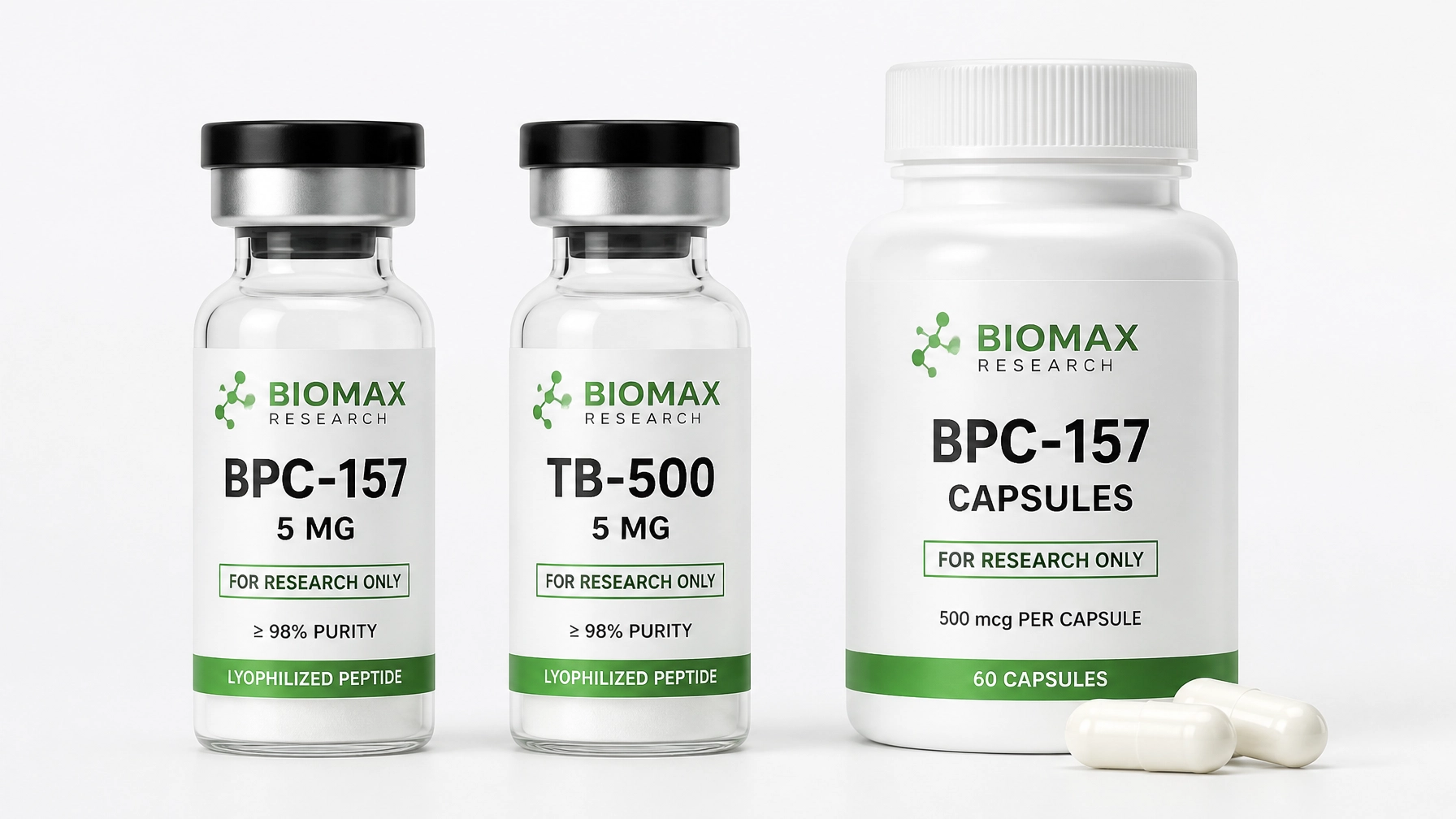
- Oral Administration: Ideal for systemic background support and specifically for gastrointestinal healing. Consider our BPC-157 500mcg Capsules or the higher potency BPC-157 1000mcg Capsules.
- Subcutaneous Injection: Often preferred for musculoskeletal injuries to maximize local concentration. We offer BPC-157 5mg and BPC-157 20mg vials for research applications.

TB-500: The Systemic Logistics Manager
While BPC-157 builds the "plumbing," TB-500 (Thymosin Beta-4 fragment) handles the "traffic." TB-500 is a master regulator of actin, a protein critical for cell movement.
Think of actin as the "zipper" of a cell. For a cell to move to an injury site, it must "unzip" its structure, crawl forward, and "re-zip." TB-500 makes this process incredibly efficient. Because it is a much smaller molecule and moves easily through tissues, it acts systemically. You can inject it in the thigh, and it will effectively find its way to a shoulder injury.
Take control of your systemic recovery with our Body Repair Peptide (TB-500) 10mg.
The Synergy: Local vs. Systemic Healing
The "Wolverine Stack" works like a zipper mechanism. BPC-157 provides the local structural signaling (angiogenesis), while TB-500 ensures the necessary cellular "parts" can migrate to that location.
| Feature | BPC-157 | TB-500 |
|---|---|---|
| Primary Focus | Local Tissue/Angiogenesis | Systemic Cell Migration |
| Analogy | Site Foreman | Logistics Manager |
| Tissue Specialty | Tendons, Ligaments, Gut | Muscle, Fascia, Inflammation |
| Movement | Stays relatively local | Highly mobile/systemic |
The "Wolverine" Dual Mix
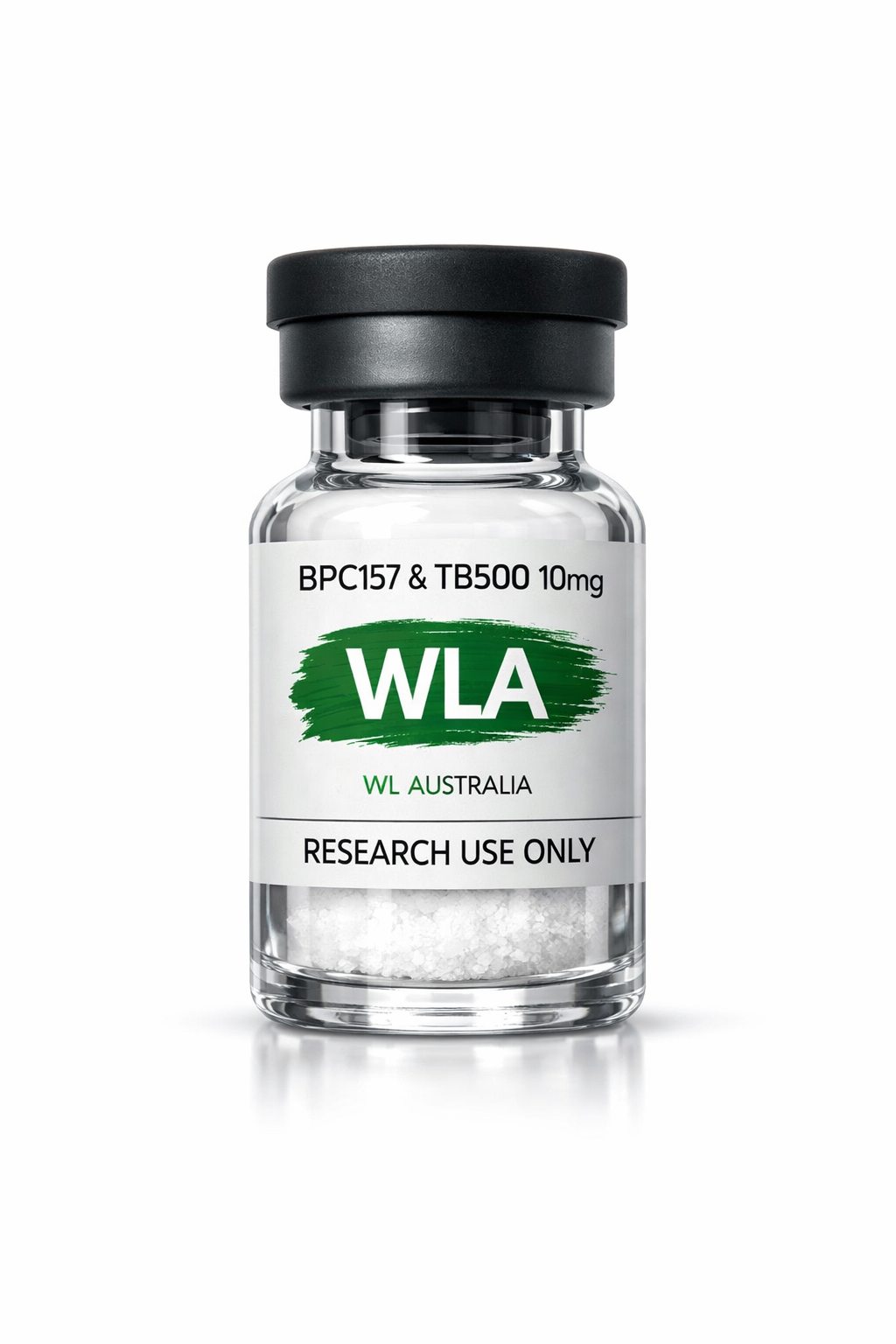
To simplify this complex biological dance, many researchers opt for a Dual Mix. This combines both peptides into a single vial, ensuring that the Foreman and the Logistics Manager are always on the same clock.
Explore our tiered Dual Mix options:
- Dual Mix BPC-157 + TB-500 (10mg)
- Dual Mix BPC-157 + TB-500 (20mg)
- Dual Mix BPC-157 + TB-500 (30mg)
- Dual Blend Tablets (BPC-157 500mcg + TB-500 500mcg)
Instructional Guide: The Healing Protocol
When implementing a recovery protocol, logic and consistency are your best tools. Most research-based "Wolverine" protocols follow a Pulse Strategy:
- Foundational Phase (Weeks 1–4): This is where you flood the system with TB-500 to lower systemic inflammation and mobilize cells. Common research patterns involve 2–5mg of TB-500 twice weekly.
- Maintenance Phase (Weeks 1–8): BPC-157 is typically administered daily (250mcg–500mcg) to maintain a constant "pro-healing" signal at the site of injury.
- The "Safety Brake": Never run these peptides indefinitely. The body needs a "washout" period to prevent receptor desensitization. A typical cycle is 6–8 weeks on, followed by 4 weeks off.
Video Resource: Understanding the Stack
To see a visual breakdown of these mechanisms, we recommend watching these educational guides:
- Video 1: “What Is the Wolverine Stack? BPC-157, TB-500 and the Evidence” – A deep dive into the clinical data.
- Video 2: “Peptide Healing Protocols: How to Sequence Your Recovery” – A practical guide on timing and administration.
Regional Context: Healing in Australia
In the Australian landscape, it is vital to understand that while these peptides offer immense potential, they are currently classified as research chemicals. The Therapeutic Goods Administration (TGA) has strict guidelines regarding the human use of BPC-157 and TB-500.
Always ground your biological optimization in safety. Ensure you are working under the guidance of a medical professional who understands peptide therapy. Use of these substances in professional sports is also strictly regulated by ASADA/WADA; if you are a competitive athlete, check your specific regulations before starting.
Summary: Unlocking Your Recovery Potential
Recovery is not a passive process; it is an active biological mission. By stacking BPC-157 and TB-500, you are providing your body with the ** Foreman** to lead the local repair and the Logistics Manager to clear the path for success.
Focus on these three principles:
- Synergy: Use both to cover local and systemic needs.
- Form: Choose capsules for gut health and vials for targeted musculoskeletal repair.
- Compliance: Always prioritize medical oversight and legal awareness.
Take control of your biology and move from "injured" to "optimized."

 Immune Support and Life Extension
 Shop Bioregulators & Research Chemicals for 2026 Scientific Labs
 Brain
Brain Buy Hair & Skin Care Peptides Australia – Top Quality & Best Prices
 Discover WLAustralia Peptides for Anxiety Relief & Longevity