
Thymopentin vs Thymalin vs Thymogen: The Ultimate Thymic Peptide Comparison

When you look at your body’s defense apparatus, think of it as a high-security national defense network. At the command center sits the thymus gland, the elite boot camp where raw, untrained immune recruits are whipped into specialized T-cells (lymphocytes that coordinate cellular immunity and hunt down cellular invaders). But as you age, or when chronic stress and environmental toxins overwhelm your system, this command center begins to falter. The recruits lose their edge, communication breakdowns occur, and your biological defenses slow down.
If you are exploring advanced biological optimization, you have likely encountered thymic peptides and bioregulators designed to restore command integrity. But how do you choose between the synthetic pentapeptide Thymopentin (TP-5), the multi-peptide extract Thymalin, and the synthetic dipeptide Thymogen? In this comprehensive guide, you will learn the exact biochemical differences, clinical data, and practical safety considerations required to take control of your immune biology.
1. The Core Dilemma: When Your Biological Defense System Slows Down
The Problem: You notice a sluggish immune response, prolonged recovery times after seasonal bugs, or persistent systemic inflammation that leaves you feeling drained despite optimal sleep and nutrition.
The Frustration: Standard wellness protocols only scratch the surface, offering generic vitamins that fail to upgrade cellular-level signaling or restore thymic output.
The Solution: Targeted thymic peptide bioregulators act like master architects, directly signaling your immune cells to upgrade their operational readiness, repair damaged pathways, and re-establish homeostasis.
To understand how these agents differ, let us examine a high-level comparison of their biochemical structures, origins, and primary mechanisms:
| Feature | Thymalin | Thymogen | Thymopentin (TP-5) |
|---|---|---|---|
| What It Is | Heterogeneous polypeptide extract from calf thymus | Synthetic dipeptide (Glu-Trp) derived from thymic research | Synthetic pentapeptide active sequence of thymopoietin |
| Primary Mechanism | Broad T-cell differentiation and NK (natural killer) cell support | T-cell modulation, IL-2 and IFN-gamma upregulation | T-cell maturation and HLA-DR antigen presentation |
| Evidence Setting | Extensive Russian clinical trials in immunodeficiency and aging | Mechanistic and clinical trials in respiratory and immune support | International clinical studies in immunodeficiencies and viral hepatitis |
| Primary Focus | Comprehensive systemic immune recovery | Targeted mucosal and cellular optimization | Precision synergy for antigen-presenting pathways |
2. Thymalin: The Broad-Spectrum Command Center Extract
The Problem: Aging and chronic inflammatory states cause your thymus to undergo involution (fatty shrinkage), severely limiting the release of naive T-cells.
The Frustration: You need a compound that doesn't just tweak one isolated receptor, but comprehensively revitalizes the entire immune machinery.
The Solution: Thymalin provides a complex blend of natural polypeptide fractions extracted from bovine thymus tissue, delivering multi-target cellular instructions.

Think of Thymalin as an experienced commanding officer arriving at a disorganized base with a comprehensive manual for every department. By regulating gene expression in hematopoietic (blood-forming) and immune cells, Thymalin promotes broad T-cell differentiation and modulates pro-inflammatory cytokines such as interleukin-1 beta (IL-1β) and tumor necrosis factor-alpha (TNF-α) via nuclear factor kappa-light-chain-enhancer of activated B cells (NF-κB) inhibition.
- Pros: Offers comprehensive multi-target immune support, addressing both adaptive and innate arms.
- Cons: Being a tissue extract, it presents batch-to-batch variability and theoretical animal-protein considerations.
Core Principle: True recovery requires multifaceted signaling. Thymalin supplies the raw, diverse blueprint your immune architecture needs to reboot.
3. Thymogen: The Precision Dipeptide Specialist
The Problem: You want the targeted immune-modulating benefits of thymic research without the complexity or variability of crude animal extracts.
The Frustration: Complex multi-peptide mixtures can be difficult to standardize and may trigger unwanted off-target immune responses.
The Solution: Thymogen is a precisely engineered synthetic dipeptide composed of L-glutamyl-L-tryptophan (Glu-Trp), specifically designed to streamline immune signaling.
Imagine Thymogen as a specialized sniper rifle compared to Thymalin's artillery barrage. Discovered as the active core sequence during thymic research, this clean dipeptide zeroes in on T-cell maturation pathways, upregulating vital signaling molecules like interleukin-2 (IL-2) and interferon-gamma (IFN-gamma) while activating neutrophil defenses through mitogen-activated protein kinase (MAPK) pathways.
- Pros: Chemically defined, highly stable, and easy to standardize for exact research protocols.
- Cons: Clinical human trials are largely concentrated in regional literature, requiring careful interpretation.
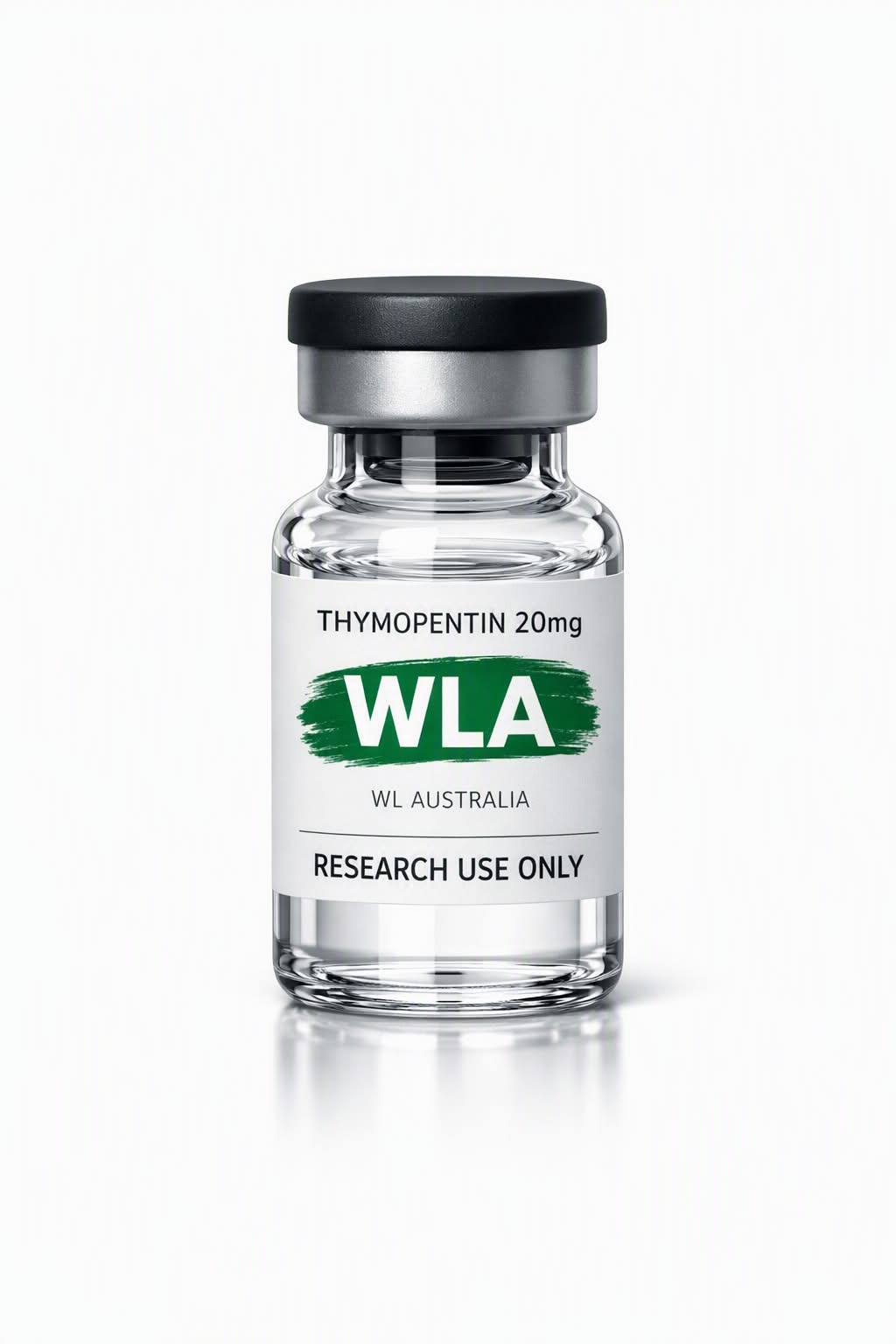
Explore advanced research compounds like our premium Thymopentin 20mg and related organ-specific solutions such as Thyreogen 10mg for metabolic and endocrine synchronization.
4. Thymopentin (TP-5): The International Immunomodulation Pioneer
The Problem: You require a well-studied, synthetically pure peptide with documented international clinical trials evaluating antigen presentation and cellular defense.
The Frustration: Many experimental peptides lack transparent pharmacokinetic data or have only been evaluated in isolated domestic cohorts.
The Solution: Thymopentin (TP-5) is a precise five-amino-acid polypeptide sequence mirroring the active site of thymopoietin, boasting extensive global research in cellular immunity.
[ Thymus Gland Command ] ---> [ TP-5 Pentapeptide ] ---> [ T-Cell Maturation & HLA-DR Activation ] ---> [ Resilient Defense ]
Thymopentin acts like a master cryptographic key that unlocks human leukocyte antigen-DR (HLA-DR) surface receptors on antigen-presenting cells. This sharpens your immune system's ability to recognize foreign pathogens and coordinate swift counter-attacks. However, note its pharmacokinetic challenge: Thymopentin has a very short plasma half-life (under 30 seconds), meaning research protocols must account for rapid systemic clearance.
- Pros: Well-characterized synthetic structure with extensive cross-cultural clinical studies.
- Cons: Rapid enzymatic degradation demands precise administration timing in experimental frameworks.
5. Stacking and Synergy: Integrating Thymic Peptides Safely
The Problem: Isolated interventions often hit biochemical bottlenecks when trying to optimize multi-system vitality (immune, endocrine, and metabolic health).
The Frustration: Running single compounds in isolation leaves interconnected physiological pathways unsupported.
The Solution: Strategic peptide stacking combines organ-specific bioregulators: such as pairing immune regulators with endocrine targets like Thyreogen 10mg or metabolic regulators like Svetinorm 20mg: to create profound biochemical synergy.
Think of your body as a high-performance race car engine: upgrading the ignition (immune defense via Thymopentin 20mg) works best when the fuel delivery (thyroid regulation via Thyreogen 10mg) and cooling systems are simultaneously optimized.
6. Safety, Legal Compliance, and Australian Regulatory Context
The Problem: Navigating the legal and safety landscape of research peptides requires rigorous adherence to local laws and medical oversight.
The Frustration: Misinformation online often conflates commercial dietary supplements with clinical research chemicals.
The Solution: Ground your approach in strict compliance. In Australia, compounds like Thymopentin, Thymalin, and Thymogen are strictly classified as research chemicals only: not for human consumption. They are governed by Therapeutic Goods Administration (TGA) guidelines and must be handled exclusively by qualified professionals in accredited laboratory settings.
Essential Safety Checklist
- Verify Purity: Always source HPLC-verified compounds with verified third-party certificates of analysis.
- Consult Professionals: Never self-administer research peptides; consult a qualified medical practitioner who understands endocrinology and immunology.
- Respect Regulations: Adhere strictly to institutional review board (IRB) protocols or local Australian regulatory frameworks.
Conclusion: Taking Control of Your Biological Resilience
You now possess the foundational clarity needed to evaluate Thymopentin, Thymalin, and Thymogen. Whether you prioritize Thymalin's broad botanical extract framework, Thymogen's clean dipeptide precision, or Thymopentin's international clinical heritage, the key to biological mastery lies in rigorous education, safety compliance, and professional oversight.
Ready to elevate your laboratory research standards? Explore our complete catalog of high-purity peptides, including Thymopentin 20mg, and take complete control of your scientific investigations today.

 Immune Support and Life Extension
 Shop Bioregulators & Research Chemicals for 2026 Scientific Labs
 Brain
Brain Buy Hair & Skin Care Peptides Australia – Top Quality & Best Prices
 Discover WLAustralia Peptides for Anxiety Relief & Longevity