
Uroprogen: The Khavinson Urological Bioregulator for Urinary Tract Health and Bladder Support

Urinary function can feel simple until something changes. A weak stream, increased urgency, frequent bathroom visits, pelvic discomfort or the feeling that your bladder has not fully emptied can affect sleep, travel, exercise and confidence.
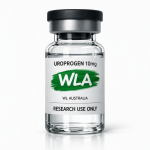
Uroprogen is a Khavinson-style peptide bioregulator complex listed by WL Australia for research into prostate tissue, bladder function, urinary tract health and pelvic tissue support. It is important to be clear from the beginning: the product page labels Uroprogen as a research chemical only: not for human use. It is not a registered medicine, approved treatment or substitute for assessment by a doctor or urologist.
This article explains the biological ideas behind Uroprogen while keeping the evidence, safety and Australian regulatory position in view.
What is Uroprogen?
The frustration: urinary symptoms are often discussed as if they have one single cause.
The solution: look at the lower urinary tract as a connected system.
Your bladder, urethra, prostate, pelvic muscles, nerves and blood vessels work together like a coordinated plumbing and control network:
- The bladder stores urine.
- The detrusor muscle in the bladder wall contracts to push urine out.
- The urethra carries urine from the bladder.
- The prostate, in people who have one, surrounds part of the urethra and can influence flow.
- The pelvic floor acts like a support platform and pressure-control valve.
- The nervous system coordinates timing, sensation and muscle relaxation.
If one part becomes inflamed, enlarged, overactive or poorly coordinated, the rest of the system may have to compensate.
Uroprogen is marketed as a targeted urological bioregulator. In simple terms, a bioregulator is intended to influence local biological processes rather than act like a conventional broad-spectrum drug. The “Khavinson” reference relates to a family of short peptide preparations associated with organ-specific research.
However, Uroprogen-specific evidence is limited. There are no strong, independently replicated human clinical trials identified for Uroprogen by name. Therefore, you should treat its proposed applications as research questions, not established medical outcomes.

Video placeholder 1 : Insert explainer video: How the bladder, prostate and pelvic floor work together.
How bladder and urinary function work
The frustration: urgency and frequency can seem like a bladder problem only.
The solution: understand the “traffic control” system behind urination.
A healthy bladder gradually fills and sends signals to the brain when it is ready to empty. The brain then coordinates two actions: the bladder muscle contracts while the urinary outlet relaxes. Think of it like a zipper. The bladder provides the pressure, while the outlet must open at the right time. If the timing is poor, you may experience urgency, hesitancy, dribbling or incomplete emptying.
Several factors can affect this system:
- Prostate enlargement: benign prostatic hyperplasia, or BPH, can narrow the urethral passage.
- Inflammation: irritation in the prostate, bladder or pelvic tissues may increase sensitivity.
- Nerve signalling: diabetes, spinal conditions and some medications can alter bladder control.
- Pelvic-floor tension: muscles that remain contracted may make emptying more difficult.
- Lifestyle factors: caffeine, alcohol, dehydration and constipation can influence urinary symptoms.
Uroprogen’s product description positions it around normal prostate tissue structure, urinary function and pelvic inflammation. These are plausible areas for investigation, but the product description does not establish that Uroprogen can diagnose, prevent or treat BPH, prostatitis, urinary tract infection or bladder disease.
Short summary: urinary symptoms are signals from a system. They are not a diagnosis.
The proposed role of a urological bioregulator
The frustration: conventional explanations often focus on one structure, while pelvic tissues operate as a team.
The solution: consider tissue support, inflammation and microcirculation as separate research themes.
WL Australia describes Uroprogen as a peptide complex intended for research into:
| Research theme | What it means in plain English | Important limitation |
|---|---|---|
| Prostate tissue structure | Studying how prostate tissue maintains its normal organisation | This does not prove treatment of BPH |
| Bladder function | Investigating bladder tone, storage and emptying | No validated human dosing or outcome data are provided |
| Urinary tract health | Examining the connected lower urinary system | It is not a treatment for infection |
| Pelvic tissue support | Exploring local tissue environment and circulation | Human benefits remain unconfirmed |
| Inflammation research | Studying inflammatory signalling and swelling | Persistent pelvic pain requires medical assessment |
Microcirculation means the movement of blood through very small vessels. You can think of it as local delivery traffic: oxygen, nutrients and waste removal depend partly on these small routes. But an attractive mechanism is not the same as a proven clinical result. The body is more like a construction site than a single switch. Changing one signal may affect several processes, and those effects must be studied carefully.
The broader Khavinson peptide literature includes reviews and laboratory research, but this should not be confused with high-quality evidence for Uroprogen itself. A PubMed-indexed review on peptide bioregulation provides general background, not proof that Uroprogen improves urinary outcomes.
Uroprogen and prostate-related symptoms
The frustration: urinary changes are sometimes dismissed as a normal part of ageing.
The solution: investigate them rather than simply accepting them.
BPH is a non-cancerous enlargement of the prostate that becomes more common with age. It may contribute to:
- A weak or interrupted urinary stream
- Difficulty starting
- Dribbling after urination
- Increased nighttime urination
- Urgency or frequency
- A sensation of incomplete emptying
Prostatitis, which refers to inflammation involving the prostate, can involve pelvic pain, discomfort with urination, urinary changes and sometimes systemic symptoms. These conditions can overlap, but they are not interchangeable. Infection, stones, medication effects, bladder disorders and other medical conditions can produce similar symptoms.
That is why Uroprogen should not be used as a way to self-diagnose. If you have ongoing urinary changes, your doctor may consider your medical history, a physical examination, urine testing, blood tests, prostate assessment or referral to a urologist.
Do not wait for a product to “prove itself” if symptoms are worsening.
Video placeholder 2 : Insert educational video: Urinary red flags and when to arrange a GP or urology appointment.
Safety, evidence and Australian compliance
The frustration: research products can look similar to ordinary supplements online.
The solution: check the intended use, evidence and regulatory status before making decisions.
The Uroprogen listing states:
- Uroprogen 10mg
- Research chemical only
- Not for human use
- The listing currently shows the product as out of stock
- No human dosing instructions are provided on the product page
There is no sufficient molecule-specific information to confirm long-term safety, interactions, reproductive effects, allergy risk or suitability for people with prostate, kidney, bladder or cardiovascular conditions. Do not assume that “peptide” means harmless. Short peptides may be broken down by the body, but that does not replace proper toxicology, quality-control and clinical safety studies.
In Australia, therapeutic goods advertising and supply are regulated by the Therapeutic Goods Administration (TGA). Calling a product a research chemical does not make it suitable for human use. The surrounding claims, presentation and intended audience matter. Review the TGA guidance on advertising therapeutic goods before publishing or relying on health claims.
You should also seek medical care urgently if you experience:
- Inability to pass urine
- Blood in the urine
- Fever or chills with urinary symptoms
- Severe back, side or pelvic pain
- Vomiting or feeling acutely unwell
For general Australian guidance, see Healthdirect’s information on urinary problems and urinary retention.
The practical takeaway
Uroprogen is an emerging Khavinson urological bioregulator listed for research only. Its proposed research areas include bladder function, urinary tract health, prostate tissue organisation and pelvic tissue support.
The opportunity is interesting. The evidence is not yet strong enough to support therapeutic promises.
If you are studying Uroprogen in a legitimate laboratory setting, focus on:
- Identity and purity testing
- Documented storage and handling
- Validated analytical methods
- Appropriate ethics and institutional oversight
- Clear separation between laboratory findings and human health claims
If you are experiencing urinary or prostate symptoms, start with a qualified Australian healthcare professional: not an unapproved research product.
You can view the Uroprogen 10mg product listing, browse the Khavinson bioregulator range or visit the WL Australia shop. Always prioritise evidence, medical oversight and legal compliance.
Research carefully. Protect your health. Keep optimisation responsible.

 Immune Support and Life Extension
 Shop Bioregulators & Research Chemicals for 2026 Scientific Labs
 Brain
Brain Buy Hair & Skin Care Peptides Australia – Top Quality & Best Prices
 Discover WLAustralia Peptides for Anxiety Relief & Longevity