CMS 121 Capsules: The Neuroprotective Nootropic for Cognitive Health and Longevity Research

CMS 121 is an experimental small molecule attracting attention in neuroprotection, cognitive ageing and longevity research. Developed as a modified derivative of the flavonoid fisetin, CMS 121 has been studied for its effects on lipid metabolism, mitochondrial function, oxidative stress and memory-related pathways.
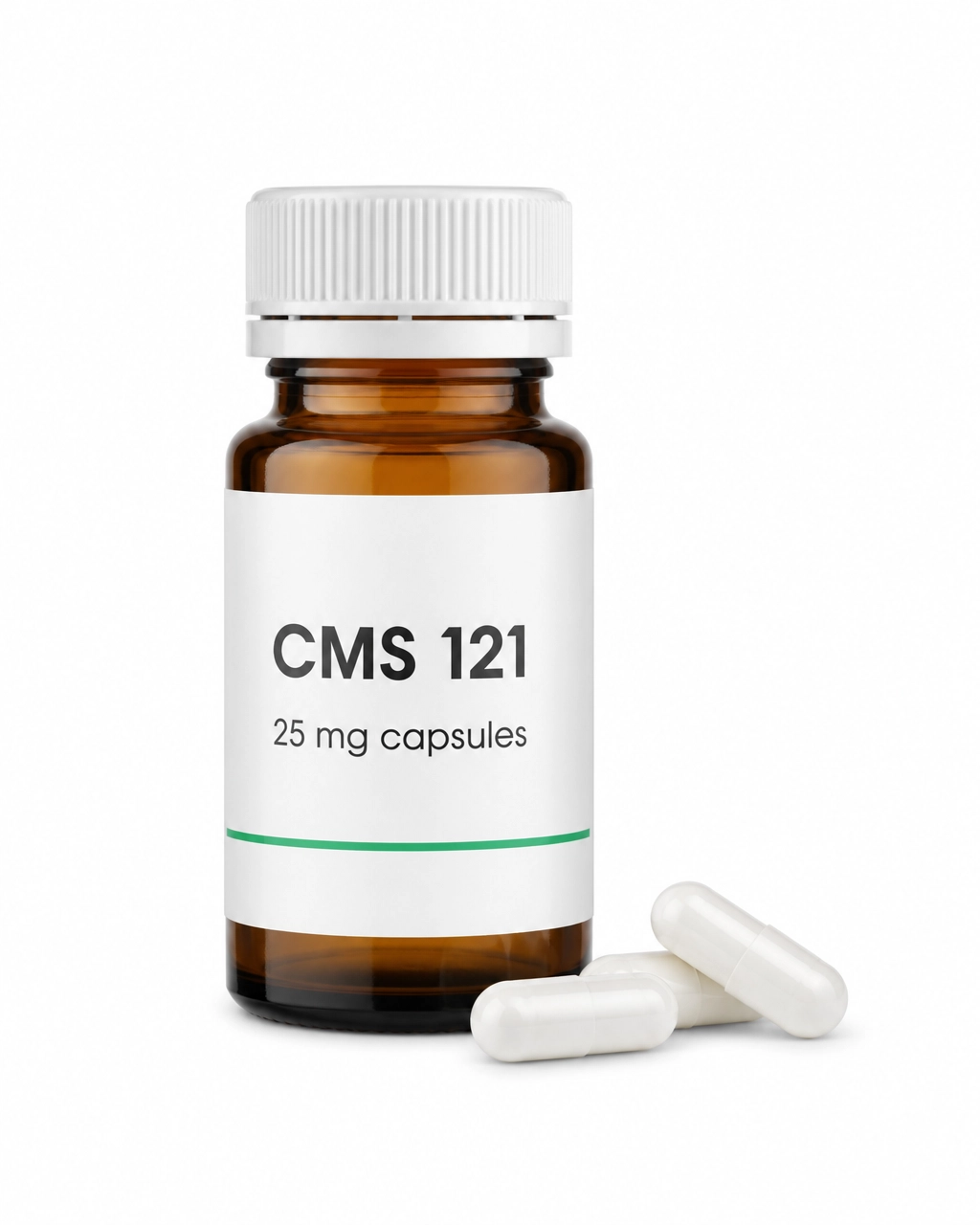
The important distinction is this: CMS 121 is a research chemical, not an approved medicine or supplement for human use. The CMS 121 capsules listed by wlaustralia contain 25 mg per capsule, with 30 capsules per bottle, and are labelled for research purposes only.
You can view the CMS 121 capsule product listing for the available product specifications.
Research-use notice: CMS 121 capsules are not for human or veterinary use. This article is educational and does not provide dosing instructions, treatment advice or a recommendation for personal use.
Why is CMS 121 being researched?
The problem: brain ageing involves several connected systems
Cognitive ageing is not controlled by one switch. It is more like an ageing city: energy supply, waste removal, roads, communication networks and emergency services must all continue working together.
In the brain, these systems include:
- Mitochondria, the energy-producing structures inside cells
- Lipid metabolism, which manages fats used for membranes and signalling
- Oxidative stress, an imbalance between reactive molecules and antioxidant defences
- Neuroinflammation, the immune response within nervous tissue
- Synaptic function, which supports communication between neurons
When these systems become disrupted, neurons may struggle to maintain their membranes, energy supply and signalling connections.
The research direction: support the cell’s internal infrastructure
CMS 121 is being investigated because it appears to influence several of these connected pathways. In laboratory and animal studies, researchers have observed changes associated with:
- Reduced lipid peroxidation
- Lower inflammatory signalling
- Preservation of mitochondrial activity
- Increased acetyl-coenzyme A, or acetyl-CoA
- Improved performance in memory-related tests in certain mouse models
These findings are promising, but they remain preclinical. Results in cells or mice do not prove that CMS 121 improves memory, prevents dementia or extends lifespan in humans.
The short version: CMS 121 is a research candidate, not a proven cognitive-health treatment.

Acetyl-CoA carboxylase inhibition explained
The problem: too much metabolic traffic can reduce useful fuel
To understand CMS 121, you need to understand acetyl-CoA carboxylase 1, commonly abbreviated as ACC1.
ACC1 is an enzyme involved in converting acetyl-CoA into malonyl-CoA. Malonyl-CoA then contributes to the production of fatty acids. Think of acetyl-CoA as a versatile fuel voucher inside the cell. It can be sent to several departments, including:
- Energy production through the tricarboxylic acid cycle, or TCA cycle
- Fatty-acid synthesis
- Production of molecules used in cellular regulation
- Histone acetylation, which helps control gene activity
ACC1 acts like a traffic gate that directs some acetyl-CoA toward fatty-acid production. If that gate is inhibited, more acetyl-CoA may remain available for other cellular functions.
The research solution: redirect the metabolic flow
Studies of CMS 121 suggest that it can increase ACC1 phosphorylation through activation of AMP-activated protein kinase, or AMPK. AMPK is an energy-sensing enzyme often compared with a cellular fuel gauge.
When AMPK detects energy stress, it can help the cell conserve resources. One of its effects is the phosphorylation and functional inhibition of ACC1. Research has linked CMS 121 with this AMPK–ACC1 pathway and with increased acetyl-CoA levels in neuronal cells and mouse brain tissue.
The pathway can be summarised as:
CMS 121 research exposure → AMPK activation → ACC1 inhibition → altered acetyl-CoA and lipid metabolism
The science is more nuanced than saying CMS 121 simply “blocks ACC1.” Current research describes a mechanism involving AMPK-dependent ACC1 inhibition, alongside direct effects on fatty acid synthase, or FASN, another enzyme involved in fatty-acid production.
Think of it as a metabolic traffic-control system, not a single on/off switch.
How may CMS 121 support neuroprotective research?
The problem: lipid peroxidation can damage brain-cell structures
Neuronal membranes contain many lipids. These lipids are essential, but they can also become vulnerable to oxidation. Lipid peroxidation occurs when reactive molecules damage fatty acids in cell membranes.
An everyday analogy is rust forming on metal. Once oxidation begins, it can create secondary damaging compounds that affect nearby structures.
In brain research, lipid peroxidation is associated with:
- Membrane damage
- Mitochondrial stress
- Inflammatory signalling
- Vulnerability to oxytosis and ferroptosis-like cell death pathways
Oxytosis is a form of oxidative-stress-related cell death. Ferroptosis is an iron-dependent cell-death pathway driven in part by lipid oxidation.
The research solution: investigate lipid metabolism as a protective target
In a transgenic mouse model of Alzheimer’s disease, CMS 121 research treatment was associated with:
- Lower lipid peroxidation markers
- Reduced inflammatory changes
- Altered FASN activity
- Improved performance in cognitive and behavioural tests
The Salk Institute reported that CMS 121 reduced Alzheimer’s-like memory decline in mice and changed how brain cells processed lipids. These results helped establish FASN and lipid peroxidation as important research targets.
However, a mouse model is a research model, not a human diagnosis. It can show whether a biological pathway is worth investigating, but it cannot confirm clinical effectiveness.
CMS 121 and cognitive-health research
The problem: cognitive decline may involve energy and gene-regulation changes
Neurons require a constant energy supply. They are like a communications team operating around the clock: maintaining connections, sending signals and repairing equipment all require fuel.
The eLife study on CMS 121 and the related compound J147 examined rapidly ageing SAMP8 mice. Researchers found that treatment was associated with changes in:
- Cognitive behaviour
- Mitochondrial gene expression
- TCA-cycle metabolites
- Acetyl-CoA levels
- Histone H3K9 acetylation
Histones are proteins around which DNA is organised. Acetylation changes how accessible certain genes may be, similar to adjusting the settings on a building’s control panel.
The study reported that CMS 121 helped preserve aspects of cognition and mitochondrial homeostasis when administered to aged mice. It also linked acetyl-CoA metabolism with histone acetylation at a site associated with memory formation.
What this means for research
CMS 121 may be useful for investigating the relationship between:
- Energy metabolism
- Lipid synthesis
- Mitochondrial function
- Epigenetic regulation
- Cognitive ageing
The research is valuable because it connects these systems rather than treating memory as an isolated process.
Cognitive research is moving from “one target, one symptom” toward integrated cellular biology.
[Video placeholder: Explainer video showing how AMPK, ACC1, acetyl-CoA and fatty-acid metabolism interact in a neuron.]
CMS 121 and longevity research applications
The problem: longevity is often confused with lifespan extension
A compound may influence biological markers associated with ageing without extending lifespan. These are different outcomes.
- Lifespan means how long an organism lives.
- Healthspan means how long it remains healthy and functional.
- Geroprotection refers to attempts to protect tissues from age-related decline.
CMS 121 is being investigated as a potential geroneuroprotective compound, meaning a candidate that may protect nervous tissue from ageing-related stress.
Research applications may include:
- Studying metabolic changes in ageing brain tissue
- Comparing young and old neuronal energy pathways
- Investigating lipid peroxidation and ferroptosis
- Examining mitochondrial gene expression
- Testing links between acetyl-CoA and chromatin regulation
- Exploring therapeutic targets for neurodegenerative disease
There is currently no evidence that CMS 121 extends human lifespan. The available evidence does not establish that it prevents Alzheimer’s disease, reverses dementia or improves cognition in healthy adults.
Evidence snapshot
| Research question | Current evidence |
|---|---|
| Neuroprotection | Cell and animal research |
| ACC1 pathway | Preclinical mechanistic evidence |
| FASN and lipid metabolism | Cell and mouse research |
| Cognitive improvement | Observed in selected mouse models |
| Human cognitive benefit | Not established |
| Human longevity benefit | Not established |
| Approved medical treatment | No |

Product details and responsible handling
The wlaustralia CMS 121 capsules are listed as:
- Strength: 25 mg per capsule
- Pack size: 30 capsules per bottle
- Category: Research chemical
- Intended use: Laboratory research only
- Human use: Not for human or veterinary use
Store research materials according to the supplier’s product information and applicable laboratory procedures. Keep them clearly separated from medicines, food and household supplements. Use appropriate labelling, access controls and documentation.
In Australia, products represented for human therapeutic use may fall under the Therapeutic Goods Administration, or TGA, framework. Research chemicals also remain subject to relevant import, storage, workplace and chemical-safety requirements.
For research teams, good practice includes:
- Confirming identity and specifications
- Reviewing the certificate of analysis where available
- Following institutional safety procedures
- Using trained personnel
- Maintaining batch and storage records
- Avoiding human administration outside an authorised clinical framework
[Video placeholder: Laboratory safety video covering storage, labelling, documentation and controlled research handling of CMS 121.]
Final perspective
CMS 121 is an intriguing experimental compound because it links several major areas of ageing biology: acetyl-CoA metabolism, ACC1 inhibition, fatty-acid synthesis, mitochondrial function and neuroprotection.
The strongest evidence currently comes from cell and animal studies. These studies suggest that CMS 121 may help researchers understand how metabolic traffic affects brain resilience and cognitive ageing. They do not yet prove a benefit for human cognition, dementia treatment or longevity.
If you are reviewing the compound for laboratory work, start with the CMS 121 product page and use the wlaustralia nootropics category for related research materials.
The responsible research position is clear: investigate the mechanism, respect the evidence limits and keep human health decisions under qualified medical oversight.

 Immune Support and Life Extension
 Shop Bioregulators & Research Chemicals for 2026 Scientific Labs
 Brain
Brain Buy Hair & Skin Care Peptides Australia – Top Quality & Best Prices
 Discover WLAustralia Peptides for Anxiety Relief & Longevity