Melittin Research Protocol: Applications, Dosage and Safety Considerations

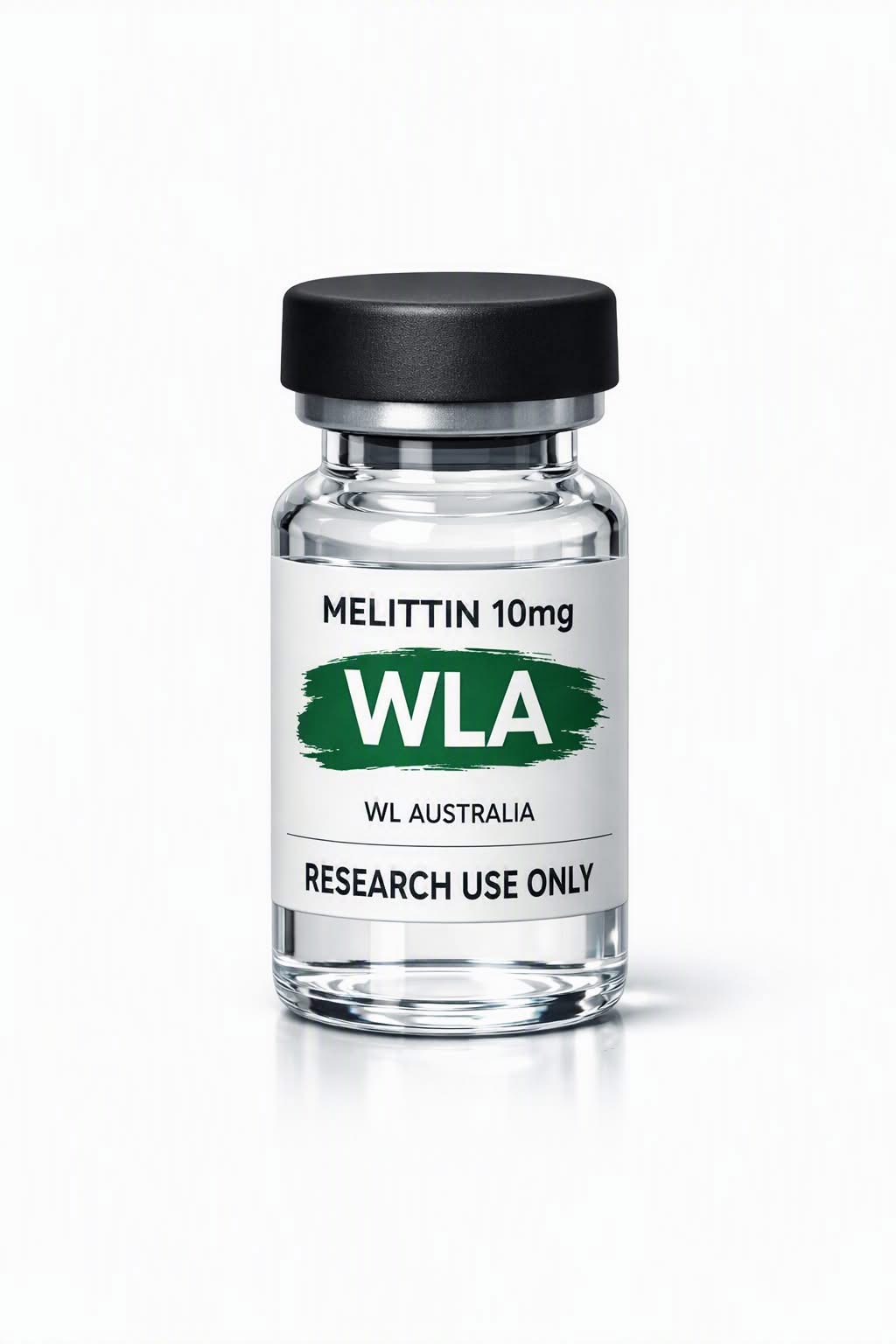
When you look under the hood of cellular biology, cellular membranes act much like high-security perimeter walls protecting a bustling construction site. If an intruder bypasses the wall incorrectly, the entire structure collapses. In the realm of advanced biochemical investigation, researchers studying the Melittin 10mg protocol encounter one of nature’s most potent pore-forming polypeptides. Derived primarily from Apis mellifera venom, melittin is a 26-amino-acid amphipathic peptide that commands respect, demanding precise handling, strict safety protocols, and rigorous optimization to harness its extraordinary potential.
In this comprehensive guide, you will learn how to approach melittin research, examine its multifaceted applications in oncology and immunology, evaluate literature-based dosing parameters, and implement uncompromising safety standards tailored for Australian laboratory environments.
1. Decoding Melittin: Structure and Biochemical Mechanism
The Problem: Non-Selective Cytolysis
Uncontrolled cellular disruption is the primary frustration researchers face when working with raw or unformulated cytolytic agents. Because melittin's primary structure is amphipathic: possessing both hydrophilic and hydrophobic domains: it acts like a biological zipper that unzips lipid bilayers. Without careful modulation, this pore-forming action attacks healthy red blood cells just as aggressively as targeted experimental models, leading to severe hemolysis (the destruction of red blood cells).
The Solution: Targeted Nano-Formulation and Controlled Titration
To achieve biological optimization without triggering widespread toxicity, modern protocols rely on targeted delivery systems, such as polymeric micelles, liposomes, or lipid nanoparticles. Think of these carriers as armored transport vehicles that shield healthy tissues while delivering the peptide directly to the experimental target.

When examining high-purity synthetic melittin (≥97% purity), researchers must always verify structural integrity via High-Performance Liquid Chromatography (HPLC) and Mass Spectrometry (MS) before initiating any assay.
- Primary Sequence: Gly-Ile-Gly-Ala-Val-Leu-Lys-Val-Leu-Thr-Glw-Leu-Pro-Val-Al-Leu-Ile-Ser-W-Ile-Lys-Arg-Lys-Arg-Gln-Gln-Gly (abbreviated representation).
- Molecular Weight: Approximately 2,840 Daltons.
- Solubility: Highly soluble in aqueous buffers and polar organic solvents; requires gentle swirling rather than vigorous shaking during reconstitution.
2. Core Research Applications: Oncology, Antimicrobial Defense, and Immunology
The Problem: Treatment Resistance in Complex Models
Standard experimental models often struggle with drug-resistant cancer phenotypes, persistent microbial biofilms, and stubborn inflammatory cascades that evade conventional agents. Researchers need tools capable of dismantling resilient cellular defenses.
The Solution: Multi-Modal Synergy and Pathway Modulation
Melittin operates through a diverse array of biochemical pathways, offering remarkable synergy when paired with complementary agents.
| Research Application | Primary Mechanism | Observed Experimental Outcome |
|---|---|---|
| Oncology (e.g., Breast Cancer) | Membrane lysis & PI3K/Akt pathway inhibition | Selective cytolysis of neoplastic cells; suppression of metastasis in murine models. |
| Antimicrobial & Biofilms | Disruption of bacterial peptidoglycan and cell walls | Broad-spectrum clearance of Gram-positive and Gram-negative drug-resistant strains. |
| Rheumatology & Inflammation | Downregulation of NF-κB signaling and cytokine suppression | Reduced joint edema, decreased inflammatory infiltration, and cartilage protection. |
By interrupting oncogenic signaling cascades and inducing immunogenic cell death, melittin accelerates biological recovery and opens new horizons in targeted therapeutic research.
3. Literature-Based Dosing Parameters and Experimental Design
The Problem: Navigating the Gap Between In Vitro and In Vivo Data
A frequent pitfall in peptide research is translating cell-culture concentrations directly into animal or clinical models without accounting for systemic clearance and plasma protein binding. This disconnect often leads to protocol failure or severe adverse events.

The Solution: Tiered Protocol Scaling and Pilot Dose-Escalation
You must establish a rigorous, stepwise experimental design. Below is an overview of literature-derived dosage ranges utilized exclusively in preclinical settings:
- In Vitro Assays (Cell Cultures): Concentrations typically range from 0.4 µg/mL to 20 µM, depending on the specific cell line (e.g., vascular smooth muscle cells vs. tumor cell lines).
- In Vivo Rodent Models (Systemic/Local):
- Atherosclerosis models: 0.1 mg/kg administered intraperitoneally twice weekly.
- Oncology nanoformulations: Maximum tolerated doses (MTD) reach up to 20 mg/kg when encapsulated in polymeric micelles, compared to a baseline MTD of 2 mg/kg for free peptide.
- Adjuvant studies: Micro-dose ranges around 4 µg per dose co-administered with antigens to boost antibody titers.
Important Reminder: All stated values are purely illustrative and derived from published preclinical literature. They do not constitute human dosing recommendations.
4. Safety Considerations, Storage, and Australian Compliance
The Problem: Handling Cytotoxic Agents and Ensuring Regulatory Compliance
Working with potent cytolytic peptides introduces significant occupational and biological risks, including accidental tissue irritation, allergic hypersensitivity, and non-compliance with local therapeutic goods regulations.

The Solution: Strict Personal Protective Equipment (PPE) and Cold-Chain Maintenance
To maintain absolute safety and operational integrity within Australian laboratories:
- Regulatory Status: In Australia, research peptides such as melittin are strictly classified for laboratory research and analytical purposes only. They are not approved for human consumption, therapeutic administration, or self-experimentation.
- Personal Protection: Always wear powder-free nitrile gloves, laboratory coats, and eye protection when handling lyophilized powders or reconstituted solutions to prevent cutaneous exposure or mucous membrane irritation.
- Storage Protocols: Store lyophilized powder at -20°C in a desiccated environment protected from direct light. Once reconstituted with bacteriostatic water or sterile PBS, utilize within 14–21 days while maintaining continuous refrigeration (2°C to 8°C).
- Waste Disposal: Treat all vials, needles, and contaminated consumables as biohazardous waste and dispose of them in accordance with local Australian state environmental and health regulations.
By prioritizing precision, strict adherence to safety protocols, and continuous education, you unlock the true potential of advanced peptide research while safeguarding your laboratory standards.

 Immune Support and Life Extension
 Shop Bioregulators & Research Chemicals for 2026 Scientific Labs
 Brain
Brain Buy Hair & Skin Care Peptides Australia – Top Quality & Best Prices
 Discover WLAustralia Peptides for Anxiety Relief & Longevity