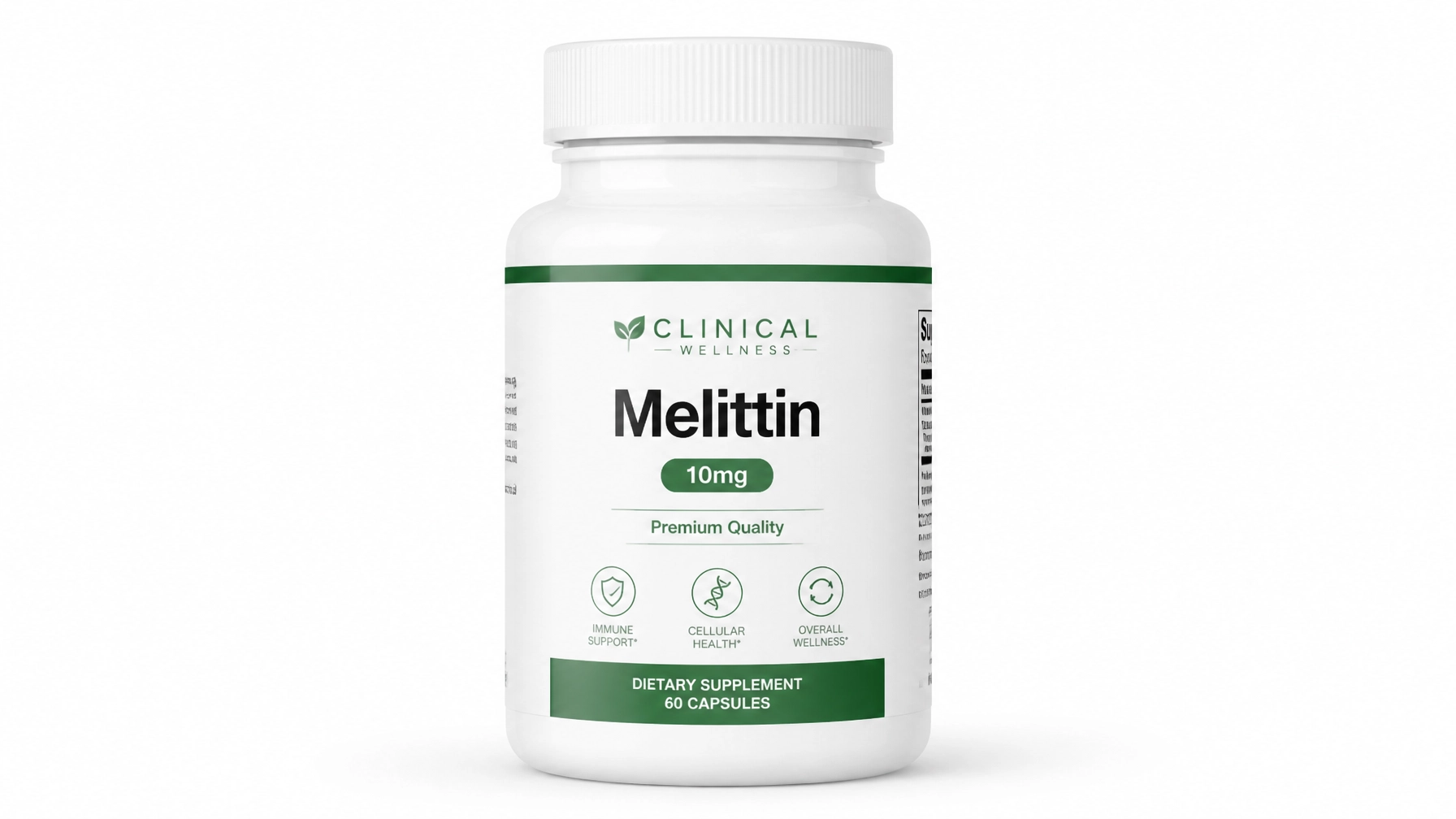
Melittin: The Bee Venom Peptide for Antimicrobial and Anti-Inflammatory Research

Are you frustrated by stubborn, recurring infections and chronic inflammation that standard protocols fail to resolve? You are not alone. Modern biological research is increasingly turning toward nature's most sophisticated defense systems to break through these physiological roadblocks. In this deep dive, you will learn how Melittin: the primary bioactive peptide found in honeybee venom (Apis mellifera): serves as a cornerstone for advanced antimicrobial and anti-inflammatory investigation.
By taking control of your biological literacy, you can unlock a deeper understanding of how amphipathic molecules interact with cellular architecture. Whether you are a practitioner or an enthusiastic researcher navigating Australian regulatory frameworks and clinical standards, mastering the mechanics of Melittin 10mg is essential for modern optimization.
1. Foundational Architecture: What is Melittin?
The Problem: Biological Resilience vs. Microbial Armor
Pathogenic bacteria and inflammatory pathways often possess robust defenses that render conventional interventions sluggish or ineffective. When microbes construct resilient biofilms or when the immune system gets trapped in a perpetual loop of irritation, your biological systems experience gridlock.
The Solution: The 26-Amino-Acid Molecular Key
You can think of Melittin as a master construction crew equipped with a specialized molecular key. Structurally, it is a 26-amino-acid, amphipathic (possessing both hydrophilic and hydrophobic regions), cationic peptide comprising roughly 40–50% of dry bee venom.
- Hydrophobic Tail: Drives insertion directly into lipid bilayers.
- Cationic Head: Attracts negatively charged cellular surfaces.
- Synergy: This dual nature allows Melittin to act with devastating precision against unwanted cellular targets.

Focus on the core principle: Optimization relies on precision. Melittin demonstrates that natural templates can achieve extraordinary structural integration when engineered correctly.
2. Antimicrobial Powerhouse: Breaching Resistant Strains
The Problem: Superbug Resistance and Biofilm Barriers
Traditional antibiotics face a mounting crisis as drug-resistant strains: such as methicillin-resistant Staphylococcus aureus (MRSA): build impenetrable polysaccharide fortresses known as biofilms. These barriers function like concrete walls around a medieval city, blocking standard pharmacological agents.
The Solution: Pore Formation and Triple-Action Disruption
Consider Melittin like a demolition team using targeted explosive charges. When introduced to microbial environments, Melittin exhibits a triple-action profile: broad-spectrum antibacterial action, anti-biofilm eradication, and quorum-sensing inhibition.
- Membrane Insertion: Melittin binds to microbial membranes, inserting itself like a wedge into wood.
- Pore Assembly: It aggregates to form toroidal pores, causing rapid cytoplasmic leakage and cellular lysis.
- Biofilm Penetration: It actively dismantles mature biofilms, exposing entrenched bacterial colonies to clearance.
| Feature | Traditional Antibiotics | Melittin Peptide |
|---|---|---|
| Target Mechanism | Inhibits specific enzymatic synthesis (e.g., cell wall or protein synthesis) | Physical disruption of lipid bilayers and pore formation |
| Biofilm Efficacy | Often blocked by extracellular polymeric substances | High penetration and eradication capacity |
| Resistance Risk | High evolutionary pressure leading to acquired resistance | Low incidence of direct resistance due to physical membrane lysis |
For complementary immune support strategies, consider reviewing our guides on Thymopentin 20mg and metabolic health optimization via Svetinorm 20mg.
[Video Placeholder: Watch our expert visual breakdown on Melittin membrane pore formation and bacterial lysis mechanics.]
3. Anti-Inflammatory Modulation: Navigating the Dose-Dependent Paradox
The Problem: Chronic Inflammatory Fires
When systemic inflammation flares up: mimicking an uncontrolled engine fire in a high-performance vehicle: pro-inflammatory cytokines (TNF-α, IL-1β, and IL-6) wreak havoc across tissues, accelerating degeneration and discomfort.
The Solution: Strategic Low-Dose Signaling
You must consider the crucial dose-dependent paradox of Melittin. At high concentrations, unrefined bee venom or excess Melittin acts as a pro-inflammatory agent. However, at carefully controlled, low therapeutic doses, Melittin acts as an expert coach calming a stressed sports team.
- NF-κB Inhibition: Blocks nuclear factor kappa-light-chain-enhancer of activated B cells, preventing the transcription of inflammatory genes.
- Cytokine Suppression: Downregulates tumor necrosis factor-alpha and interleukins.
- Enzyme Regulation: Suppresses inducible nitric oxide synthase (iNOS) and cyclooxygenase-2 (COX-2) expression.

4. Safety, Toxicity, and Clinical Frontiers: Engineering the Delivery
The Problem: Hemolytic Activity and Broad Cytotoxicity
Because Melittin is a potent membrane-active agent, it does not strictly differentiate between a microbial cell and a human red blood cell. High systemic exposure can trigger hemolysis (the rupture of red blood cells) and localized hypersensitivity.
The Solution: Precision Nanocarriers and Structural Analogs
To unlock Melittin's full potential safely within Australian clinical and research guidelines, scientists utilize advanced engineering frameworks:
- Nanoparticle Conjugation: Encapsulating Melittin in liposomes or polymer-based nanocarriers ensures targeted delivery directly to infected sites or tumor microenvironments, shielding healthy tissue.
- Amino Acid Substitutions: Modifying specific lysine residues alters charge distribution, reducing hemolytic side effects while retaining antimicrobial potency.
- Enzymatic Hydrolysates: Utilizing protease-derived fragments creates multifunctional bioagents with significantly enhanced safety profiles.
Consider this: Safety is not an afterthought; it is the ultimate metric of scientific maturity. Always ensure your research adheres to local TGA (Therapeutic Goods Administration) compliance and institutional oversight.
[Video Placeholder: Explore our laboratory walkthrough on safe handling, reconstitution, and nanocarrier delivery systems for research peptides.]
Conclusion & Practical Takeaways
You have now explored the intricate dual nature of Melittin: a formidable antimicrobial agent and a delicate inflammatory modulator. By understanding its 26-amino-acid structure, its pore-forming mechanisms, and the critical importance of low-dose optimization and nanocarrier delivery, you are equipped to approach peptide research with both ambition and rigorous caution.
- Focus on purity: Always source high-grade research materials such as Melittin 10mg.
- Prioritize recovery: Balance inflammatory modulation with comprehensive cellular support.
- Maintain safety standards: Respect dosage parameters and regulatory compliance in every experimental design.

Take control of your biological investigations today, and continue exploring our comprehensive catalog at wlaustralia.com.au.

 Immune Support and Life Extension
 Shop Bioregulators & Research Chemicals for 2026 Scientific Labs
 Brain
Brain Buy Hair & Skin Care Peptides Australia – Top Quality & Best Prices
 Discover WLAustralia Peptides for Anxiety Relief & Longevity