Opiorphin Research Protocol: Mechanism of Action and Analgesic Studies

When you dive into advanced neurobiology and pain management research, you quickly encounter a frustrating bottleneck: traditional analgesics often come with severe tolerance, addiction liability, and systemic side effects. If you are investigating how the human body naturally controls discomfort without hijacking central nervous system pathways with brute force, you need to look at endogenous peptide regulation. Consider this your master guide to unlocking the secrets of Opiorphin, a naturally occurring pentapeptide that acts as a physiological shield for your body’s own built-in pain relief network.
In this comprehensive protocol review, you will learn the exact biochemical machinery behind opiorphin, explore preclinical analgesic studies, and discover how to structure rigorous research methodologies. Whether you are setting up laboratory assays or analyzing enkephalin preservation, mastering these concepts is essential for your scientific optimization.
1. The Molecular Architecture: Understanding Opiorphin and Enzyme Inhibition
The Problem: Molecular Degradation
In a construction site, materials arrive constantly, but if workers leave them unprotected, harsh weather destroys them before they can be used. Similarly, your nervous system constantly produces enkephalins: endogenous opioid peptides that act as natural painkillers. However, enzymes in your biological tissues act like ravenous demolition crews, instantly shredding these healing signals before they can bind to cellular receptors.
The Solution: Targeted Protease Defense
You can solve this degradation dilemma by utilizing Opiorphin (sequence QRFSR), an endogenous human pentapeptide. Opiorphin functions as a dual physiological inhibitor. Think of it like a precision zipper lock that temporarily jams the enzymatic scissors inside your tissues. By blocking specific degradative enzymes, opiorphin ensures your natural enkephalins remain intact and active.
Before proceeding further, let us define key terminology used throughout this protocol:
- NEP (Neutral Endopeptidase / Neprilysin – EC 3.4.24.11): A zinc metallo-ectopeptidase responsible for cleaving and inactivating signaling peptides.
- AP-N (Aminopeptidase N – EC 3.4.11.2): A membrane-bound enzyme that rapidly degrades enkephalins at the amino terminus.
- CNS (Central Nervous System): The complex of nerve tissues that controls bodily activities, comprising the brain and spinal cord.
- PK/PD (Pharmacokinetics / Pharmacodynamics): The study of how a substance moves through the body versus the biological effects it produces.

2. Mechanism of Action: The Enkephalin Conservation Pathway
The Problem: Receptors Running Dry Under Stress
When acute or inflammatory pain strikes, your body releases enkephalins into the spinal cord and peripheral tissues. However, due to rapid enzymatic breakdown, the concentration of these natural messengers drops too quickly to provide sustained relief.
The Solution: Amplifying Endogenous Opioidergic Tone
Focus on the core mechanism: opiorphin does not act as a direct receptor agonist like morphine. Instead, it acts upstream by protecting your natural supply.
- Enzyme Inactivation: Opiorphin binds to and inhibits NEP and AP-N, halting their degradative action.
- Half-Life Extension: Enkephalins remain in the extracellular space significantly longer, boosting their local concentration.
- Receptor Engagement: Prolonged enkephalin presence enhances binding to μ- (mu) and δ- (delta) opioid receptors on nociceptive neurons.
- Signal Dampening: This receptor activation inhibits neuronal excitability, successfully blocking pain signals from traveling up to the CNS.
To clarify how this differs from classic pharmacology, review the comparison table below:
| Feature | Traditional Opioids (e.g., Morphine) | Opiorphin-Mediated Enkephalin Preservation |
|---|---|---|
| Primary Action | Direct exogenous receptor agonist | Indirect endogenous enzyme inhibition |
| Pathway Recruitment | Overrides natural signaling loops | Amplifies stress-evoked natural release |
| Tolerance & Addiction Liability | High risk due to receptor overstimulation | Lower risk; regulated by physiological feedback |
| Enzymatic Interaction | Unaffected by tissue peptidases | Directly targets NEP and AP-N |
3. Preclinical Analgesic Studies: What the Data Reveals
The Problem: Bridging Theory and Behavioral Efficacy
Translating molecular binding assays into real-world pain management requires robust animal models. Without rigorous validation, biochemical hypotheses remain unproven.
The Solution: Standardized Behavioral Assays
Preclinical researchers have evaluated opiorphin across multiple acute and chronic pain models:
- Mechanical Pain Models: In rat pin-pain tests, systemic administration of opiorphin demonstrates antinociceptive potency comparable to morphine. Doses typically range between 1 to 2 mg/kg intravenously (i.v.).
- Chemical/Inflammatory Models: In formalin assays, opiorphin significantly reduces nocifensive behaviors.
- Reversal Assays: Co-administration with naloxone (a non-selective opioid receptor antagonist) completely blocks opiorphin-induced analgesia, proving that its effects depend entirely on endogenous opioid pathways.
[Video Placeholder: Opiorphin Mechanism of Action Animation – Visualizing NEP and AP-N inhibition and enkephalin preservation in real time]
4. Designing a Robust Research Protocol
The Problem: Experimental Inconsistency and Variable Data
If your laboratory trials lack standardized controls, fluctuating ambient conditions or incorrect dosing windows will skew your PK/PD data.
The Solution: A Tiered Methodological Framework
You can ensure reliable results by implementing a structured, multi-group experimental design:
- Group 1 (Vehicle Control): Baseline measurement using sterile saline or appropriate buffer solution.
- Group 2 (Dosage Escalation): Opiorphin administration at targeted tiers (e.g., 0.5 mg/kg, 1.0 mg/kg, and 2.0 mg/kg i.v.) to establish dose-response curves.
- Group 3 (Positive Control): Equianalgesic dosing of morphine for comparative benchmarking.
- Group 4 (Mechanistic Blockade): Opiorphin combined with naloxone or selective μ-receptor antagonists to confirm pathway dependency.
[Video Placeholder: Preclinical Analgesic Protocol Walkthrough – Step-by-step laboratory handling, reconstitution, and behavioral assay tracking]

5. Safety, Compliance, and Australian Regulatory Frameworks
The Problem: Regulatory Compliance and Handling Risks
Navigating peptide research in Australia requires strict adherence to institutional safety standards and Therapeutic Goods Administration (TGA) guidelines. Research peptides are strictly designated for laboratory investigation, and overlooking legal compliance can compromise your entire facility.
The Solution: Rigorous Oversight and Proper Storage
Always maintain professional laboratory standards:
- Storage Protocols: Lyophilized opiorphin should be stored at desiccated temperatures (-20°C for long-term stability). Once reconstituted with bacteriostatic water, maintain refrigerated conditions between 2°C and 8°C.
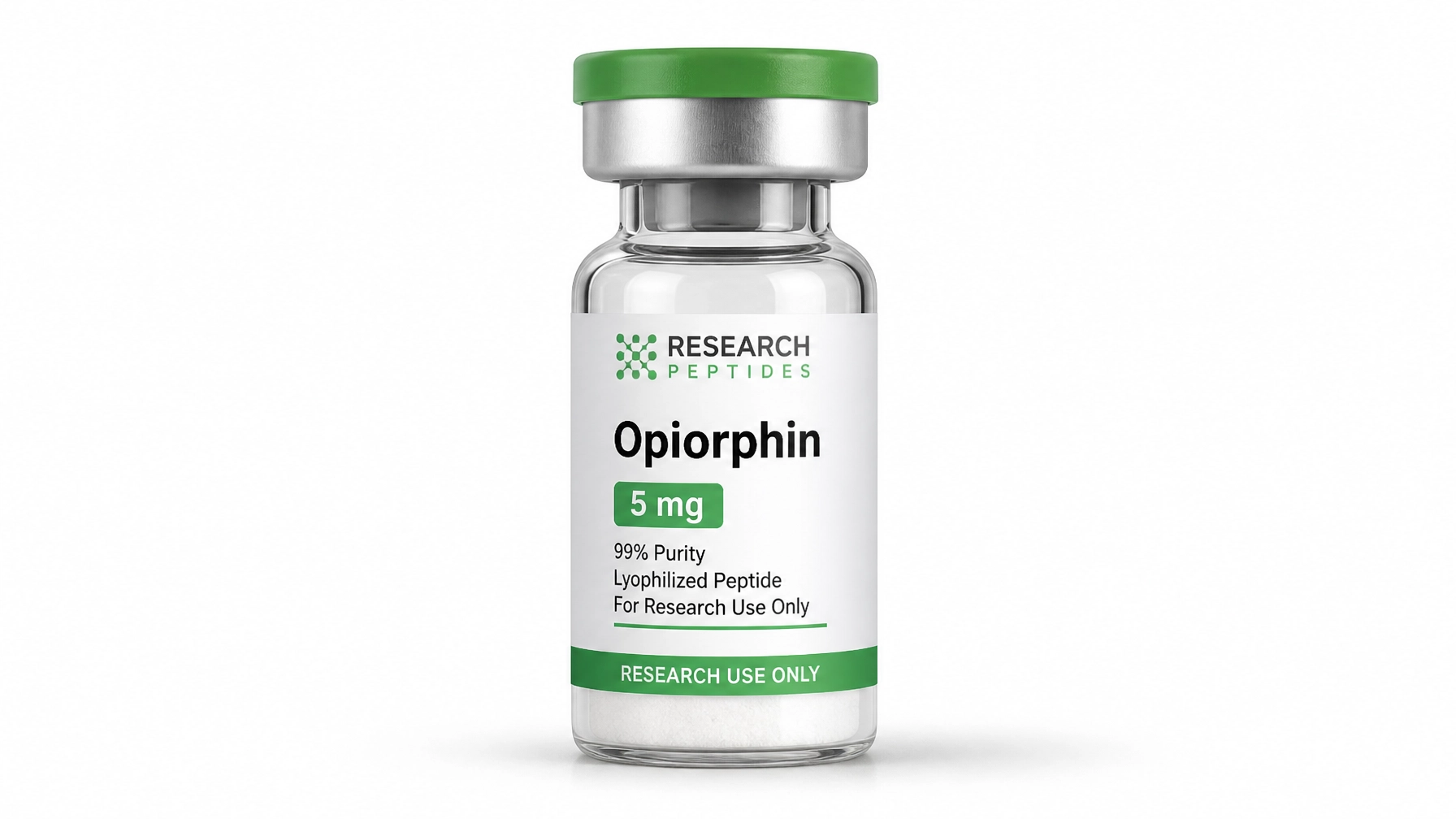
- Legal Compliance: Ensure all materials sourced via specialized suppliers: such as those available through Opiorphin 10mg: are used exclusively for qualified in vitro and preclinical research.
- Institutional Governance: Document all peptide reconstitution ratios, molar concentrations, and disposal procedures to maintain absolute transparency and safety.
By prioritizing synergy, maintaining rigorous recovery protocols, and driving continuous biological optimization, your research will push the boundaries of modern analgesic science. Take control of your laboratory standards today and unlock new pathways in neurobiology.


 Immune Support and Life Extension
 Shop Bioregulators & Research Chemicals for 2026 Scientific Labs
 Brain
Brain Buy Hair & Skin Care Peptides Australia – Top Quality & Best Prices
 Discover WLAustralia Peptides for Anxiety Relief & Longevity