Opiorphin vs Dermorphin: Natural Analgesic Peptides Compared for Research

As a biomedical researcher navigating the complex world of pain management, you face a recurring frustration: traditional analgesics either trigger heavy tolerance and addiction or fail to deliver robust relief. You need a reliable framework to evaluate natural analgesic peptides without risking severe adverse reactions.
In this comprehensive guide, you will learn how Opiorphin and Dermorphin compare across structural mechanisms, potency, and side-effect profiles. By the end of this article, you will be equipped to optimize your research protocols with confidence, safety, and strict adherence to Australian regulatory standards.
1. Foundational Concepts: How Natural Analgesic Peptides Function
The Problem: Signaling Breakdown in Nociceptive Pathways
When tissue damage occurs, the body's neural network fires pain signals like an alarm system blaring across a construction site. Normally, your body releases enkephalins: endogenous opioid neuropeptides that act as natural gatekeepers to dampen nociceptive signaling (the neural transmission of pain signals). However, enzymes like neprilysin (NEP, neutral endopeptidase) and aminopeptidase-N (AP-N) rapidly degrade these enkephalins, much like a demolition crew tearing down scaffolding before it can stabilize the structure.
The Solution: Targeted Molecular Optimization
To restore balance, researchers study peptides that protect or stimulate these pathways. Think of it like tuning a high-performance car engine: you want maximum output with zero collateral damage.
- Opiorphin acts as a precision wrench, inhibiting NEP and AP-N to preserve your body's native enkephalins.
- Dermorphin acts as a universal master key, directly activating mu-opioid receptors ($\mu$-opioid receptors) with extreme potency.
Key Takeaway: Understanding whether a peptide potentiates native signaling or artificially overrides receptor sites is the cornerstone of safe research design.
2. Deep Dive: Opiorphin vs. Dermorphin in Preclinical Research

Opiorphin: The Endogenous Amplifier
- Definition: Opiorphin is an endogenous pentapeptide (a short chain of five amino acids with the sequence Gln-Arg-Phe-Ser-Arg) originally isolated from human saliva.
- Mechanism: It binds to zinc ectopeptidases, inhibiting their degradative action. By locking the "zipper" on enkephalin breakdown, it amplifies natural pain relief only where pain signals are actively firing.
- Analgesic Potency: In murine mechanical and chemical pain models, 1 mg/kg of systemic opiorphin yields analgesia comparable to 3 to 6 mg/kg of morphine, without inducing sedation or motor impairment.
Dermorphin: The Exogenous Powerhouse
- Definition: Dermorphin is a naturally occurring heptapeptide (seven amino acids containing a D-alanine residue) extracted from the skin secretions of South American tree frogs (Phyllomedusa species).
- Mechanism: It is a high-affinity, direct $\mu$-opioid receptor agonist: meaning it floods the receptor sites directly, bypassing the body's natural regulatory feedback loops.
- Analgesic Potency: Dermorphin is orders of magnitude more potent than morphine on a molar basis. However, its high potency is a double-edged sword: it carries severe risks of respiratory depression, tolerance, and physical dependence.
Quick Comparison Table
| Metric | Opiorphin | Dermorphin |
|---|---|---|
| Origin | Endogenous human salivary peptide (PROL1 protein derivative) | Exogenous amphibian peptide toxin |
| Mechanism | Indirect enkephalinase inhibition (NEP & AP-N) | Direct full $\mu$-opioid receptor agonism |
| Morphine Equivalence | 1 mg/kg i.v. ≈ 3–6 mg/kg morphine | Multiples stronger than morphine |
| Tolerance & Addiction Risk | Minimal/undetected in rodent studies | High (classic opioid risk profile) |
| Research Status | Active preclinical SAR & liposomal trials | Restricted / experimental tool / historical doping concern |
3. Practical Applications and Laboratory Protocol Integration

The Problem: Handling Complex Peptides in Australian Laboratories
When setting up in-vitro or in-vivo assays, researchers often struggle with peptide stability, reconstitution, and compliance with local Therapeutic Goods Administration (TGA) guidelines. In Australia's variable climate: ranging from humid northern summers to crisp southern winters: maintaining cold-chain integrity is vital for peptide preservation.
The Solution: A Tiered Implementation Strategy
Focus on strict protocol discipline to ensure reproducible data:
- Storage & Reconstitution: Store lyophilized peptides at -20°C. Reconstitute using bacteriostatic water under sterile laminar flow hoods.
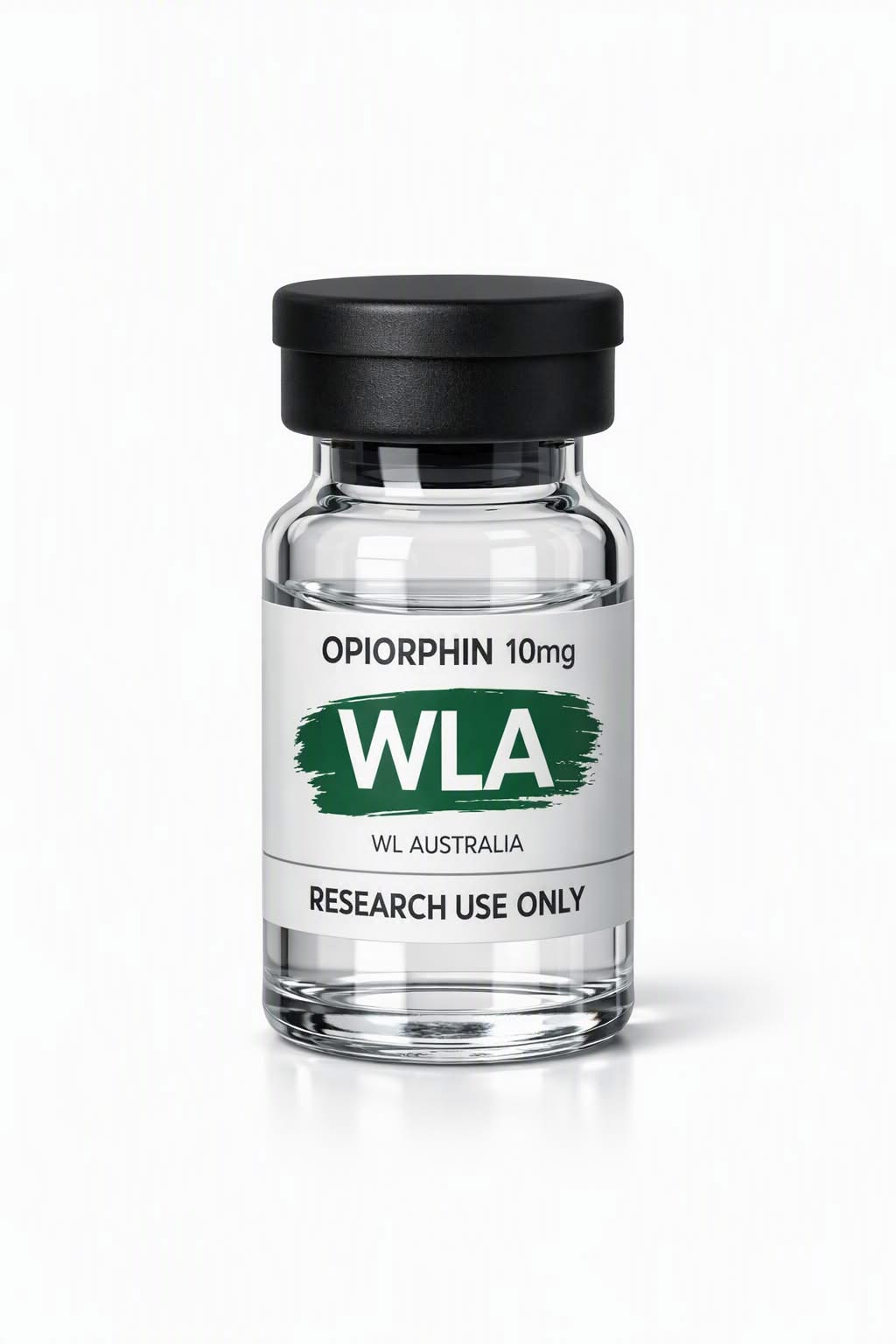
- Comparative Assay Design: When comparing Opiorphin 10mg with alternatives like Dalargin 10mg, always establish baseline nociceptive thresholds before administration.
- Data Logging: Track behavioral metrics (such as paw-withdrawal latency or tail-flick responses) to measure recovery and optimization accurately.
Focus on safety: All peptides supplied by WL Australia are strictly designated as research chemicals only: not for human consumption. Always verify institutional ethics board approval before initiating animal or clinical tissue studies.
4. Video Demonstrations & Visual Analysis
To assist your laboratory team in visualizing reconstitution techniques and assay setups, review the following instructional video walkthroughs:
[VIDEO_PLACEHOLDER_1: Opiorphin Reconstitution and Handling Protocol Walkthrough]
For an advanced look at receptor binding kinetics and comparative analgesic assays, watch our second technical seminar:
[VIDEO_PLACEHOLDER_2: Comparative Nociceptive Assays: Opiorphin vs Exogenous Opioids]
5. Safety, Compliance, and Future Research Outlook
The Problem: Regulatory Compliance and Ethical Oversight
Navigating peptide research without rigorous safety protocols exposes your facility to compliance risks and experimental variability.
The Solution: Rigorous Maintenance and Legal Adherence
- Regulatory Alignment: Ensure your research aligns with Australian federal guidelines regarding research chemicals.
- Synergy & Recovery: Emphasize cellular synergy and tissue recovery by combining peptide studies with robust baseline controls.
- Continuous Optimization: Regularly audit your laboratory handling procedures to maintain peak structural integrity across all stored compounds.
Take control of your research today. Explore our catalog of high-purity research compounds, including Opiorphin 10mg, to unlock new dimensions in your analgesic studies.

 Immune Support and Life Extension
 Shop Bioregulators & Research Chemicals for 2026 Scientific Labs
 Brain
Brain Buy Hair & Skin Care Peptides Australia – Top Quality & Best Prices
 Discover WLAustralia Peptides for Anxiety Relief & Longevity