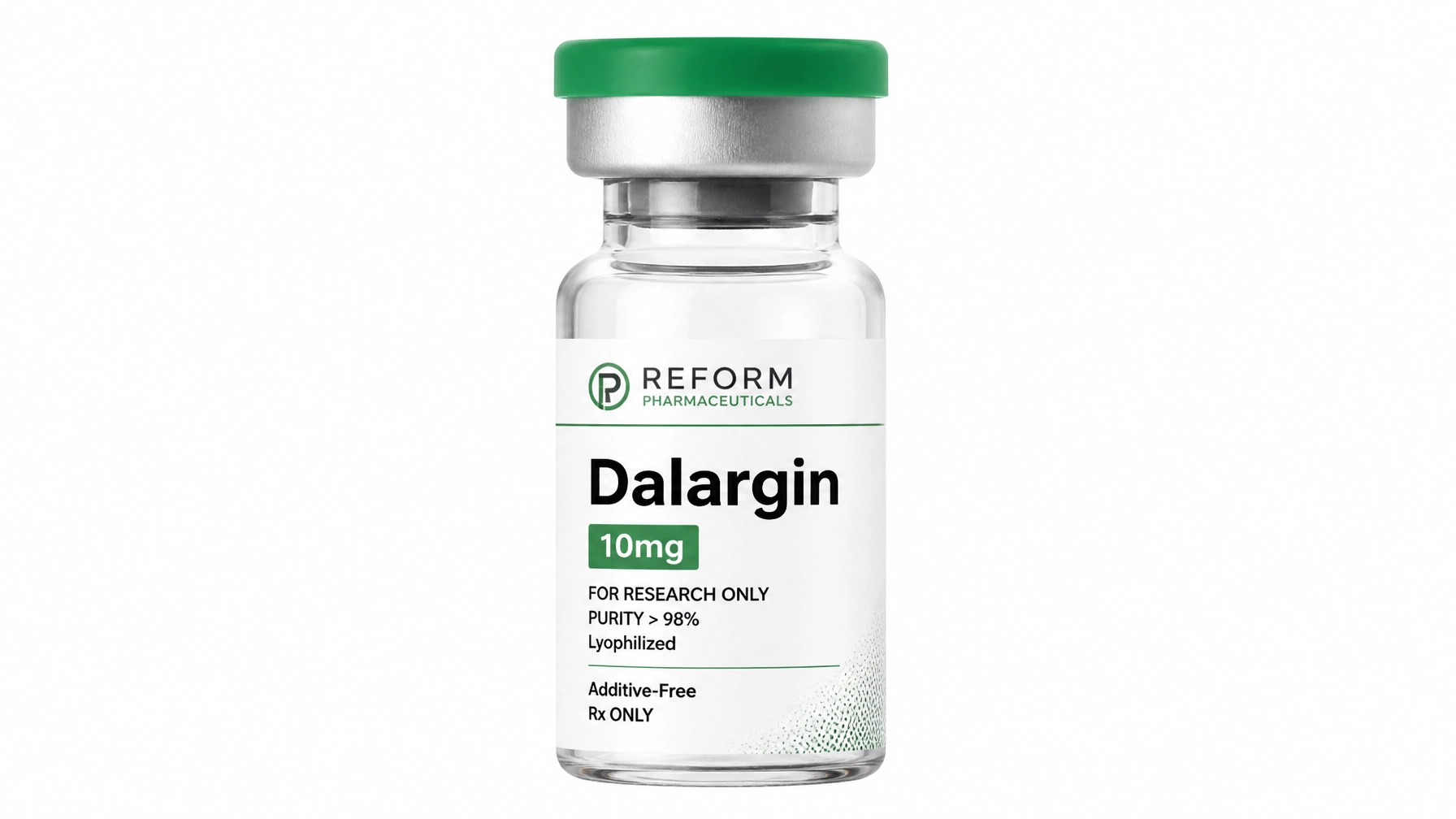
Dalargin: The Synthetic Opioid Hexapeptide for Gastroprotection and Pain Research

When you explore advanced peptide research, you quickly realize that the human body is like a complex construction site. When inflammation or tissue damage strikes: such as gastric ulcers or acute stress: the cellular machinery experiences friction, breakdowns, and delayed repairs. You need targeted tools to accelerate recovery and achieve biological optimization. Enter Dalargin, a specialized synthetic hexapeptide (a chain of six amino acids) engineered specifically to interact with peripheral opioid receptors, offering profound cytoprotective and gastroprotective properties.
In this comprehensive guide, you will learn how Dalargin works, its unique receptor pharmacology, its role in mucosal recovery, and how it bridges the gap between pain research and tissue restoration. Let us examine how you can take control of your understanding of this fascinating compound available at Dalargin 10mg.
1. Structure and Peripheral Receptor Pharmacology: The Molecular Zipper
The frustration in peptide design is often the body's natural defense mechanisms: enzymes break down foreign peptides before they reach their target, or compounds cross the blood-brain barrier (BBB), triggering unwanted central nervous system effects.
To solve this, researchers designed Dalargin with the exact sequence Tyr‑D‑Ala‑Gly‑Phe‑Leu‑Arg (YAGFLR), derived from endogenous Leu-enkephalin. Consider this molecular structure like a specialized zipper:
- D‑Ala (D-alanine) at position 2: Acts as a reinforced tooth in the zipper, making the peptide highly resistant to enzymatic degradation by peptidases.
- C‑terminal Arg (arginine): Introduces a strong positive charge and polarity, effectively locking the peptide out of the central nervous system and concentrating its action strictly on peripheral opioid receptors.

Receptor Selectivity Breakdown
| Receptor Type | Affinity & Activity | Primary Biological Outcome |
|---|---|---|
| Mu-Opioid (μ) | High Potency / Agonist | Mucosal protection, anti-secretory action, and local tissue modulation |
| Delta-Opioid (δ) | Moderate / Secondary | Supporting vascular tone and microcirculation |
| Kappa-Opioid (κ) | Minimal / Negligible | Little to no involvement in standard therapeutic windows |
Focus on precision: By restricting its activity to peripheral mu-opioid receptors, Dalargin achieves targeted recovery without inducing central sedation or systemic opioid side effects. For researchers examining related peripheral mechanisms, exploring compounds like Opiorphin 10mg offers additional insights into local peptide signaling.
2. Gastroprotection and Cytoprotection: Healing the Mucosal Lining
When gastric or duodenal mucosa suffers from stress, non-steroidal anti-inflammatory drugs (NSAIDs), or corrosive factors, the epithelial layer breaks down like a damaged engine running without oil.
The Problem: Chronic Mucosal Degradation
Standard interventions often reduce acid production but fail to actively stimulate tissue repair, leaving the gut vulnerable to recurring lesions and oxidative stress.
The Solution: Tiered Mucosal Optimization
Dalargin acts as a master foreman on your biological construction site, driving multi-tiered healing:
- Stimulation of Cellular Proliferation: Accelerates DNA synthesis in gastric and duodenal mucosal cells, ensuring rapid replacement of damaged epithelial cells.
- Suppression of Proteolysis and Acid Secretion: Moderates gastric juice acidity and suppresses excessive proteolytic enzyme activity, creating a calm environment for tissue recovery.
- Redox Balance and Microcirculation: Enhances lymphatic drainage and microcirculation while lowering free-radical activity in injured tissues.

Core Principle Reminder: True biological optimization requires both halting destructive inflammation and actively promoting structural synergy between repair factors like Epidermal Growth Factor (EGF) and mucosal cells.
If your research extends into broad immune and tissue defense pathways, consider pairing your analysis with compounds like Alloferon-1 10mg or hormonal regulators such as Alarelin 10mg.
3. Clinical Applications and Visceral Protection
Beyond experimental models, Dalargin has established a strong clinical footprint in regional gastroenterology and pancreatology (particularly registered in Russia for peptic ulcer exacerbations and acute pancreatitis).
How It Manages Acute Pancreatitis
During acute pancreatic inflammation, the organ essentially digests itself due to the uncontrolled release of proteolytic enzymes. Dalargin steps in as a molecular governor:
- Suppresses pancreatic exocrine secretion.
- Reduces hyperenzymemia (elevated blood enzyme levels).
- Limits necrosis foci and promotes their replacement with healthy, viable tissue.
Safety and Regulatory Compliance in Australia
When conducting research or sourcing peptides within Australia, always ensure adherence to local Therapeutic Goods Administration (TGA) guidelines and institutional oversight. Clinical-grade peptides require rigorous verification of purity and chain integrity. For general immune support and foundational vitality research, complementary peptide protocols such as Thymopentin 20mg provide robust frameworks for systemic balance.
4. Analgesia, Pain Research, and Future Horizons
While early pharmacological assays demonstrated that Dalargin possesses opioid-type analgesic properties in rodent hot-plate models, its primary clinical value remains distinct from central painkillers. Because therapeutic anti-ulcer doses do not cross the blood-brain barrier, Dalargin functions primarily as a visceral cytoprotective agent rather than a systemic analgesic.

Future Research Directions
- NF-κB and TLR-4 Modulation: Investigating how peripheral opioid agonists downregulate inflammatory transcription factors.
- TGF-β and EGF Balancing: Exploring the intricate molecular signaling that suppresses scarring while promoting functional mucosal healing.
- Dose Optimization: Avoiding the "effect escape" phenomenon where excessively high doses diminish therapeutic efficacy.
Take control of your research protocols today by securing verified compounds directly from trusted sources like Dalargin 10mg.
Summary Checklist for Researchers
- Verify Sequence Integrity: Confirm the Tyr-D-Ala-Gly-Phe-Leu-Arg structure.
- Target Peripheral Receptors: Leverage mu-opioid selectivity for localized cytoprotection without central sedation.
- Monitor Dosage Windows: Ensure optimal dosing to prevent receptor desensitization or "effect escape."
- Prioritize Compliance: Align all experimental protocols with Australian research standards and safety guidelines.
Unlock the full potential of your peptide research and drive superior recovery outcomes by integrating Dalargin into your scientific workflow.

 Immune Support and Life Extension
 Shop Bioregulators & Research Chemicals for 2026 Scientific Labs
 Brain
Brain Buy Hair & Skin Care Peptides Australia – Top Quality & Best Prices
 Discover WLAustralia Peptides for Anxiety Relief & Longevity