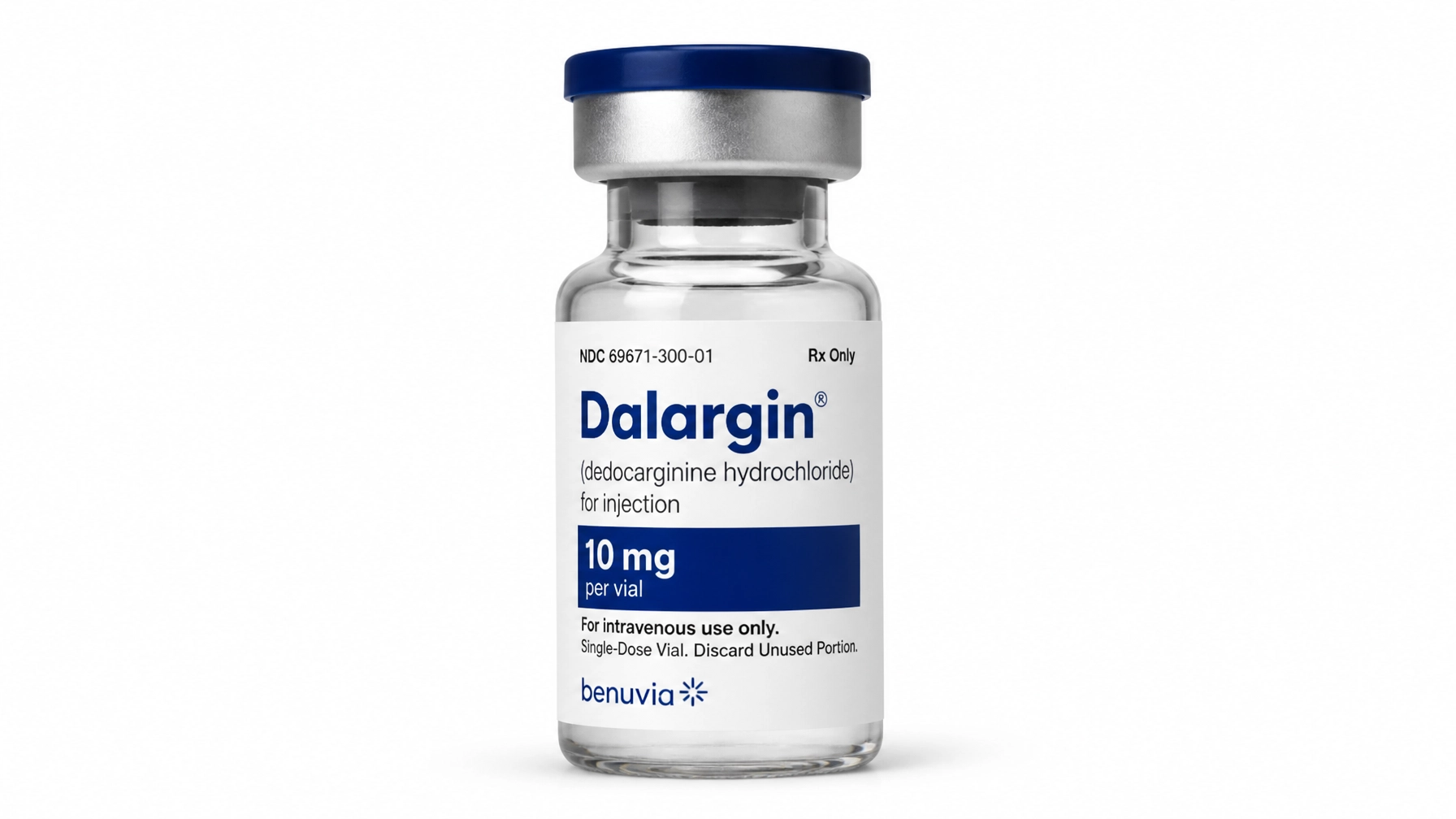
Dalargin Research Protocol: Gastroprotection and Tissue Healing Applications

When you look at your body's digestive lining, imagine a high-performance construction site constantly exposed to harsh corrosive weather. Every single day, your gastrointestinal tract battles acidic stress, enzymatic wear, and dietary friction. When this delicate barrier breaks down, you face persistent inflammation, delayed tissue repair, and chronic discomfort.
You need a targeted restoration strategy to take control of your biology and accelerate recovery.
Enter Dalargin, a breakthrough synthetic hexapeptide designed to fortify mucosal defenses, stimulate cellular proliferation, and drive rapid tissue healing. In this comprehensive research guide, you will explore the precise mechanisms, dosing protocols, and gastroprotective applications that make Dalargin a cornerstone of advanced alternative peptide research.
To get started right away, you can examine our pharmaceutical-grade product directly on the Dalargin 10mg product page. For comprehensive systemic support, consider pairing your research protocols with complementary metabolic regulators such as Svetinorm 20mg or immune-modulating peptides like Thymopentin 20mg and Alloferon-1 10mg.
1. Chemical Architecture and Mechanism of Action
The Problem: Rapid Enzymatic Degradation in Biological Environments
Naturally occurring peptides are fragile. When introduced into biological systems, endogenous enzymes quickly tear them apart like a fragile zipper pulled too fast, neutralizing their therapeutic potential before they can reach target tissues.
The Solution: Engineered Structural Stability
Dalargin solves this vulnerability through precise molecular engineering. Structurally classified as a synthetic hexapeptide analogue of leucine-enkephalin with the sequence Tyr-D-Ala-Gly-Phe-Leu-Arg, Dalargin incorporates a D-amino acid substitution and a C-terminal arginine. This structural modification acts like reinforced steel framing in a car engine, shielding the peptide from enzymatic breakdown and ensuring prolonged biological activity.

You will find that Dalargin functions primarily as a selective $\delta$-opioid receptor (delta-opioid receptor) agonist. Unlike classical narcotics that target central nervous system receptors and cause heavy sedation, Dalargin's peripheral affinity focuses entirely on cytoprotection, vascular integrity, and mucosal optimization.
Core Principle: Stability equals efficacy. By protecting molecular integrity, Dalargin ensures uninterrupted cellular recovery.
2. Gastroprotection Protocols: Preclinical & Clinical Insights
The Problem: Acute Gastric Lesions and Stress Ulcerogenesis
Stress, non-steroidal anti-inflammatory drugs (NSAIDs), and gastric acid hypersecretion create localized tissue destruction akin to acid burning through metal pipes. Left unchecked, these erosions deepen into ulcers that compromise nutrient absorption and systemic vitality.
The Solution: Standardized Subcutaneous Dosing Protocols
Preclinical and clinical research establishes clear benchmark parameters for acute gastroprotection.
- Duodenal Ulcer & Stress Erosion Models: In established rat models utilizing cysteamine or immobilization stress, subcutaneous (s.c.) administration of Dalargin at 10 $\mu$g/kg (micrograms per kilogram) reduced duodenal lesion manifestations four to five-fold.
- NSAID Gastropathy: Studies confirm that Dalargin administration significantly decreases erosive surface area, normalizes epithelial cell proliferation, and tames oxidative stress markers within the gastric mucosa.
- Clinical Healing Benchmarks: Human clinical series demonstrate that targeted Dalargin therapy shortens average duodenal ulcer healing times significantly, achieving up to 87.5% complete cicatrization (scar tissue formation and healing) within 28 days.
[Video Placeholder: Watch our expert breakdown of Dalargin gastroprotection mechanisms and mucosal repair dynamics.]
When preparing your research solutions, precision is paramount. Always dissolve Dalargin powder in sterile 0.9% NaCl (sodium chloride / normal saline) to maintain isotonic stability.

3. Tissue Healing & Barrier Restoration in Colitis Models
The Problem: Compromised Colonic Permeability and Chronic Inflammation
When studying inflammatory bowel conditions such as ulcerative colitis (UC): frequently modeled using DSS (Dextran Sodium Sulfate): the intestinal epithelial barrier becomes porous, allowing luminal toxins to infiltrate deep tissue layers like a breached dam.
The Solution: Multi-Tiered Tissue Regeneration
To overcome chronic barrier failure, researchers utilize a 7-day protocol in murine models.
- Dosing Regimen: Administration of Dalargin at 100 $\mu$g/kg s.c. once daily for 7 days starting from the onset of inflammation.
- Macroscopic Outcomes: Noticeable reduction in the Disease Activity Index (DAI), prevention of pathological colonic shortening, and elimination of mucosal infiltrate accumulation.
- Growth Factor Stimulation: Dalargin actively stimulates EGF (Epidermal Growth Factor) concentration while modulating TGF-$\beta$ (Transforming Growth Factor-beta) levels in colonic tissue. This hormonal teamwork accelerates cellular division and restores tight junction permeability.
| Parameter | Control Group (UC Model) | Dalargin Protocol Group (100 $\mu$g/kg) | Mechanistic Outcome |
|---|---|---|---|
| Disease Activity Index | High (Severe weight loss & bleeding) | Significantly Reduced | Rapid symptom stabilization and weight maintenance |
| Colonic Length | Severe shortening due to edema | Preserved (Minimal shortening) | Reduced tissue inflammation and structural protection |
| Goblet Cell Density | Depleted mucin production | Restored and normalized | Enhanced mucus barrier and defense |
| Growth Factors (EGF) | Suppressed baseline levels | Upregulated | Accelerated mucosal healing and epithelial repair |
4. Practical Dosing, Preparation, and Safety Considerations
The Problem: Handling Errors and Regulatory Compliance
Even the most potent research compound will underperform if reconstitution, storage, and administration protocols are mishandled. Furthermore, navigating local Australian health guidelines and research standards requires strict adherence to safety and ethical frameworks.
The Solution: Stepwise Protocol Execution & Medical Oversight
You must approach every peptide protocol with rigorous scientific discipline. Follow these essential guidelines:
- Reconstitution: Reconstitute lyophilized Dalargin powder using bacteriostatic water or sterile 0.9% NaCl under laminar flow conditions.
- Storage: Keep unconstituted vials stored at -20°C. Once reconstituted, maintain vials between 2°C and 8°C and use within recommended stability windows.
- Route of Administration: Standard preclinical studies rely on subcutaneous injections (s.c.) in 0.1 mL volumes. Emerging investigations also explore intranasal delivery (e.g., 0.2 $\mu$g/kg) for anti-stress systemic effects.
- Safety and Oversight: All protocols outlined here are intended for advanced research, laboratory evaluation, and educational inquiry under appropriate medical supervision. Always comply with relevant therapeutic goods regulations in Australia.
[Video Placeholder: Step-by-step laboratory demonstration of peptide reconstitution and safe handling techniques.]

Conclusion: Take Control of Your Biological Optimization
You now possess the foundational knowledge required to understand Dalargin's remarkable capacity for gastroprotection, antioxidant defense, and mucosal tissue healing. By mastering the synergy between precise s.c. dosing (ranging from 10 to 100 $\mu$g/kg), growth factor modulation (EGF and TGF-$\beta$), and rigorous barrier restoration, you unlock new frontiers in biological research.
Ready to advance your investigative protocols? Explore our complete inventory and secure your high-purity research materials directly at the Dalargin 10mg product page. Empower your laboratory with confidence, transparency, and scientific excellence today.

 Immune Support and Life Extension
 Shop Bioregulators & Research Chemicals for 2026 Scientific Labs
 Brain
Brain Buy Hair & Skin Care Peptides Australia – Top Quality & Best Prices
 Discover WLAustralia Peptides for Anxiety Relief & Longevity