PL5 Research Protocol: Handling, Dosing and Laboratory Applications

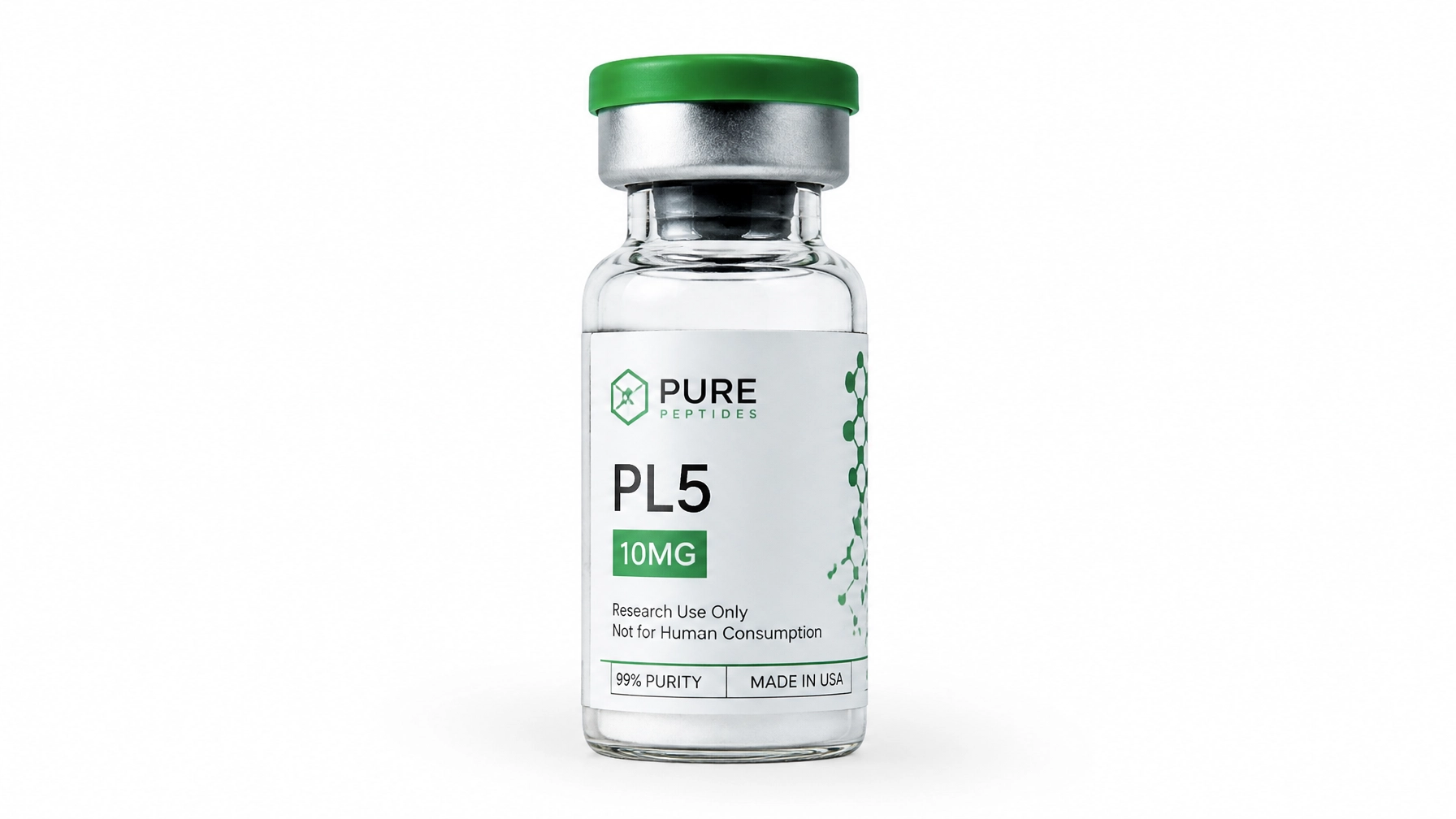
When you step into the demanding world of advanced molecular research, treating biological reagents with casual guesswork is like tuning a high-performance sports car engine with a wrench you found in the garden shed. Precision is everything. If you are exploring targeted cellular agents such as PL5 (available directly via our PL5 10mg product page), mastering the exact mechanics of handling, reconstitution, and laboratory dosing is the absolute dividing line between breakthrough data and experimental failure.
In this comprehensive guide, you will learn the foundational mechanics of PL5 variants, discover step-by-step reconstitution frameworks, and explore rigorous dosing strategies designed to optimize your laboratory workflows. Whether you are comparing cellular responses with related bioregulators like Cerluten 10mg or structural peptide tools like Ventfort 10mg, this manual provides the clarity and technical rigor required for high-level scientific inquiry.
1. Demystifying PL5: Sequence Variants and Core Principles
The Frustration: Many researchers struggle with ambiguous peptide classifications, leading to incompatible solvent choices and distorted in vitro readouts. When your baseline materials are poorly defined, every subsequent data point becomes compromised.
The Solution: Establish exact chemical identification before opening the vial.
Think of a peptide's amino acid sequence like a precision zipper: every single tooth must align perfectly for the structure to function. In scientific literature, "PL5" can refer to distinct molecular structures, including Peceleganan (PL-5) (a synthetic antimicrobial peptide utilized in wound healing studies), Palmitoyl Tripeptide-5 (PT-5) (a hydrophobic cosmetic lipopeptide), or pig-derived hybrid defensin variants.

Before initiating any protocol, you must review the Certificate of Analysis (COA) to confirm:
- Sequence and Purity: Ensuring greater than 98% HPLC purity.
- Counter-Ion Profile: Determining whether the peptide is supplied as an acetate or trifluoroacetate salt.
- Hydrophilic vs. Hydrophobic Character: Guiding your precise solvent selection.
Focus on precision. By locking down these foundational parameters early, you establish complete control over your biological optimization pipeline.
2. Reconstitution Mechanics: Conquering Solubility Challenges
The Frustration: Watching lyophilized powder clump together or form cloudy suspensions in standard aqueous buffers can ruin an entire vial in seconds.
The Solution: Implement a tiered, solvent-specific reconstitution protocol tailored to your PL5 variant's chemical properties.
Like mixing concrete at a construction site, getting the ratio and liquid type wrong results in a structural failure. Depending on whether your PL5 variant is hydrophilic or hydrophobic, your approach must differ:
For Hydrophobic Lipopeptide Variants (e.g., Palmitoyl Tripeptide-5)
- The Problem: Poor direct solubility in pure water or standard phosphate-buffered saline (PBS).
- The Strategy: First dissolve the weighed peptide in a minimal volume of organic solvent such as ethanol, dimethyl sulfoxide (DMSO, an organosulfur solvent used to dissolve recalcitrant compounds), or dimethylformamide (DMF, an organic solvent with high solvation power) to achieve a high-concentration stock (10–30 mg/mL). Gently vortex until fully dissolved.
- The Dilution: Slowly dilute this organic stock into aqueous buffer (e.g., PBS pH 7.2) keeping the final organic fraction below tolerated cellular thresholds ($\le 0.1%$ to $0.5%$ v/v).
For Hydrophilic Antimicrobial Variants (e.g., Peceleganan)
- The Problem: Rapid degradation or precipitation if pH is improperly adjusted.
- The Strategy: Dissolve directly in sterile water or 10 mM PBS (pH 7.4) to a convenient stock concentration (1–10 mM). Adjust pH to near-neutral before filter-sterilization through a 0.22 µm syringe filter.
| Parameter | Hydrophilic PL5 Variants | Hydrophobic PL5 Variants |
|---|---|---|
| Primary Solvent | Sterile Water / PBS (10 mM, pH 7.4) | Ethanol / DMSO / DMF |
| Max Initial Stock | 1–10 mg/mL | 10–30 mg/mL |
| Aqueous Dilution | Direct dissolution | Gradual step-down with buffer |
| Filtration | 0.22 µm PES membrane | Compatible organic-resistant filter |
[Video Placeholder: PL5 Reconstitution & Handling Demonstration]
3. Laboratory Dosing and Assay Protocols
The Frustration: Applying arbitrary or generalized dosing ranges in cell culture or animal models often leads to extreme cytotoxicity or undetectable biological activity.
The Solution: Scale your dosing systematically using established in vitro and in vivo frameworks derived from peer-reviewed precedents.
Consider the human body: or a cellular assay plate: like a complex sports team where every player has a specific threshold of workload. Overload them, and the system collapses; underload them, and nothing happens.
In Vitro Antimicrobial & Cytotoxicity Assays (MIC & RBC)
When evaluating antimicrobial potency via broth microdilution:
- Stock Preparation: Adjust your PL5 stock solution to 256 µM in appropriate media.
- Serial Dilution: Perform two-fold serial dilutions across a 96-well plate containing Mueller-Hinton broth.
- Inoculation: Add standardized bacterial suspensions ($5 \times 10^4$ CFU/mL per well). Incubate at 37 °C for 20–24 hours.
- Hemotoxicity Check: Run a parallel Red Blood Cell (RBC) hemolysis assay using 0.1% Triton X-100 as a positive control to define your therapeutic safety window.

In Vivo Exploratory Ranges
For animal research models (such as topical wound management or pulmonary instillation studies):
- Topical Application: Clinical trials evaluating peceleganan spray utilized a 0.04% w/v concentration. Laboratory rodent models typically explore 0.01% to 0.1% w/v vehicle formulations.
- Parenteral / Local Dosing: Initial exploratory starting ranges frequently sit around 0.1 mg/kg, scaled strictly according to institutional animal ethics guidelines and local Australian regulatory frameworks.
Consider this: Optimization requires patience. Always titrate from lower micromolar ranges (e.g., 1–50 µM) before scaling upward.
4. Storage, Expiry, and Environmental Maintenance
The Frustration: Degradation caused by fluctuating room temperatures, repeated freeze-thaw cycles, and light exposure can render expensive peptides completely inert within days.
The Solution: Enforce strict cold-chain protocols and desiccated storage environments.
Australia's diverse and often warm climate demands exceptional vigilance. Think of reconstituted peptides like perishable biological samples in a field hospital: without proper refrigeration, their structural integrity spoils.
- Lyophilized Powder: Store desiccated and protected from light at $-20\text{ }\text{°C}$ or below.
- Reconstituted Aliquots: Divide your stock solutions into single-use micro-aliquots to completely eliminate damaging freeze-thaw cycles. Store at $-80\text{ }\text{°C}$ for long-term stability.
- Workplace Hygiene: Always handle vials inside a certified laminar flow hood wearing sterile gloves and appropriate PPE.
[Video Placeholder: Laboratory Dosing & Assay Protocol Walkthrough]
5. Summary and Actionable Next Steps
Mastering the handling, reconstitution, and dosing of PL5 unlocks unprecedented reliability in your experimental protocols. By respecting the chemical nature of your reagents, maintaining rigorous documentation, and adhering to strict safety standards, you take absolute control of your biological research pipeline.
Ready to advance your laboratory capabilities? Explore our catalog for high-purity research materials, including the PL5 10mg listing, and maintain maximum synergy across your entire research workflow.

 Immune Support and Life Extension
 Shop Bioregulators & Research Chemicals for 2026 Scientific Labs
 Brain
Brain Buy Hair & Skin Care Peptides Australia – Top Quality & Best Prices
 Discover WLAustralia Peptides for Anxiety Relief & Longevity