
Splenogen Protocol Guide: Dosage, Timing and Immune Support Protocols

Important: WL Australia lists Splenogen 10mg as a research chemical only: not for human use. This guide is for research literacy and safety education. It does not provide a human dosing protocol, capsule schedule, or treatment recommendation.
When you research organ-specific peptides, the hardest part is often separating a product description from validated human evidence. Think of it like reading a car manual: a description of the engine does not automatically tell you how to drive the car safely on public roads.
This guide explains what is known about Splenogen, what is not known, how capsule dosage should be documented in research, and which evidence-based immune-support measures take priority in Australia.
What Is Splenogen?
The problem: Product names can sound familiar, while the underlying formulation, route and evidence may be unclear.
The solution: Start with the exact listing rather than borrowing a protocol from a different product.
Splenogen 10mg is listed by WL Australia within the company’s Khavinson Bioregulators category. The product page describes Splenogen as an organ-specific peptide bioregulator associated with spleen research. It refers to very short peptide chains and proposed effects on cellular signalling, protein production and blood-cell formation.
However, those statements describe a proposed research mechanism. They do not establish that Splenogen:
- Treats an immune disorder
- Prevents infection
- Rebuilds spleen tissue
- Improves blood counts in humans
- Has a validated oral or capsule dose
- Is approved as a therapeutic medicine in Australia
The spleen acts like a combined security checkpoint, recycling centre and training academy. It filters blood, helps identify certain pathogens and supports immune-cell activity. That biology makes the spleen an interesting research target, but biological plausibility is not the same as clinical proof.
Video placeholder 1 : Understanding the spleen:
Add an educational video explaining the spleen’s role in blood filtration and immune surveillance. Avoid presenting Splenogen as a proven treatment.
Splenogen Capsule Dosage: What Is Actually Published?
The problem: Readers often search for a simple answer such as “How many capsules should I take?” The danger is that a dose from another spleen extract, peptide or animal study may be incorrectly applied to Splenogen.
The solution: Use a product-specific evidence table.
| Question | What can be confirmed for Splenogen 10mg? |
|---|---|
| Product strength shown on the listing | 10mg |
| Human capsule dose | Not published on the product page |
| Validated human dose | None established |
| Validated timing | None established |
| Human treatment indication | None |
| Listed status | Research chemical only: not for human use |
| Personal-use protocol | No safe protocol can be recommended |
There is an important distinction between product strength and human dose. The strength tells you how much material is associated with the research product. It does not tell you how much a person should take, how often it should be taken, or whether oral absorption produces a meaningful biological effect.
You should also avoid converting research material into capsules, tablets or other forms without validated formulation data. A capsule is not simply a small container. It is more like a delivery vehicle: the active material, excipients, stability, dissolution and absorption all influence what reaches the body.
How Should Researchers Document Dosage?
For an approved laboratory study, the protocol should record:
- Exact product name and batch or lot number
- Stated strength and formulation
- Intended research model
- Route of administration specified by the study
- Exposure amount in appropriate units
- Timing relative to observations or sampling
- Storage conditions
- Inclusion and exclusion criteria
- Adverse-event monitoring
- Stopping rules and reporting procedures
This is very different from giving a consumer a daily schedule. A legitimate study is governed by a research protocol, institutional oversight and qualified personnel. It does not rely on a generic internet dosage chart.
Timing: Why There Is No Universal Splenogen Schedule
The problem: People may assume that all peptide products work best in the morning, before food or at bedtime.
The solution: Separate timing questions into three categories: absorption, measurement and safety.
1. Absorption timing
There is no product-specific evidence on the WL Australia listing establishing whether Splenogen should be taken:
- With food
- Without food
- In the morning
- At night
- Once daily
- Several times daily
Do not copy timing advice from beef spleen supplements, spleen extracts or other bioregulators. Those products may differ in composition and manufacturing.
2. Measurement timing
In a research setting, timing may be selected to create consistent measurement points. For example, a study may standardise when observations occur relative to administration. That is a research-design decision: not evidence that the same timing benefits humans.
3. Safety timing
The most important timing rule is knowing when to stop treating a supplement question as a supplement question. If you develop significant symptoms of infection or an acute reaction, the correct next step is urgent medical assessment, not adjusting a peptide schedule.
Video placeholder 2 : Reading a research product label:
Add a video showing how to check product strength, route, warnings, batch information and storage instructions without turning a research listing into a personal treatment plan.
Immune Support Protocols That Come First
The problem: A person may look for a peptide to “boost” immunity while overlooking proven preventive care.
The solution: Build immune support like a sports team. Nutrition and sleep are the conditioning staff; vaccination is the defensive strategy; medical care is the referee who makes urgent decisions. One unverified compound cannot replace the whole team.
For general immune health, focus on:
- Adequate sleep and recovery
- Regular physical activity appropriate to your ability
- A varied diet with sufficient protein and micronutrients
- Hand hygiene and sensible infection-control measures
- Management of diagnosed health conditions
- Medical review of persistent fatigue, recurrent infections or abnormal blood results
- Vaccination according to your age, risk profile and clinician’s advice
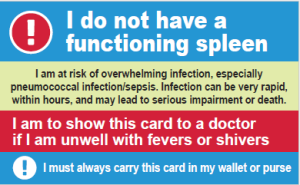
If you have had your spleen removed or have hyposplenism, meaning reduced spleen function, your plan requires additional medical oversight. Spleen Australia explains that people without a functioning spleen have a lifelong risk of serious bacterial infection, including pneumonia, sepsis and meningitis.
That risk is not solved by an unapproved research chemical.
Your clinician may discuss:
- Recommended vaccines
- Annual influenza vaccination
- Emergency antibiotics where appropriate
- A medical alert card or identification
- Travel precautions, particularly for malaria-risk areas
- An urgent-response plan for fever or systemic symptoms
When to Seek Urgent Medical Care
The problem: People without normal spleen function can become seriously unwell quickly, and early symptoms may look like an ordinary infection.
The solution: Treat warning signs as a medical priority.
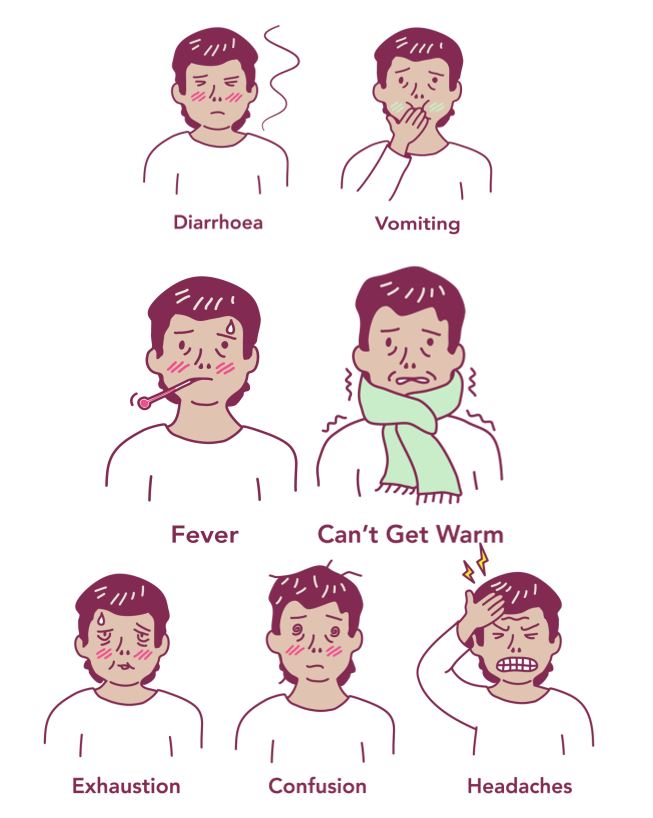
According to Spleen Australia’s infection guidance, warning signs can include:
- Fever over 38°C
- Feeling cold or shivering
- Diarrhoea or vomiting
- Severe exhaustion
- Confusion
- Severe headache
- Rapid deterioration or feeling unusually unwell
If you have no functioning spleen and develop these symptoms, seek urgent medical attention. Follow the emergency plan provided by your doctor. Do not delay care while experimenting with timing, stacking or dose changes.
Evidence: What Splenogen Research Can and Cannot Show
The problem: Related spleen-derived peptide studies may be mistaken for direct evidence about Splenogen.
The solution: Label the evidence correctly.
Research on related spleen-derived preparations may provide useful background about immune signalling or blood-cell biology. It does not prove that the WL Australia Splenogen product has the same:
- Ingredients
- Purity
- Peptide sequence
- Absorption profile
- Dose-response relationship
- Clinical effect
- Safety profile
A useful research hierarchy is:
- Direct human studies of the exact product
- Human studies of a chemically identical formulation
- Human studies of a closely related preparation
- Animal or cell studies
- Mechanistic theory or marketing language
Splenogen currently belongs in a category where product-specific human dosing and outcome evidence are not established. That does not make research unimportant. It means you must be precise about what the evidence can support.
In Australia, therapeutic claims are regulated. Before describing a product as treating, preventing or modifying a health condition, review the Therapeutic Goods Administration guidance on complementary-medicine advertising.
Final Protocol Checklist
Before considering Splenogen in a research context, confirm:
- You have read the exact product listing and warning
- You understand it is not for human use
- You are not treating the 10mg strength as a personal dose
- You have not copied a protocol from another spleen product
- You have documented the research question and endpoints
- You have appropriate professional and institutional oversight
- You have a plan for storage, handling and adverse-event reporting
- You are not using it instead of vaccination, antibiotics or urgent medical care
- You understand that no validated human capsule dosage or timing schedule is currently provided
The short version: Splenogen is a research product, not a proven immune treatment. There is no established human capsule dose or timing protocol to recommend. Focus on evidence, oversight, consistency and safety. That is how responsible research moves from an interesting mechanism to reliable knowledge.

 Immune Support and Life Extension
 Shop Bioregulators & Research Chemicals for 2026 Scientific Labs
 Brain
Brain Buy Hair & Skin Care Peptides Australia – Top Quality & Best Prices
 Discover WLAustralia Peptides for Anxiety Relief & Longevity