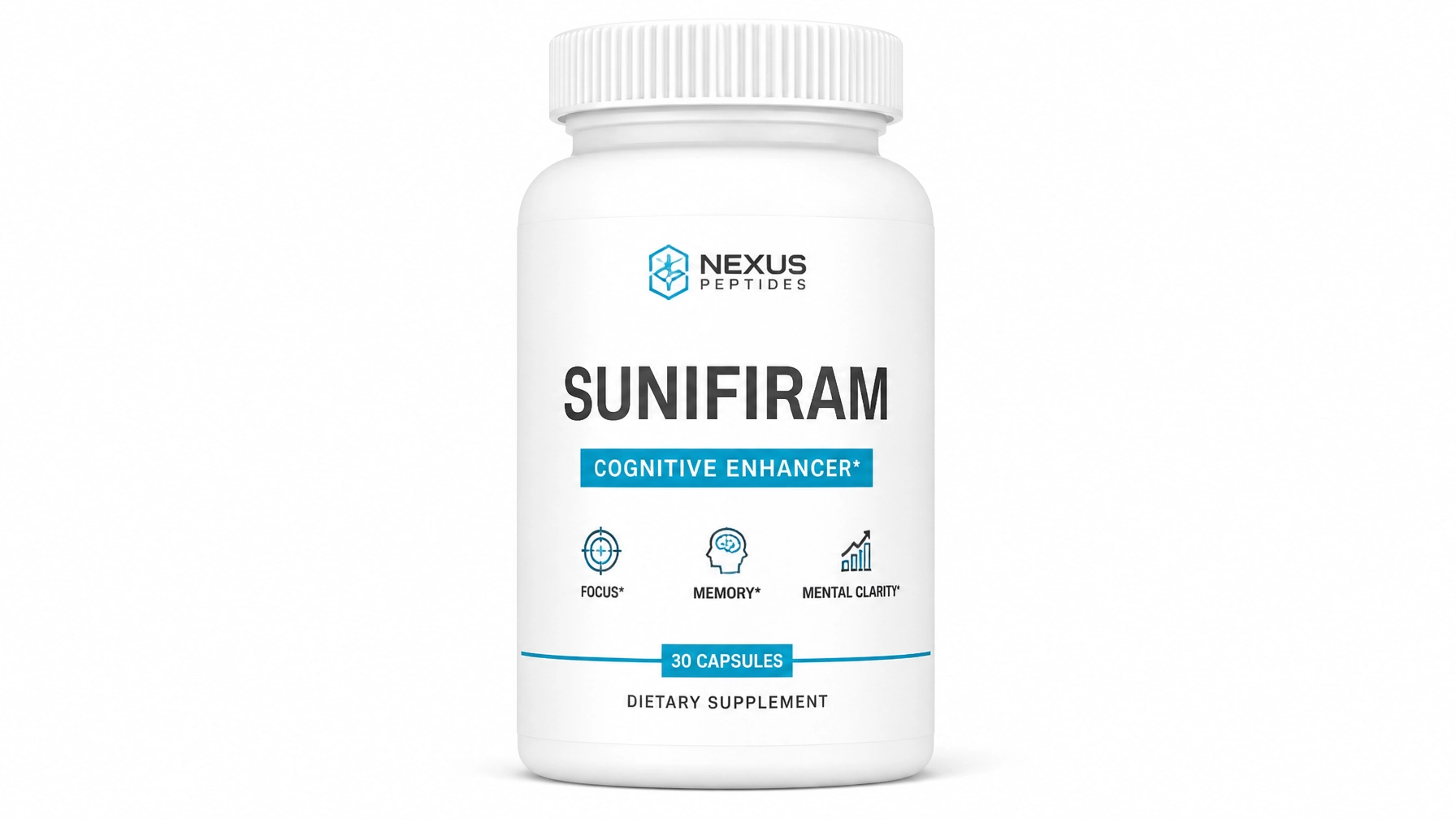
Sunifiram: The Potent Nootropic for Memory, Focus and Cognitive Enhancement

You have likely experienced the frustration of a "mental fog" that refuses to lift. Imagine your brain is a high-performance engine, but the spark plugs are fouled, and the fuel line is clogged. You press the accelerator, trying to focus on a complex task or recall a critical piece of information, but the engine only sputters. This cognitive friction is often the result of inefficient communication between your neurons.
Sunifiram is an experimental compound that acts like a high-octane additive for your neural circuitry. As a member of the AMPAkine family, it is designed to streamline the way your brain processes information, turning a sluggish commute into a high-speed sprint. In this guide, you will learn how Sunifiram functions, the specific benefits it offers for memory and focus, and the essential safety protocols you must follow to optimize your biology responsibly.
What is Sunifiram? The Blueprint of a Powerhouse
Sunifiram (also known as DM-235) is a piperazine-derived nootropic. While it shares some structural similarities to the Racetam family (like Piracetam), it is significantly more potent, often cited as being up to 1,000 times more powerful in its cognitive-enhancing effects.
Think of traditional nootropics as manual tools; Sunifiram is the power-tool equivalent. It was originally researched for its potential to treat severe neurodegenerative conditions such as Alzheimer’s disease. Today, it is utilized by the biohacking community as a "research chemical" aimed at pushing the boundaries of human focus and memory retention.
[INSERT VIDEO PLACEHOLDER: What is Sunifiram? A 2-Minute Overview]
How It Works: The Engine of Intelligence
To understand Sunifiram, you must understand Long-Term Potentiation (LTP). LTP is the process by which synaptic connections between neurons become stronger with frequent activation. This is the biological foundation of learning.
The Spark Plug: AMPA and NMDA Receptors
Your brain uses glutamate as its primary excitatory neurotransmitter. Consider glutamate the "electricity" that powers your thoughts. For this electricity to do work, it must plug into specific sockets: AMPA receptors and NMDA receptors.
- The AMPA Connection: Sunifiram acts as an AMPAkine. It enhances the activity of AMPA receptors, which are responsible for fast synaptic transmission. In our engine analogy, Sunifiram ensures that every time a spark is sent, the combustion is more efficient and powerful.
- The NMDA Glycine Site: Sunifiram also targets the glycine binding site of the NMDA receptor. This acts like a "zipper" that opens the door for calcium to enter the neuron, triggering the chemical cascade required for memory formation.
By modulating these two systems, Sunifiram promotes a state of heightened "neuroplasticity", the brain's ability to reorganize itself by forming new neural connections.

Unlocking the Vault: Key Cognitive Benefits
Focus on these primary outcomes when considering Sunifiram for your cognitive toolkit. The "problem" of mental fatigue is met with a specific, tiered "solution" through Sunifiram supplementation.
1. Rapid Memory Encoding and Recall
If your memory is a filing cabinet, mental fatigue makes the drawers stick. Sunifiram acts as a lubricant. By stimulating the production of Acetylcholine, often called the "learning neurotransmitter", it facilitates the rapid encoding of new data. You will find that complex concepts become easier to grasp and, more importantly, easier to retrieve later.
2. Laser-Like Focus and Attention
Distraction is the enemy of productivity. Sunifiram helps you achieve a state of "flow" by increasing glutamatergic signaling. This sharpens your focus, allowing you to tune out background noise and stay locked onto your primary objective. It is the difference between a flickering candle and a focused laser beam.
3. Enhanced Visual and Auditory Perception
Many users report a "brightening" of their environment. Colors may appear more vivid, and sounds more crisp. This is likely due to the increased efficiency of sensory processing in the brain's cortex.
| Benefit | Biological Mechanism | Real-World Application |
|---|---|---|
| Memory | Acetylcholine Release | Studying for exams or learning a new language. |
| Focus | AMPA Receptor Activation | Completing high-stakes projects under tight deadlines. |
| Clarity | Enhanced LTP | Breaking through "brain fog" during long workdays. |
Dosage and Administration: The Maintenance Guide
Because Sunifiram is exceptionally potent, precision is your greatest ally. Consider this: more is not better; better is better.
- Standard Research Dose: Most anecdotal protocols suggest a range of 4mg to 8mg taken once or twice daily.
- The Low-Start Rule: Always begin at the lowest possible dose (4mg) to assess your sensitivity. Sunifiram is a "precision instrument," and over-dosing can lead to overstimulation.
- Choline Stacking: Because Sunifiram increases the demand for Acetylcholine, it is often "stacked" with a choline source like Alpha GPC or CDP Choline. This prevents the common "nootropic headache" that occurs when the brain's fuel tank (choline) runs dry.

[INSERT VIDEO PLACEHOLDER: How to Safely Dose and Stack Sunifiram]
Safety, Legal Status, and Medical Oversight
Safety is the foundation of any successful biohacking endeavor. You must approach Sunifiram with a sense of responsibility.
Side Effects and Risk Mitigation
While many research subjects tolerate Sunifiram well, the "pulse" of its potency can lead to side effects if not respected:
- Overstimulation: Feeling "jittery" or anxious, similar to drinking too much espresso.
- Headaches: Usually a sign that you need more choline.
- Sleep Disruption: Due to its long-lasting effects on focus, take your final dose early in the afternoon to protect your sleep hygiene.
The Australian Context
In Australia, Sunifiram is currently unregulated and is not listed on the Australian Register of Therapeutic Goods (ARTG). It is typically sold as a research chemical and is not for human consumption under current TGA (Therapeutic Goods Administration) guidelines.
Legal Compliance Notice: Before you explore our full catalog, ensure you are aware of your local state laws regarding "analogue" substances. We highly recommend consulting with a medical professional before introducing any experimental compound into your regimen, especially if you have pre-existing cardiovascular or neurological conditions.
Taking Control of Your Biology
The quest for cognitive optimization is a journey toward unlocking your hidden potential. Sunifiram represents one of the most exciting frontiers in this journey, offering a potent solution for those struggling with memory and focus. By understanding the "engine" of your mind and providing it with the right "maintenance," you can transition from a state of mental friction to one of effortless clarity.
Ready to explore the world of high-performance supplements? Visit our Shop All page to see our latest arrivals in cognitive and physical optimization.

Frequently Asked Questions
Is Sunifiram a stimulant?
No, it is not a traditional stimulant like caffeine or amphetamines. It is an AMPAkine, meaning it enhances the brain's existing signaling pathways rather than forcing a massive release of dopamine or norepinephrine.
Can I take Sunifiram every day?
Because long-term human studies are lacking, most experts recommend "cycling" Sunifiram (e.g., 5 days on, 2 days off) to prevent the buildup of tolerance and ensure the brain maintains its natural equilibrium.
What is the difference between Sunifiram and Unifiram?
While they are "sibling" compounds with similar effects, Sunifiram is generally considered to be slightly more potent and focused on memory enhancement, whereas Unifiram may have a broader effect on mood.

 Immune Support and Life Extension
 Shop Bioregulators & Research Chemicals for 2026 Scientific Labs
 Brain
Brain Buy Hair & Skin Care Peptides Australia – Top Quality & Best Prices
 Discover WLAustralia Peptides for Anxiety Relief & Longevity