
The 30-Day Liver Support Protocol: Svetinorm, Ovagen and Livagen Explained

Your liver works like a highly organised processing plant. It helps process nutrients, medicines, alcohol and other substances while producing proteins and supporting energy metabolism.
That does not mean you need a “detox” every few months. Your liver is already carrying out these processes every day. A better goal is to reduce unnecessary strain, monitor liver health and understand emerging research carefully.
This article explains the 30-day Svetinorm + Ovagen liver-support concept from the provided bioregulator research material. It also explains where Livagen is discussed as an ongoing-support option.
This is educational information only. It is not medical advice, a proven detox treatment or a recommendation to use research chemicals. WL Australia product pages identify these products as research chemicals only: not for human use. Speak with a qualified Australian healthcare professional before making decisions about liver health, supplements or medicines.
What does “liver detox” really mean?
The word “detox” is often used as if the liver were a blocked drain that needs flushing. The reality is more like a waste-processing facility with several departments.
Your liver helps:
- Process nutrients from food
- Modify and clear many medicines and chemicals
- Produce bile for digestion
- Store and release energy
- Make proteins such as albumin
- Support immune and metabolic functions
The problem is that symptoms such as tiredness, bloating or feeling unwell do not tell you exactly what is happening inside the liver. They may relate to sleep, diet, alcohol, medication, infection or another medical condition.
The solution is measurement before speculation. If you are concerned about your liver, start with a GP assessment and appropriate blood tests rather than assuming you need a cleanse.
The 30-day concept: a research framework, not a prescription
The chapter “Detoxification Protocols for Longevity” describes a 30-day concept using Svetinorm and Ovagen together, followed by Livagen as a longer-term support option.
Think of this as a two-stage research model:
- Initial support and observation: Svetinorm + Ovagen are discussed as a combined 30-day liver-support concept.
- Ongoing research interest: Livagen is discussed as a separate option for continued liver and cellular research.
This framework does not establish a clinically validated treatment. There is no strong human evidence showing that this combination lowers liver enzymes, reverses fatty liver or removes stored toxins.
The practical takeaway is simple: a 30-day period may organise observation, but it does not prove effectiveness.
Svetinorm: the broader liver-support concept
According to the WL Australia product description, Svetinorm is presented as a natural liver peptide bioregulator associated with the A-7 complex. The research concept is that short peptide signals may interact with liver tissue and support cellular maintenance.
Use an analogy: hepatocytes are the liver’s main processing workers. If the worksite is affected by alcohol, excess body fat, poor nutrition or other stressors, researchers may ask whether tissue-specific peptide signals can influence how those cells function.
That is the proposed research idea: not a confirmed clinical outcome.
The Svetinorm 20mg research page states that the product is for research only and not for human use. The page also describes Svetinorm as out of stock at the time of research for this article, so availability can change.
The problem Svetinorm is intended to address
The research problem is reduced cellular resilience or impaired liver processing.
The proposed solution is to investigate whether a tissue-specific peptide complex can support cellular signalling and maintenance.
What the evidence does not show
Current independent reviews report very limited human evidence for Svetinorm. There is no reliable human trial demonstrating that it improves:
- Alanine aminotransferase (ALT)
- Aspartate aminotransferase (AST)
- Fatty liver
- Fibrosis
- Cirrhosis
- Long-term liver outcomes
Treat these descriptions as research hypotheses, not established health claims.
Ovagen: a targeted liver and gastrointestinal research peptide
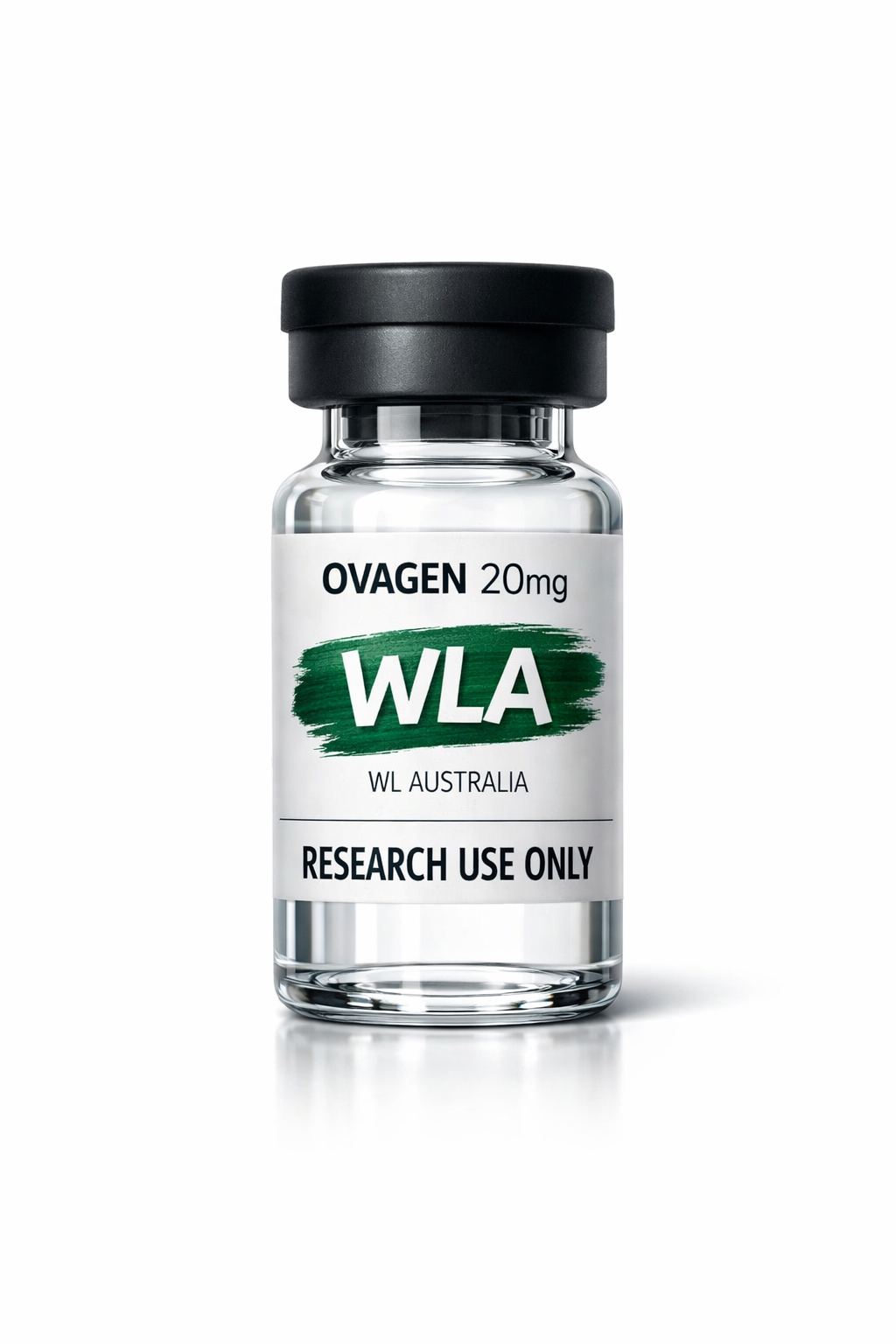
Ovagen is described on the Ovagen 20mg product page as a short-chain peptide intended for research relating to liver and gastrointestinal function.
The chapter presents Ovagen as the more targeted component of the initial 30-day concept. In simple terms, Svetinorm is described as broader liver-tissue support, while Ovagen is presented as a more direct signal for liver and gastrointestinal processes.
Think of the difference between maintaining an entire factory and adjusting one production line. Both may be studied, but they are not the same task.
The problem Ovagen is intended to address
The research question is whether a short peptide can influence tissue-specific functions involved in liver and gastrointestinal activity.
The proposed solution is to study whether those signals affect cellular function and metabolic processing.
Important limitations
There is no robust human evidence showing that Ovagen treats hepatitis, fatty liver, medication-related liver injury or abnormal ALT and AST. The product page also clearly states:
Research chemical only: not for human use.
Do not use this information to replace medical treatment, prescribed medicines or clinical monitoring.
How Svetinorm and Ovagen are presented together
The chapter describes a 30-day combination of Svetinorm and Ovagen. The underlying logic is synergy:
| Research component | Proposed focus | Evidence position |
|---|---|---|
| Svetinorm | Broader liver tissue and cellular maintenance | Very limited human evidence |
| Ovagen | Liver and gastrointestinal signalling | Very limited human evidence |
| Livagen | Ongoing liver and cellular research | Mainly preclinical or experimental evidence |
The concept is attractive because it follows a familiar problem-solution pattern:
- Problem: Daily metabolic and environmental demands may place stress on the liver.
- Proposed solution: Study more than one biological pathway during an organised period.
- Reality check: The combination has not been proven as a human detox treatment.
If you are considering any research compound, do not stack multiple unapproved products without qualified medical oversight. Combining substances can make it difficult to identify side effects, interactions or the true cause of changing blood results.
Video placeholder: A short explainer showing how the liver processes nutrients, alcohol and medicines: and why “detox” is not the same as flushing toxins.
Livagen as an ongoing-support research option
Livagen is described as a tetrapeptide bioregulator with the sequence Lys-Glu-Asp-Ala. The Livagen 10mg product page presents it as a research compound associated with liver cell function, protein synthesis and cellular rhythms.
The page also states that Livagen is for research only and not for human use.
The problem Livagen is intended to address
The research focus is longer-term cellular maintenance and liver resilience.
The proposed solution is to investigate whether Livagen influences liver-cell activity after an initial period of targeted research.
However, independent reviews describe Livagen evidence as largely preclinical, including animal or laboratory research. Animal findings cannot be assumed to predict human safety or benefit. Long-term controlled human safety data are not established.
For that reason, Livagen should not be treated as a maintenance supplement or a substitute for care if you have abnormal liver tests.
Build the foundation before considering any research concept
A liver-support plan without lifestyle foundations is like servicing a car while continuing to drive it without oil. The basic maintenance still matters.

For the next 30 days, focus on:
- Alcohol: For healthy Australian adults, the NHMRC recommends no more than 10 standard drinks per week and no more than four on any one day. If you have alcohol-related liver disease or cirrhosis, the safest advice is to avoid alcohol completely.
- Food quality: Emphasise vegetables, fibre, adequate protein and minimally processed foods. Reduce excess added sugar, saturated fat and highly processed meals.
- Movement: Combine regular walking or aerobic exercise with resistance training, adjusted to your fitness level.
- Sleep: Aim for a consistent sleep routine. Poor sleep can affect appetite, weight and metabolic health.
- Medication review: Do not stop prescribed medication without advice. Ask your GP or pharmacist to review medicines, over-the-counter products and supplements together.
- Avoid unnecessary detox blends: More ingredients do not automatically mean more protection. Some supplements can interact with medicines or cause liver injury.
Consistency beats intensity. Recovery, monitoring and optimisation all begin with the basics.
Monitoring liver health: what to discuss with your GP
If you have symptoms, risk factors or a history of abnormal tests, ask your doctor whether you need a baseline liver assessment.
Tests may include:
- ALT and AST: Enzymes that can rise with liver-cell injury
- Gamma-glutamyl transferase (GGT): A marker that may be affected by alcohol, medicines and bile-duct conditions
- Alkaline phosphatase (ALP): Helps assess bile-duct and liver-related patterns
- Bilirubin: A waste product processed through the liver
- Albumin: A protein made by the liver
- International normalised ratio (INR): Helps assess blood-clotting function
ALT and AST are warning signals, not a complete health score. A normal result does not always rule out liver disease, and an elevated result does not identify the cause by itself.
If a clinician is monitoring you, repeat testing may be considered after 8–12 weeks. Thirty days may be useful as an observation period, but it is often too short to judge meaningful changes in liver health.
When should you seek medical help?
Arrange prompt medical review if you notice:
- Yellowing of the skin or eyes
- Dark urine or unusually pale stools
- Severe or persistent abdominal pain
- Confusion or unusual drowsiness
- Vomiting that does not settle
- Significant swelling of the abdomen or legs
- Severe fatigue with unexplained weight loss
Seek urgent care for severe symptoms, confusion, vomiting blood or black stools.
Be especially cautious if you are pregnant, breastfeeding, under 18, living with liver disease, taking multiple medicines, or receiving treatment for cancer or hepatitis.
Final perspective: support the liver, do not promise a detox
Svetinorm, Ovagen and Livagen are presented in the supplied research material as liver-focused bioregulators. The 30-day Svetinorm + Ovagen concept and Livagen maintenance concept may be useful for understanding how tissue-specific signalling is discussed in experimental peptide research.
They are not proven human detox treatments. They are not a replacement for medical care, alcohol reduction, healthy nutrition, exercise or appropriate testing.
If you want to take control of your liver health, begin with a GP conversation, accurate blood tests and sustainable daily habits. Then assess any research claims with the same discipline used in a laboratory: define the question, measure the outcome, monitor safety and remain honest about uncertainty.
Research, recovery and optimisation work best when safety comes first.
Video placeholder: A clinician-led discussion covering liver blood tests, alcohol and medication safety, and when abnormal results require further investigation.

 Immune Support and Life Extension
 Shop Bioregulators & Research Chemicals for 2026 Scientific Labs
 Brain
Brain Buy Hair & Skin Care Peptides Australia – Top Quality & Best Prices
 Discover WLAustralia Peptides for Anxiety Relief & Longevity