Beta Endorphin: The Brain’s Natural Mood Enhancer and Neuroprotector

You have likely heard of the "runner’s high": that euphoric, floaty feeling that washes over you after a grueling workout. For years, we attributed this sensation to a simple release of endorphins. However, modern science has revealed that the reality is far more sophisticated.
Beta-endorphin is not just a "feel-good" chemical; it is a master regulator of your internal biological environment. Think of it as the brain’s own "thermostat" for stress and a "shield" for your neurons. In this guide, you will learn how this endogenous opioid peptide influences your mood, why it is essential for long-term brain health, and how recent breakthroughs in 2025 and 2026 have changed everything we thought we knew about its role in neuroprotection.
The Foundation: Your Internal Opioid System
To understand beta-endorphin, you must first understand the mu-opioid receptor. Imagine your brain is a high-performance sports car. The mu-opioid receptors are like the fine-tuning components of the engine. When beta-endorphin binds to these receptors, it doesn't just "mask" pain; it recalibrates your reward pathways and your resilience to stress.
Focus on this: Beta-endorphin is produced primarily in the pituitary gland and the hypothalamus. Its job is to bind to receptors throughout the nervous system to dampen the "noise" of stress and pain. When your levels are optimal, you experience emotional stability and a sense of calm. When they are low, the engine begins to rattle: anxiety, low mood, and chronic pain often follow.
Problem: The "Brain Fog" and Emotional Burnout
Many of our customers come to us feeling "stuck." They describe a persistent grey cloud, a lack of motivation, or a feeling that their brain is working twice as hard to achieve half as much. This is often the result of neuroplasticity failure. Without the right chemical signals, your brain cannot repair the "wiring" damaged by chronic stress.
The Solution: The BDNF Connection
This is where the science gets exciting. Beta-endorphin is not a "dead-end" molecule. Recent research has confirmed that it acts as a trigger for BDNF (Brain-Derived Neurotrophic Factor).
Think of BDNF as "brain fertilizer." It is the primary protein responsible for the growth, maintenance, and survival of neurons. You will find that beta-endorphin upregulates BDNF through two specific pathways:
- The Mu-Opioid Pathway: Primary for mood regulation.
- The Delta-Opioid Pathway: Essential for cognitive resilience.
By optimizing your endorphin levels, you aren't just feeling better in the moment: you are literally "fertilizing" your brain to build more resilient structures for the future.

The 2026 Breakthrough: The "Bio-Shield" Corona
Perhaps the most significant discovery in recent years involves how beta-endorphin protects us from cognitive decline. Research published in 2025 and 2026 has identified a phenomenon known as the "Beta-Endorphin Corona."
Consider this analogy: If amyloid-beta aggregates (the toxic proteins associated with Alzheimer’s) are like corrosive waste leaking into your brain’s "construction site," then beta-endorphin acts as a specialized containment crew.
Scientists have discovered that beta-endorphin physically forms a protective "corona" or shell around these toxic amyloid-beta clusters. This coating does two things:
- Reduces Toxicity: It prevents the aggregates from damaging the surrounding healthy brain cells.
- Facilitates Cleanup: It makes it easier for your brain’s waste-management system to identify and remove the debris.
This is a game-changer for longevity. It suggests that maintaining high levels of beta-endorphin through exercise and supplementation is not just about mood: it is a proactive strategy to "unlock" a longer, healthier cognitive lifespan.
Practical Strategy: How to Optimize Your Levels
If you want to take control of your biology, you must approach beta-endorphin optimization from multiple angles. It is about synergy: combining lifestyle shifts with targeted support.
1. Movement is Non-Negotiable
High-intensity interval training (HIIT) and endurance exercise are the most direct ways to flood your system with beta-endorphin. This is why the runner's high is so potent: it forces the brain to release its internal reserves to manage the physical "stress" of the workout.
2. Strategic Supplementation
While your body makes its own endorphins, sometimes the factory needs help. At wlaustralia, we focus on peptides and compounds that support these specific pathways.
- Dermorphin: A potent peptide that interacts with mu-opioid receptors, offering a unique approach to research in pain and mood management.
- Anxiety Support: For those dealing with the "rattle" of a stressed system, exploring our anxiety category can provide the foundational support needed to allow natural endorphin production to flourish.
- Deep Recovery: Check out Super Relaxation for tools that help down-regulate the nervous system, allowing for the restorative "rebound" of beta-endorphin.

Safety, Maintenance, and Local Context
In Australia, we have a unique environment where high levels of sun exposure and a culture of physical activity naturally support endorphin production. However, it is vital to remember that these are powerful biological systems.
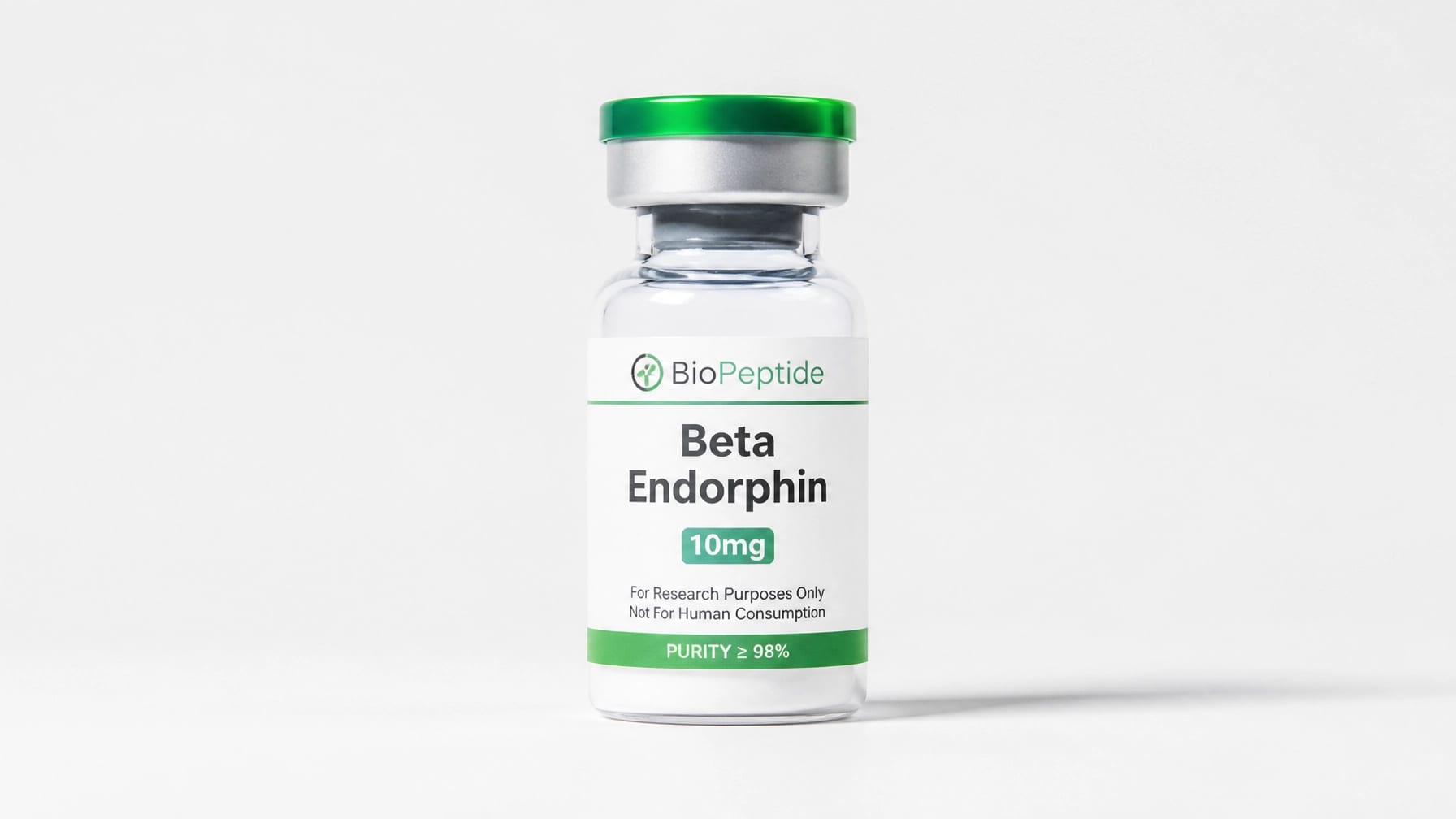
Consider this: When using advanced peptides like Beta-Endorphin or Dermorphin, you must treat them with the respect they deserve. This is not about a "quick fix"; it is about long-term optimization.
- Legal Compliance: Always ensure you are working within the framework of local regulations.
- Medical Oversight: We strongly recommend consulting with a healthcare professional before introducing new peptides into your protocol, especially those that interact with opioid receptors.
Summary Table: Beta Endorphin at a Glance
| Feature | Function | Analogy |
|---|---|---|
| Mu-Opioid Binding | Mood elevation & pain relief | The car's fine-tuning |
| BDNF Upregulation | Neuroplasticity & repair | Brain fertilizer |
| Amyloid Corona | Neuroprotection against plaques | The protective bio-shield |
| Hippocampal Release | New neuron growth | The internal nursery |

Taking Control of Your Biology
The science is clear: your brain has an incredible, built-in system for joy and protection. By understanding the "problem" of stress and the "solution" of beta-endorphin, you can move away from reactive health and toward proactive optimization.
Whether you are looking to clear the fog of anxiety or you are focused on the long-term goal of neuroprotection, focusing on your endogenous opioid system is the key. Explore our nootropics collection today to discover the tools that can help you unlock your brain’s full potential.
Stay focused, stay resilient, and always prioritize the health of your internal "engine."


 Immune Support and Life Extension
 Shop Bioregulators & Research Chemicals for 2026 Scientific Labs
 Brain
Brain Buy Hair & Skin Care Peptides Australia – Top Quality & Best Prices
 Discover WLAustralia Peptides for Anxiety Relief & Longevity