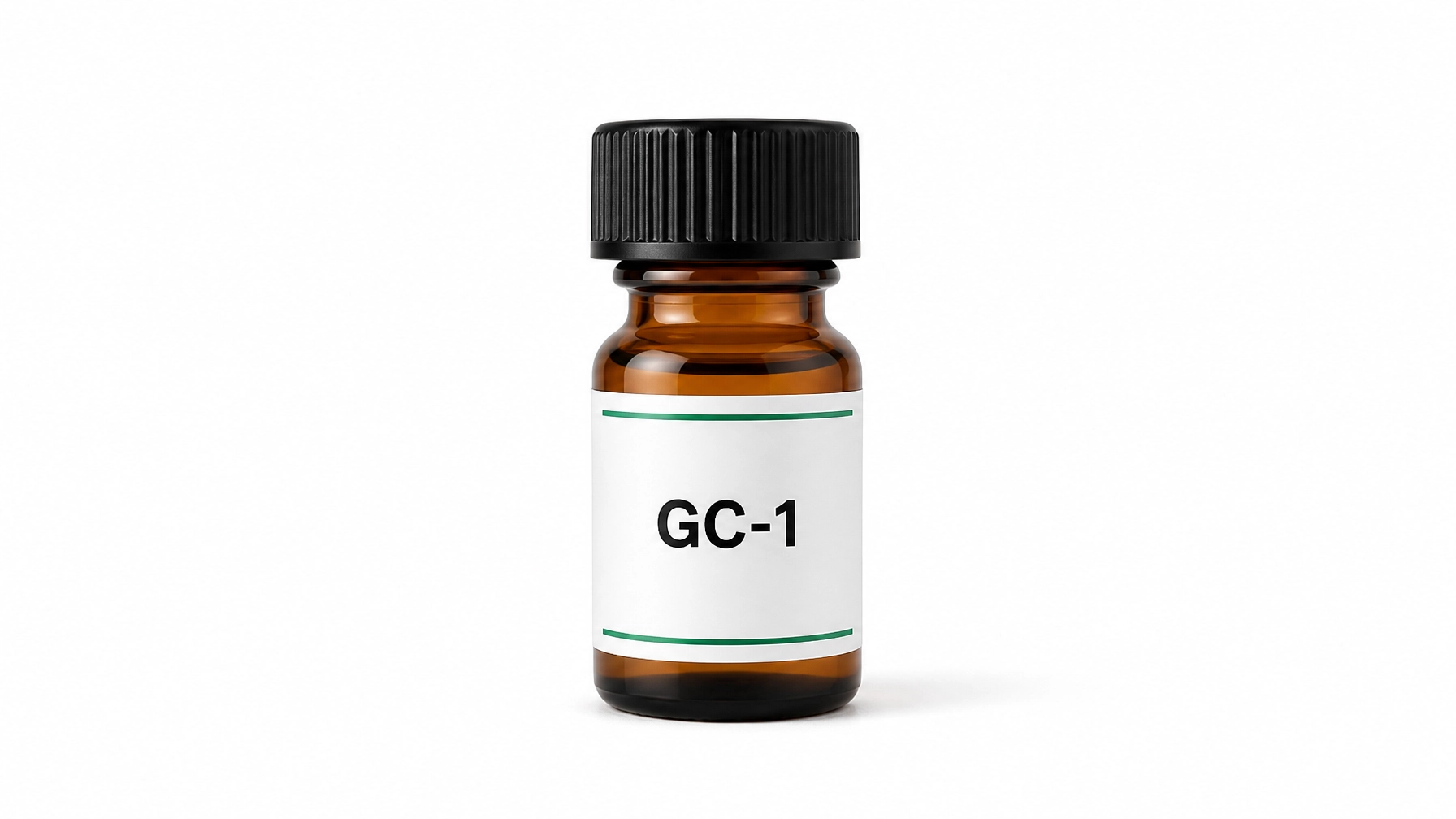
GC-1 (Sobitirome): The Selective Thyroid Hormone Metabolite for Cellular Energy and Fat Loss Research

Research notice: GC-1, also known as sobetirome or sobitirome, is an investigational compound. It is not an approved weight-loss medicine or general health supplement. This article is for education and laboratory research context only, not for human use, self-experimentation, diagnosis or treatment.
If you are researching metabolism, you have probably encountered a difficult problem: the thyroid system can influence energy expenditure, cholesterol and fat handling, but activating it broadly may also affect the heart, bones, muscles and nervous system.
GC-1 was designed to investigate a more targeted solution.
Instead of acting like a master switch across the entire body, GC-1 is studied as a selective thyroid hormone receptor beta agonist. In simple terms, it aims to direct more thyroid-like activity toward the liver and metabolic tissues, where many energy and lipid processes are managed.
The idea is promising. The evidence is also limited.
You will learn how GC-1 works, why its receptor selectivity matters, what cellular energy and fat-loss research has found, and why safety and regulatory oversight remain essential.

What is GC-1?
The problem: thyroid biology is powerful but broad
Thyroid hormones help regulate growth, temperature, heart function and metabolism. The main active thyroid hormone, triiodothyronine (T3), acts through thyroid hormone receptors inside cells.
Think of these receptors as locks on different doors. When a thyroid hormone or thyroid-like compound fits the lock, it can change which genes are switched on or off.
The two main receptor types are:
- TRα, or thyroid hormone receptor alpha, which is prominent in the heart, muscle, bone and parts of the brain.
- TRβ, or thyroid hormone receptor beta, which is particularly important in the liver and is strongly involved in lipid metabolism.
Natural thyroid hormones can activate both receptors. That broad activity helps explain why excessive thyroid signalling may be associated with effects such as a faster heart rate, heat intolerance, muscle loss and changes in bone health.
The proposed solution: selective receptor activity
GC-1 is a synthetic thyromimetic, meaning a compound designed to imitate some actions of thyroid hormone. It is more accurate to call it a thyroid hormone analogue than a naturally occurring thyroid metabolite.
Research suggests that GC-1 binds preferentially to TRβ rather than TRα. Early receptor studies reported approximately T3-like activity at TRβ, with substantially lower affinity for TRα. This selectivity is the central reason GC-1 became important in metabolic research.
The short version: GC-1 was designed to study thyroid-like metabolic signalling with greater emphasis on TRβ activity.
Why TRβ selectivity matters
The problem: one signal can produce different effects in different tissues
Your body is not a single engine. It is more like a fleet of specialised vehicles. The liver processes fats and cholesterol. The heart controls circulation. Muscle manages movement and fuel use. Each tissue may respond differently to the same hormonal signal.
If a compound strongly stimulates thyroid receptors everywhere, it may create metabolic effects alongside unwanted cardiovascular or skeletal effects.
The solution: investigate the liver’s metabolic control panel
TRβ is abundant in the liver, where it helps regulate genes involved in:
- Low-density lipoprotein (LDL) clearance : removing LDL cholesterol from the bloodstream.
- Bile acid synthesis : converting cholesterol into bile acids for disposal.
- Fatty-acid oxidation : using fatty acids as fuel.
- Mitochondrial activity : influencing the cell structures that help generate energy.
- Energy expenditure : the amount of energy the body uses at rest and during activity.
A useful analogy is a building with separate electrical circuits. GC-1 research asks whether it is possible to increase activity in the liver’s metabolic circuit without overloading the heart’s circuit.
Selectivity is helpful, but it is not the same as complete safety. A compound can prefer one receptor and still affect other tissues, especially at higher exposure or with prolonged use.
GC-1 and cellular energy research
The problem: cells may store fuel without using it efficiently
Inside your cells, mitochondria act like microscopic power stations. They convert nutrients into usable energy, including adenosine triphosphate (ATP), the cell’s main energy currency.
When researchers study cellular energy, they may examine:
- Oxygen consumption.
- Mitochondrial respiration.
- Fatty-acid oxidation.
- Energy expenditure.
- Expression of genes associated with mitochondrial function.
- Changes in fat mass or liver fat in animal models.
The research strategy: examine fuel use, not just body weight
Preclinical studies suggest that GC-1 can increase aspects of mitochondrial oxidation and energy expenditure. It has also been investigated for effects on brown adipose tissue, sometimes called brown fat, which can release energy as heat through a process called thermogenesis.
Think of this as changing a vehicle’s fuel-management system. The research question is not simply, “Does the vehicle weigh less?” It is, “Is the vehicle processing fuel differently, and what are the costs of doing so?”
Animal studies have reported reductions in body weight or fat mass in some settings. However, animal results do not establish that the same outcome will occur in humans.
Human trials involving GC-1 were short and focused mainly on lipid outcomes rather than long-term fat loss, body composition or resting energy expenditure.
Pulse summary: Cellular energy findings are scientifically interesting, but they are not proof of a safe or effective human fat-loss treatment.
Video placeholder : Cellular energy explained
Insert an approved educational video showing how thyroid receptors, mitochondria and energy expenditure are connected. Avoid dosage, administration or self-experimentation instructions.
GC-1 and fat-loss research
The problem: fat loss is often treated as a single outcome
Body-fat reduction is influenced by energy intake, activity, sleep, hormones, genetics, medication, stress and underlying disease. A compound that changes one metabolic pathway may not produce predictable or sustainable fat loss.
The solution: measure several metabolic outcomes together
Researchers studying GC-1 may assess:
| Research area | What may be measured | Why it matters |
|---|---|---|
| Body composition | Fat mass, lean mass and total weight | Shows whether weight changes reflect fat, muscle or fluid |
| Energy expenditure | Oxygen consumption and heat production | Indicates how much fuel cells are using |
| Lipid metabolism | LDL cholesterol, triglycerides and liver fat | Shows how the liver is handling circulating fats |
| Thyroid signalling | Thyroid-stimulating hormone (TSH), free T4 and free T3 | Checks whether the thyroid feedback system is being altered |
| Safety | Heart rate, blood pressure and liver enzymes | Helps identify cardiovascular or hepatic stress |
| Glucose control | Blood glucose, insulin and insulin sensitivity | Detects potentially unfavourable metabolic changes |
Preclinical work has linked GC-1 with lower fat mass, lower liver triglycerides and improved lipid profiles in certain animal models. These findings support further investigation into metabolic applications.
They do not justify presenting GC-1 as a consumer fat burner.
Some studies of thyroid receptor beta agonists have also raised concerns about impaired insulin sensitivity or increased endogenous glucose production. This is an important reminder that improving one metabolic marker does not guarantee that every metabolic pathway improves at the same time.
Lipid and liver applications
The problem: the liver can accumulate and redistribute excess fat
The liver is a central processing plant for cholesterol and fatty acids. If too much fat enters, is produced or is stored, liver triglycerides may increase.
GC-1 has been studied in models of:
- Elevated cholesterol.
- Elevated triglycerides.
- Fatty liver.
- Cholesterol transport.
- Bile acid production.
- Atherosclerosis-related processes.
- Liver regeneration and hepatocyte proliferation.
The proposed solution involves several pathways working together:
- Increasing hepatic LDL receptor activity to improve LDL removal.
- Stimulating CYP7A1, an enzyme involved in converting cholesterol into bile acids.
- Supporting reverse cholesterol transport, which moves cholesterol from peripheral tissues back to the liver.
- Increasing fatty-acid oxidation and reducing lipid accumulation in some experimental models.
This is similar to improving a warehouse’s full logistics chain. The warehouse must receive less excess stock, process what it already has and move unwanted material out efficiently.
The research is encouraging, but liver biology is complex. Some experimental models have also shown changes in liver enzymes or glucose handling. That is why metabolic optimisation must always be paired with monitoring and scientific caution.

What human research has shown
The problem: early laboratory results can appear more definitive than they are
GC-1 progressed to early human clinical testing. Short-term studies in healthy male volunteers evaluated oral exposure and lipid-related outcomes.
Reported findings included:
- Short-term tolerability at tested doses.
- A reduction in LDL cholesterol in multiple-dose studies.
- Limited obvious signs of classic thyroid excess during the short observation period.
- Some influence on the hypothalamic–pituitary–thyroid, or HPT, axis : the feedback system connecting the brain and thyroid gland.
However, GC-1 did not progress into a full clinical development program for obesity or dyslipidaemia. No established long-term human evidence demonstrates that it safely reduces body fat or improves health outcomes.
The practical solution: separate “research signal” from “clinical proof”
Use this hierarchy when reading claims:
- Cell studies: useful for exploring mechanisms.
- Animal studies: useful for testing biological effects and early safety.
- Phase I studies: mainly assess tolerability, pharmacokinetics and early signals.
- Phase II and III studies: needed to test effectiveness and longer-term safety in relevant patient groups.
GC-1 has an important research history, but its evidence remains limited compared with approved therapies.
Safety and Australian regulatory context
The problem: thyroid-like compounds can affect multiple systems
Even with TRβ selectivity, GC-1 should not be treated as a routine supplement. Potential areas of concern include:
- Heart rate and cardiovascular strain.
- Thyroid-axis suppression.
- Changes in liver enzymes or bile acid handling.
- Glucose and insulin regulation.
- Heat intolerance, sweating, restlessness or sleep disturbance.
- Unknown long-term effects on bone, cartilage and other tissues.
- Product identity, purity, concentration and contamination.
The responsible solution: use proper oversight
In Australia, the Therapeutic Goods Administration (TGA) regulates therapeutic goods. The Australian Register of Therapeutic Goods (ARTG) records products authorised for supply.
At the time of writing, GC-1 is not presented here as an ARTG-approved medicine, and WL Australia’s shop and weight-loss research category should not be interpreted as evidence that GC-1 is approved for human use.
A “research use only” label does not automatically make a product suitable for people or remove regulatory obligations. Genuine laboratory work should occur through an appropriate institution, with chemical handling procedures, documented testing, ethics approval where relevant, and qualified supervision.
Do not use GC-1 for weight loss, thyroid problems, bodybuilding or metabolic self-experimentation. If you have concerns about thyroid function, cholesterol, liver health or body composition, speak with a qualified Australian healthcare professional.
Video placeholder : Responsible research and Australian compliance
Insert an approved video explaining research-compound handling, product verification, TGA requirements and the difference between laboratory research and human treatment.
GC-1 at a glance
| Feature | Research position |
|---|---|
| Compound | GC-1, sobetirome or sobitirome |
| Compound class | Synthetic thyromimetic and selective thyroid receptor agonist |
| Main target | Preferential activity at TRβ |
| Key tissue of interest | Liver and metabolic tissues |
| Research focus | Lipids, cholesterol, mitochondria, energy expenditure and liver metabolism |
| Fat-loss evidence | Mainly preclinical; limited human body-composition data |
| Clinical status | Investigational; not an established weight-loss medicine |
| Consumer use | Not recommended |
| Australian context | Confirm regulatory status through the TGA and use proper institutional oversight |
Final perspective
GC-1 is interesting because it treats metabolism like a systems-engineering problem. Instead of turning up every thyroid-related signal, researchers investigated whether TRβ could be targeted more selectively in the liver and metabolic pathways.
That approach has produced useful findings involving cholesterol clearance, bile acid synthesis, mitochondrial activity, energy expenditure and fat metabolism.
But selectivity is not a free pass. Research findings are not treatment instructions. Short-term tolerability is not long-term safety. Animal fat-loss results are not human clinical proof.
If you are exploring metabolic science, focus on the full picture: mechanism, evidence, monitoring, regulation and safety. That is how you unlock better research without confusing an experimental compound with an approved health solution.
Research sources
- PubMed: Sobetirome : a case history of bench-to-clinic drug discovery and development
- Frontiers in Medicine: Selective thyroid hormone receptor-beta agonists
- PubMed: GC-1 and non-alcoholic fatty liver disease research
- PubMed: GC-1 and lipid and cardiac activity
- PubMed: Structural basis of GC-1 selectivity
- WL Australia research shop
- WL Australia weight-loss research category

 Immune Support and Life Extension
 Shop Bioregulators & Research Chemicals for 2026 Scientific Labs
 Brain
Brain Buy Hair & Skin Care Peptides Australia – Top Quality & Best Prices
 Discover WLAustralia Peptides for Anxiety Relief & Longevity