IDRA 21 Capsules: The AMPAkine Nootropic for Memory Enhancement and Cognitive Research

If you are researching advanced nootropics, you may have come across IDRA 21. It is often described as an AMPAkine-like compound because it affects AMPA receptors, which help nerve cells communicate quickly.
IDRA 21 is particularly interesting in memory and learning research. However, the evidence needs to be understood carefully: the published findings are preclinical, meaning they come from laboratory, cellular and animal studies. IDRA 21 has not been established as a safe or effective medicine for people.
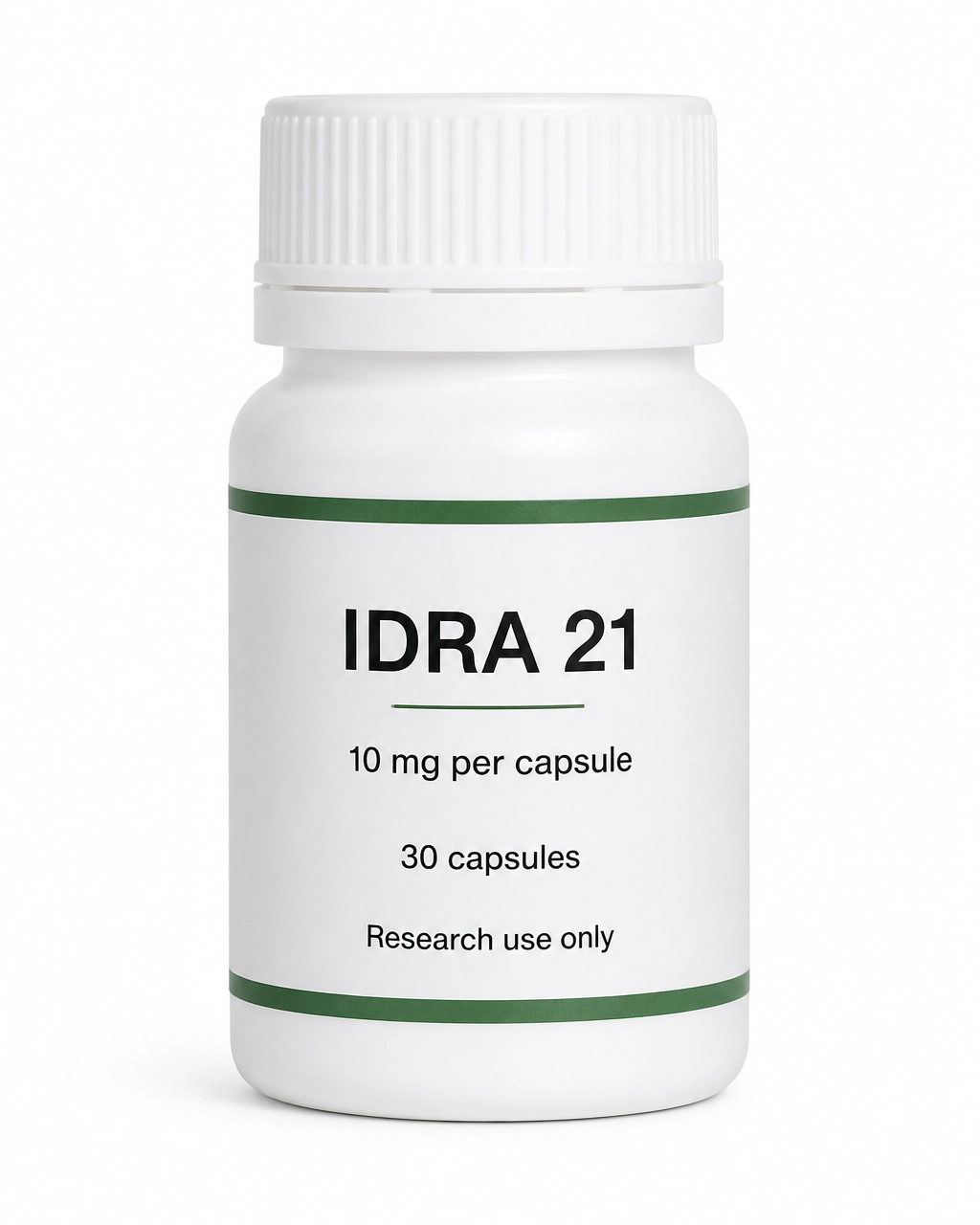
This article explains the science, the research applications and the important safety limits surrounding the listed IDRA 21 10 mg capsules, 30 capsules per bottle format. For current product information, check the wlaustralia shop and the nootropics category.
Important: IDRA 21 is an experimental research compound, not an approved supplement or therapeutic medicine. This article is educational only. It does not provide instructions for human use, dosing or treatment.
What is IDRA 21?
The problem researchers face in cognitive science is simple: memory is not controlled by one switch. It is more like a large communications network, with thousands of connections working together.
IDRA 21 is studied because it may influence one part of that network: the AMPA receptor.
AMPA stands for alpha-amino-3-hydroxy-5-methyl-4-isoxazolepropionic acid. That name is long, but the function is easier to understand. AMPA receptors act like fast-opening gates on nerve cells. When the neurotransmitter glutamate activates them, electrical signals can move across synapses: the junctions where nerve cells communicate.
IDRA 21 is described as a positive allosteric modulator. Rather than acting like a key that directly switches the receptor on, it binds at a separate site and changes how the receptor responds. Think of it as adjusting the sensitivity of a microphone rather than speaking into the microphone yourself.
Research suggests that IDRA 21 can reduce AMPA receptor desensitisation. In plain English, the receptor may remain responsive for longer during repeated signalling. This could strengthen excitatory communication under controlled laboratory conditions.
The short version: IDRA 21 is a research tool for studying how AMPA signalling may influence learning and memory.

How AMPA signalling relates to memory
A common frustration in learning research is explaining why some information becomes a lasting memory while other information disappears quickly.
One important model involves long-term potentiation, or LTP. LTP is a long-lasting increase in the strength of communication between nerve cells after repeated or coordinated activity. Imagine two roads between the same towns. If traffic repeatedly travels along one route, that route may be widened and reinforced. In the brain, repeated signalling can strengthen synaptic connections in a comparable way.
The hippocampus: a brain region involved in memory processing: is one of the main areas studied in relation to LTP. AMPA receptors help carry fast excitatory signals in hippocampal circuits.
The proposed chain looks like this:
- A learning experience activates a network of neurons.
- Glutamate communicates across the synapse.
- AMPA receptors help transmit the fast signal.
- Repeated signalling may strengthen the connection.
- Stronger connections can support memory formation and retrieval.
This does not mean that increasing AMPA activity automatically creates better memory. The brain is not a computer with a simple “performance” slider. Stronger signalling can be useful in one setting and disruptive in another.
Learning depends on balance, not maximum stimulation.
What does the research show?
The main problem with online discussions about IDRA 21 is that animal findings are often presented as if they were human clinical results. They are not.
A 2004 study published in Neuropharmacology examined IDRA 21 in young and aged rhesus monkeys. The animals completed a delayed matching-to-sample, or DMTS, task. This type of task measures short-term memory: an animal sees a sample, waits for a delay, and then must select the matching item.
The researchers reported improved task accuracy after IDRA 21 administration, including performance after longer delays. The effects were reported to persist for up to 48 hours in the study setting. The paper is available through PubMed.
Earlier research also examined IDRA 21 and related AMPA modulation in animal models of learning and memory. Reported areas of interest include:
- Short-term memory
- Delayed recall
- Spatial learning
- Recognition memory
- Recovery from chemically induced cognitive impairment
- Synaptic plasticity
These results are scientifically interesting, but they do not establish a human benefit. Animal studies use controlled conditions, specific species, carefully selected tasks and research-grade materials. A 10 mg capsule is not automatically equivalent to an animal research dose, and animal doses must never be converted into personal-use instructions.
| Research question | What preclinical studies suggest | What remains unknown |
|---|---|---|
| AMPA receptor activity | IDRA 21 can modulate AMPA receptor responses | How this translates to human brain networks |
| Memory performance | Improvements have been reported in animal tasks | Whether healthy adults experience a reliable benefit |
| Duration | Some animal effects persisted beyond the initial administration period | Human pharmacokinetics and safe intervals |
| Safety | No obvious acute problems were reported in some studies | Long-term human safety, interactions and individual risk |
| Learning applications | Potential value as a research model | Whether it improves real-world learning in people |
IDRA 21 and cognitive research applications
The problem for researchers is that “memory” includes several different processes. Remembering a name, learning a route, recognising an object and holding information in mind are not identical tasks.
IDRA 21 may be useful as a research compound because it allows scientists to explore these processes separately.
1. Memory retention
Researchers can examine whether AMPA modulation changes how long information remains available after a delay. This is similar to testing whether a message stays readable after being stored rather than disappearing immediately.
2. Spatial learning
Animal maze studies can assess how subjects learn locations and remember routes. These models are not direct copies of human learning, but they help researchers study hippocampal function.
3. Recognition memory
Recognition tasks compare a familiar object or stimulus with a new one. They can help separate memory retrieval from general activity or motivation.
4. Synaptic plasticity
Laboratory work can measure changes in electrical signalling, LTP and receptor behaviour. This provides a more direct view of the “wiring and reinforcement” behind learning.
5. Cognitive impairment models
Some studies use compounds or conditions that temporarily disrupt memory. Researchers then assess whether a test substance changes performance. This may help identify mechanisms for future drug development, but it does not prove that the compound treats a human disorder.
[Video placeholder: Explainer showing AMPA receptors, synaptic signalling and long-term potentiation]
Why human safety requires caution
The problem is that AMPA receptors increase excitatory communication. That is part of the reason IDRA 21 is interesting: and part of the reason it requires caution.
The brain needs excitation and inhibition to work together, like an accelerator and a braking system. If excitatory signalling is amplified without adequate control, theoretical concerns include excessive neuronal activity and excitotoxicity, a process in which overstimulation may contribute to cellular injury.
Published research has raised particular concerns around vulnerable neurological conditions, including:
- A history of seizures or epilepsy
- Stroke or reduced blood flow to the brain
- Recent head injury
- Other conditions affecting neuronal resilience
- Use of medicines or compounds that alter central nervous system activity
There are also major information gaps:
- No established human therapeutic dose
- No reliable human safety profile
- Limited information about drug interactions
- No robust long-term human studies
- No accepted medical use for general learning enhancement
Do not treat online anecdotes as clinical evidence. A personal report cannot show whether an effect came from IDRA 21, expectation, sleep, caffeine, training, stress or another variable.
Unknown does not mean safe.

Australian regulatory and product considerations
For Australian readers, legal and regulatory status matters. IDRA 21 should not be confused with an approved therapeutic good, registered medicine or ordinary dietary supplement.
The Therapeutic Goods Administration (TGA) regulates therapeutic goods in Australia. You can review current information through the TGA website. Regulatory classifications can change, so check the current position before purchasing, importing, possessing or handling any experimental compound.
The listed format discussed here is 10 mg per capsule and 30 capsules per bottle. That describes the product format only; it is not a recommendation for human consumption.
If you are involved in legitimate laboratory work, maintain appropriate documentation, storage, handling procedures and institutional oversight. Keep research materials away from children, pets, food and drink. Do not relabel, transfer or combine materials in ways that could create identification or contamination risks.
A responsible approach to learning
The problem many people are trying to solve is slow or inconsistent learning. The safest first-line strategy is still to improve the environment in which memory works.
Use a structured learning system:
- Sleep: Treat sleep as the brain’s overnight filing process.
- Active recall: Test yourself instead of repeatedly rereading.
- Spaced repetition: Review information at expanding intervals.
- Single-task focus: Reduce unnecessary switching between apps and tasks.
- Exercise: Support general cardiovascular and metabolic health.
- Nutrition and hydration: Avoid studying while routinely under-fuelled or dehydrated.
- Medical review: Speak with a qualified health professional if memory changes are persistent, sudden or worsening.
These methods may seem less dramatic than an experimental AMPAkine, but they have a much stronger practical foundation for everyday learning.
[Video placeholder: Practical demonstration of active recall and spaced-repetition learning]
Final takeaways
IDRA 21 is an intriguing AMPAkine-like research compound linked to studies of memory, synaptic plasticity and learning. Animal research has reported improvements in several controlled cognitive tasks, including delayed matching performance in rhesus monkeys.
However, the key limitations are just as important:
- Evidence is preclinical.
- Human effectiveness is unproven.
- Human dosing and long-term safety are unknown.
- Excitatory signalling creates meaningful safety questions.
- The compound should not be marketed or treated as an approved medicine or supplement.
If you are reviewing the listed IDRA 21 capsule format for research purposes, confirm the current information through the wlaustralia shop and consult qualified professionals about applicable Australian requirements.
Research carefully. Verify claims. Put safety before optimisation.

 Immune Support and Life Extension
 Shop Bioregulators & Research Chemicals for 2026 Scientific Labs
 Brain
Brain Buy Hair & Skin Care Peptides Australia – Top Quality & Best Prices
 Discover WLAustralia Peptides for Anxiety Relief & Longevity