Methylene Blue: The Mitochondrial Nootropic for Brain Health, Energy and Mood Support

Methylene blue is a well-known compound with a long history in medicine, laboratory science and biological research. More recently, researchers have studied its relationship with mitochondrial function, brain energy metabolism, memory, neuroprotection and mood-related pathways.
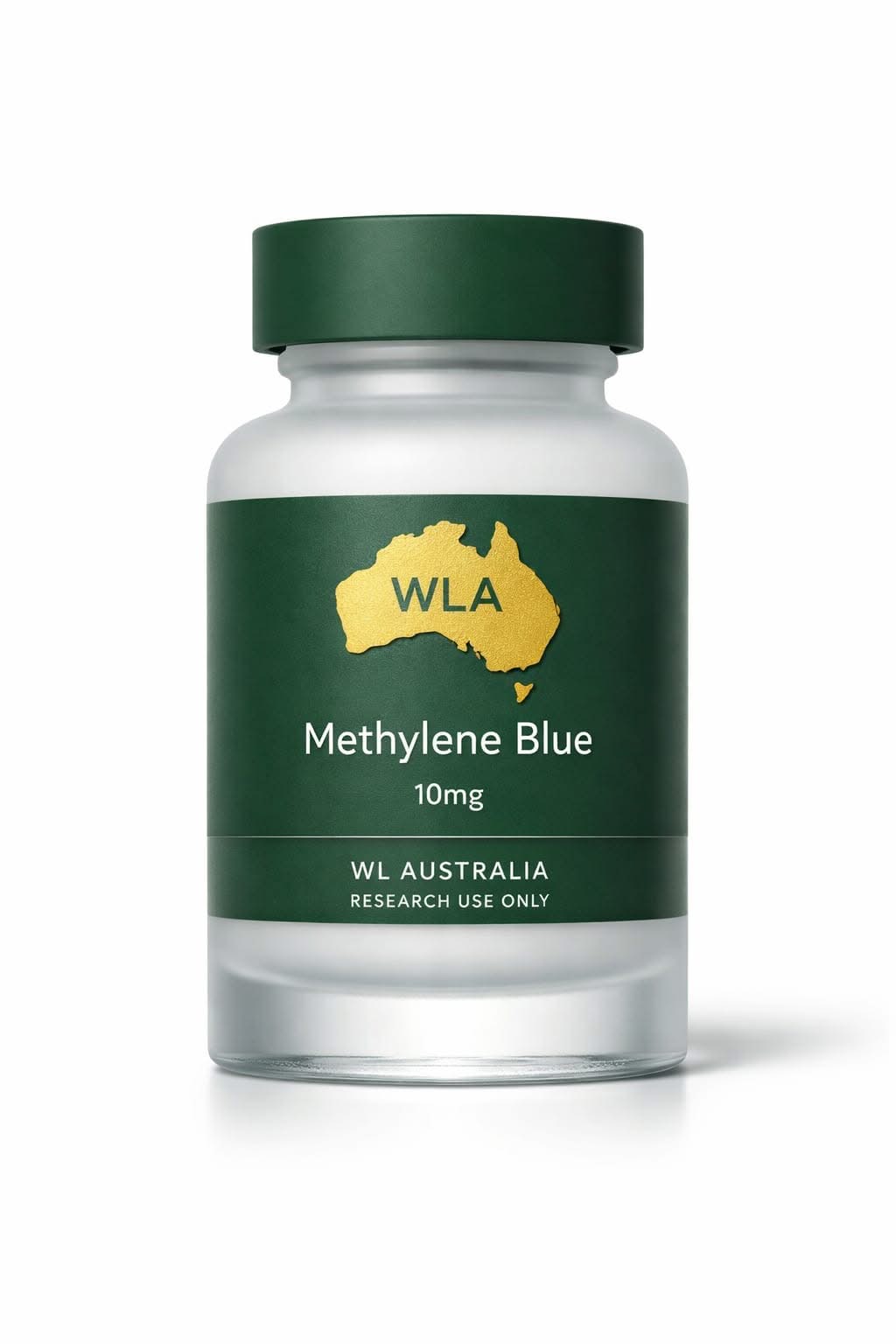
However, there is an important distinction to make from the beginning: WLA Australia’s Methylene Blue 10mg and 50mg capsules are labelled “research chemical only: not for human use.” They are not approved by the Therapeutic Goods Administration (TGA) as over-the-counter nootropics, mood supplements or general wellness products.
This article explains why methylene blue has attracted scientific interest, what the evidence currently shows, and which safety questions you must understand before considering any research involving this compound.
Safety first: Do not use research-use products in people. If you are considering methylene blue for any medical, cognitive or mood-related purpose, speak with an Australian-registered doctor or pharmacist.
What is methylene blue?
Methylene blue is a synthetic compound that can shift between oxidised and reduced forms. In simple terms, it can accept and donate electrons : a little like a rechargeable courier moving energy between stations.
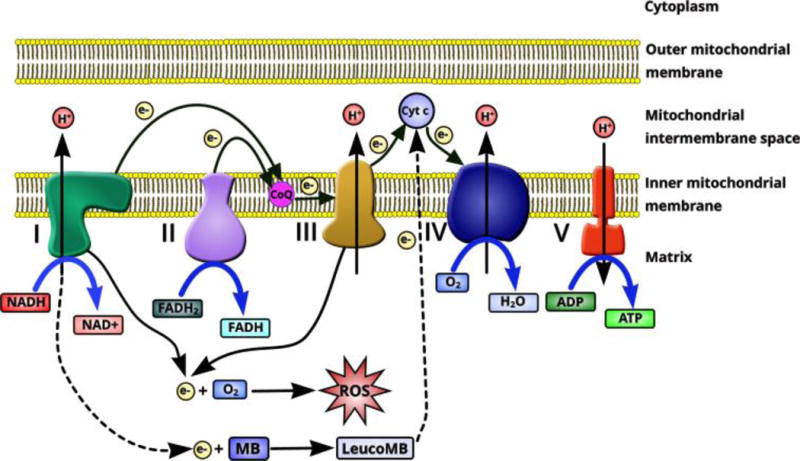
Your mitochondria are the energy-generating structures inside your cells. They convert nutrients and oxygen into adenosine triphosphate, or ATP, the main chemical energy currency used by your body.
The problem is that the mitochondrial “power grid” can become inefficient. When electrons escape from the normal pathway, they can contribute to the formation of reactive oxygen species, or ROS. A small amount of ROS is part of normal cell signalling, but excessive levels can damage proteins, membranes and DNA.
Research interest in methylene blue centres on whether it can help electrons move more efficiently through parts of the mitochondrial electron transport chain.
Short version: mitochondria are the power stations; methylene blue is being studied as an alternative electrical route.
Mitochondrial health: supporting the cellular power grid
The problem: low cellular energy
Your brain is particularly dependent on reliable energy production. Neurons constantly maintain electrical gradients, communicate across synapses and recycle chemical messengers. This is why poor sleep, illness, metabolic stress and ageing can all affect concentration and mental stamina.
Think of the brain as a city that never closes. Even while you sleep, its roads, communication lines and power systems remain active. If the power supply becomes less efficient, the city may still function : but traffic slows, communication becomes less reliable and maintenance falls behind.
The research solution: an alternative electron pathway
Methylene blue has been investigated as an alternative electron carrier. Research reviews describe its ability to receive electrons from NADH and transfer them towards cytochrome c, helping support complex IV activity in the electron transport chain.
A 2007 cell study reported that nanomolar concentrations of methylene blue increased mitochondrial complex IV activity, cellular oxygen consumption and heme synthesis in cultured human fibroblasts. These findings are scientifically interesting, but they were not a clinical trial showing that capsules improve energy or health in humans.
A broader review in Molecular Neurobiology also reported promising mitochondrial and neuroprotective findings across cell and animal models. The authors emphasised that more clinical research is needed before these mechanisms can be translated into routine treatment.
The practical lesson: improved mitochondrial activity in a laboratory model does not automatically equal better energy, focus or longevity in a person.
Video placeholder 1: Insert an educational video explaining mitochondria, ATP production and methylene blue’s proposed electron-shuttling mechanism.
Nootropic effects: what does the human evidence show?
The problem: wanting sharper focus without excessive stimulation
Many people look for nootropics : compounds studied for potential effects on attention, learning or memory : because they want to stay mentally productive without relying solely on caffeine or conventional stimulants.
Methylene blue is not a traditional stimulant. Its research rationale is different: support the energy systems that neurons use to perform demanding tasks.
The research solution: investigate memory and attention carefully
Animal studies have reported improved memory retention and learning after methylene blue exposure. Some human research has also explored short-term effects.
One randomised human imaging study reported changes in brain activity and modest improvements in aspects of memory performance after a single dose. Another study in people undergoing exposure therapy found that methylene blue improved fear-extinction memory and contextual memory after the therapy session.
These findings are promising but limited. Studies have generally involved small groups, single doses or short follow-up periods. They do not establish that methylene blue is a safe or effective daily nootropic for healthy adults.
| Research area | What current evidence suggests | Confidence |
|---|---|---|
| Mitochondrial activity | Supports alternative electron transfer in laboratory and animal models | Moderate mechanistic evidence |
| Memory and attention | Small human studies suggest possible short-term effects | Early evidence |
| Neuroprotection | Stronger in cell and animal research than in humans | Promising but unconfirmed |
| Long-term cognitive protection | No robust evidence that it prevents dementia or neurodegenerative disease | Insufficient evidence |
| Daily nootropic use | Not established as a safe, approved wellness application | Not supported |
Short version: methylene blue is an interesting research compound, not a proven everyday cognitive supplement.
Neuroprotection: protecting neurons under stress
The problem: neurons are vulnerable to energy failure
Neurons have high energy demands and limited tolerance for disruptions in oxygen, glucose and mitochondrial function. During conditions such as stroke, traumatic brain injury or neurodegenerative disease, energy failure and oxidative stress may reinforce each other.
This can resemble a construction site losing power during a storm. Tools stop working, damaged materials accumulate and the repair team becomes overwhelmed.
The research solution: target energy, oxidative stress and inflammation
Researchers have studied methylene blue in models of:
- Cerebral ischaemia and stroke
- Traumatic brain injury
- Alzheimer’s-related pathology
- Parkinson’s-related mitochondrial dysfunction
- Ifosfamide-associated encephalopathy
In these models, methylene blue has been associated with improved mitochondrial membrane potential, higher ATP levels, reduced oxidative stress and changes in inflammatory signalling. Some studies have also explored autophagy and mitophagy : the cell’s internal recycling and quality-control systems.
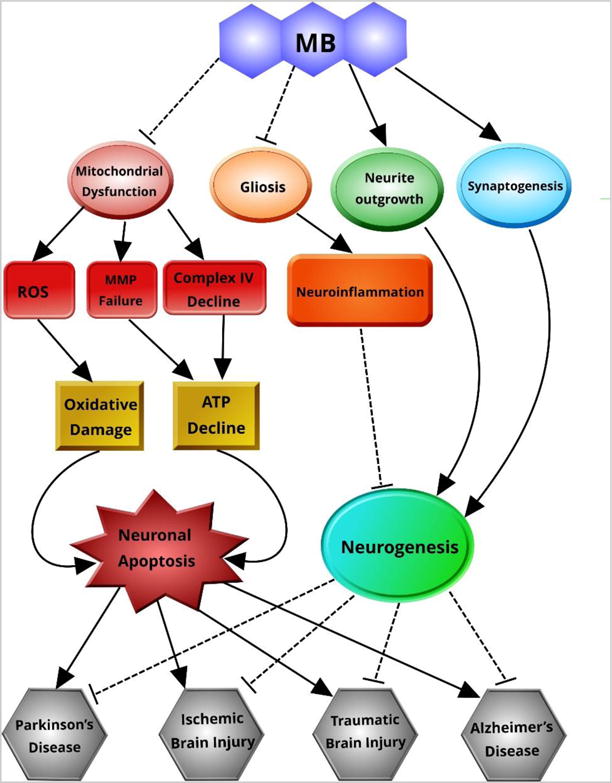
These results should not be interpreted as proof that methylene blue treats stroke, Alzheimer’s disease, Parkinson’s disease or brain injury. Acute neurological symptoms require emergency medical care. A capsule cannot replace ambulance treatment, brain imaging, hospital care or prescribed therapy.
The evidence is a research signal : not a treatment recommendation.
Mood enhancement and psychiatric research
The problem: mood is connected to energy, signalling and inflammation
Mood is not controlled by one chemical switch. It is shaped by sleep, stress hormones, neurotransmitters, inflammation, metabolism, personal circumstances and brain network activity.
Mitochondrial dysfunction may contribute to some psychiatric conditions, which is one reason researchers have explored metabolic approaches alongside conventional treatments.
The research solution: study mood pathways under medical oversight
Methylene blue has monoamine oxidase activity, particularly involving monoamine oxidase A (MAO-A). MAO-A helps break down neurotransmitters including serotonin, noradrenaline and dopamine.
Older clinical research and a later controlled study in bipolar disorder have investigated methylene blue for residual mood symptoms. However, methylene blue is not a standard antidepressant or approved mood supplement in Australia.
Its MAO-A activity creates a serious interaction risk. Combining methylene blue with serotonergic medicines may cause serotonin toxicity, a potentially life-threatening reaction involving agitation, confusion, sweating, tremor, fever, rapid heart rate and muscle rigidity.
Do not self-medicate for depression, anxiety or bipolar disorder with methylene blue. Mood symptoms deserve assessment by a qualified healthcare professional.
Video placeholder 2: Insert a clinician-led video explaining methylene blue, MAO-A activity and medication interactions.
WLA Australia product spotlight
WLA Australia lists two research-use capsule options:

| Product | Pack size | Listed status | Product page |
|---|---|---|---|
| Methylene Blue 10mg | 60 capsules | Research chemical only : not for human use | View Methylene Blue 10mg x 60 |
| Methylene Blue 50mg | 60 capsules | Research chemical only : not for human use | View Methylene Blue 50mg x 60 |
The 10mg and 50mg labels indicate different amounts per capsule. They are not interchangeable, and the higher number should never be treated as automatically better or more effective.
You can also browse WLA Australia’s nootropics category and brain and wellbeing category. Product category placement does not change the research-only status of methylene blue.
Safety considerations in Australia
The problem: online products may look like ordinary supplements
A professional-looking bottle does not prove that a product is approved for human use, clinically tested or appropriate for self-administration.
The TGA has warned about imported and unregistered oral methylene blue products promoted online for cognitive enhancement, mood and anti-ageing purposes. The regulator advises consumers not to use oral methylene blue unless directed or prescribed by a healthcare professional.
Important risk factors include:
- Serotonin toxicity with antidepressants and other serotonergic medicines
- MAO-A interactions with certain medicines and recreational substances
- Haemolytic anaemia in people with glucose-6-phosphate dehydrogenase, or G6PD, deficiency
- Potential problems during pregnancy and breastfeeding
- Dose-dependent toxicity, with higher exposure potentially becoming pro-oxidant
- Blue or green urine and other colour changes
- Possible effects on blood pressure and heart rhythm
- Product-quality risks from unregistered or non-pharmaceutical sources
If you experience severe agitation, confusion, fever, muscle stiffness, tremor, vomiting, collapse or a rapid heartbeat after exposure, seek urgent medical help.
For Australian regulatory information, review the TGA safety alert on imported unregistered methylene blue products.
The balanced conclusion
Methylene blue has a compelling research profile. It may act like an alternative route through the mitochondrial power grid, supporting electron transfer and reducing certain forms of oxidative stress in experimental models. This provides a rational basis for research into brain energy, memory, neuroprotection and mood-related biology.
But the evidence is not yet strong enough to call it a proven daily nootropic, antidepressant, anti-ageing product or neuroprotective supplement. The safety margin is also not simple, particularly because of MAO-A activity, serotonin toxicity and G6PD-related risks.
Research is the starting line, not the finish line. Protect your health by separating promising mechanisms from proven outcomes, and always place medical oversight before experimentation.

 Immune Support and Life Extension
 Shop Bioregulators & Research Chemicals for 2026 Scientific Labs
 Brain
Brain Buy Hair & Skin Care Peptides Australia – Top Quality & Best Prices
 Discover WLAustralia Peptides for Anxiety Relief & Longevity